

Creatine is defined as a naturally occurring compound stored in muscle tissue that fuels short bursts of high-intensity effort by regenerating adenosine triphosphate (ATP). The role of creatine in performance is backed by decades of research, with systematic reviews showing performance gains of 10% to 20% in high-intensity activities. Those gains include measurable strength increases: +1.43 kg on the bench press and +5.64 kg on the squat. The International Society of Sports Nutrition recognizes creatine monohydrate as one of the most studied and effective supplements available to athletes. Fitnesshealth covers the science behind these results so you can make informed decisions about your training.
How creatine improves energy production and strength
Creatine works through the ATP-phosphocreatine system, the body’s fastest energy pathway. When you sprint, lift, or perform any explosive movement, your muscles burn ATP within seconds. Creatine phosphate donates a phosphate group to replenish ATP, which increases exercise capacity and delays the onset of fatigue. More available ATP means you can push harder and recover faster between sets.

The strength gains from creatine are not trivial. When combined with resistance training, creatine produces an average gain of 3.39 kg fat-free mass and 2.70 kg lean body mass. Those numbers reflect real muscle growth, not just water weight. Without resistance training, those benefits drop significantly. Creatine amplifies the work you already put in; it does not replace it.
Key performance benefits supported by research include:
- Increased power output during explosive movements like jumps, sprints, and Olympic lifts
- Delayed muscular fatigue during repeated high-intensity efforts
- Faster recovery between sets, allowing higher training volume
- Greater strength gains over time when paired with progressive resistance training
Pro Tip: Track your rep counts and load week over week after starting creatine. The clearest sign it is working is a consistent ability to add volume or weight within the first three to four weeks.
What is the right creatine dosing protocol?
The standard safe dose for most adults is 3–5 grams daily. That amount saturates muscle creatine stores over three to four weeks of consistent use. Athletes who weigh over approximately 200 pounds may benefit from 10 grams daily to achieve the same saturation effect. A registered dietitian can help you dial in the right amount for your body weight and training load.
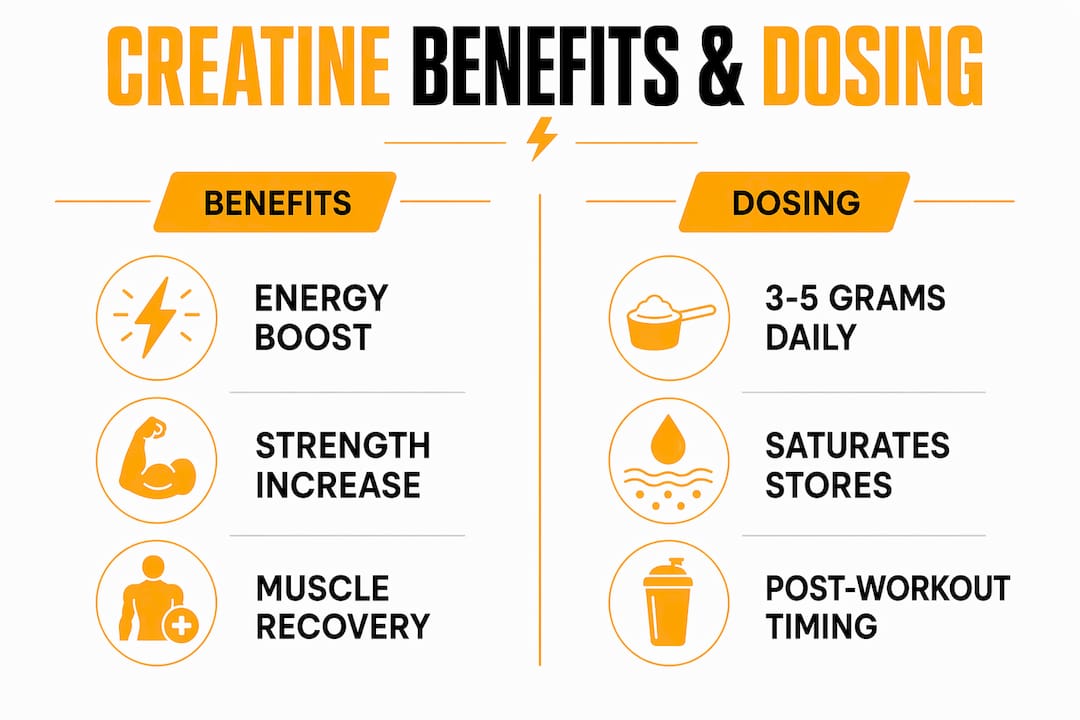
The loading phase is one of the most persistent myths in sports nutrition. Loading with 20 grams per day for five to seven days does reach saturation faster, but consistent daily intake of 3–5 grams over three to four weeks achieves the same result without the gastrointestinal discomfort some athletes report. Speed of saturation rarely matters for long-term performance.
Follow this practical protocol to get started:
- Start with 3–5 grams daily. Take it at any consistent time. Morning, pre-workout, or post-workout all produce the same long-term result.
- Stay consistent for at least four weeks. Muscle creatine stores need time to saturate fully before you notice peak performance effects.
- Adjust for body weight. Athletes over 200 pounds should consider 5–10 grams daily and confirm with a dietitian.
- Expect minor weight gain. Early weight gain from creatine is water retention within muscles, not fat. It signals effective intracellular saturation.
- Pair with resistance training. Creatine without structured training produces minimal results.
Pro Tip: Mix creatine monohydrate into water or a carbohydrate drink post-workout. Carbohydrates may slightly improve uptake by raising insulin, though consistency matters far more than timing.
Which sports benefit most from creatine?
Creatine delivers the greatest advantage in intermittent high-intensity sports such as sprinting, weightlifting, football, racquet sports, and combat training. These disciplines rely on repeated short bursts of maximal effort with brief recovery periods. That pattern matches exactly what the ATP-phosphocreatine system supports.
Endurance athletes see fewer gains. Steady-state activities like marathon running, cycling at moderate intensity, or long-distance swimming depend primarily on aerobic metabolism. Creatine does not meaningfully improve aerobic energy production. If you train for endurance sports, creatine may still help with strength training sessions in your program, but it is not a primary performance tool.
| Sport type | Creatine benefit level | Primary reason |
|---|---|---|
| Sprinting and track | High | Repeated maximal ATP demand |
| Weightlifting and powerlifting | High | Direct strength and power output gains |
| Football and rugby | High | Intermittent explosive efforts |
| Combat sports | High | Short burst power and recovery |
| Steady-state endurance | Low | Aerobic metabolism dominates |
| Mixed-sport athletes | Moderate | Strength training component benefits |
Does creatine support health beyond athletic performance?
Creatine’s benefits extend well past the weight room. Research shows creatine supports muscle retention and bone health in older adults when combined with resistance training. Preserving lean body mass as you age directly protects mobility, functional independence, and metabolic health. This makes creatine one of the few supplements with strong evidence across both athletic and aging populations.
Emerging research also points to a role in brain energy metabolism. Creatine may support cognitive function under conditions of stress, sleep deprivation, or aging. That said, cognitive benefits in healthy, well-rested adults remain inconclusive. The evidence is promising but not yet definitive enough to treat creatine as a cognitive supplement.
A few additional points worth knowing:
- Creatine does not directly cause fat loss. Fat loss happens indirectly through enhanced training capacity, which allows higher quality workouts over time.
- Older adults using creatine alongside resistance training show measurable improvements in mobility and independence.
- Creatine is one of the most studied supplements in existence, with a strong long-term safety record at standard doses.
- Unproven claims around creatine, such as direct fat burning or hormone effects, lack solid clinical backing. Evaluate new claims critically.
For athletes focused on muscle recovery, creatine fits naturally into a broader supplement plan that includes protein, micronutrients, and sleep.
Key Takeaways
Creatine monohydrate improves high-intensity performance by replenishing ATP faster, and consistent daily dosing of 3–5 grams paired with resistance training produces the strongest results.
| Point | Details |
|---|---|
| Core mechanism | Creatine replenishes ATP rapidly, extending power output in short, intense efforts. |
| Proven performance gains | Systematic reviews show 10%–20% improvement in high-intensity performance with measurable strength increases. |
| Dosing consistency | Daily intake of 3–5 grams over 3–4 weeks saturates muscle stores more safely than loading phases. |
| Sport specificity | Creatine benefits power and intermittent sports most; endurance athletes see limited gains. |
| Broader health value | Combined with resistance training, creatine supports lean mass and mobility in older adults. |
Creatine works, but only if you work too
I have watched athletes add creatine to their stack and expect transformation within two weeks. When the scale moves slightly from water retention, they panic and stop. That reaction misses the entire point.
Creatine is not a shortcut. It is a tool that extends what your training can do. The athletes I have seen get the most out of it are the ones who treat it like any other training variable: consistent, patient, and paired with progressive overload. They take their 3–5 grams daily, they train hard, and after six to eight weeks they look back at their logs and notice they are lifting more than they thought possible.
The timing obsession is also overrated. Pre-workout, post-workout, morning coffee, it genuinely does not matter much. What matters is that you take it every day. Creatine stores build gradually. Missing days slows that process.
My honest recommendation: start with creatine monohydrate at 5 grams daily, commit to at least eight weeks, and focus your energy on the training itself. The supplement supports competition-level performance only when the training behind it is serious.
— Rene
Fitnesshealth supplements for serious athletes
Athletes who train hard need supplements backed by real science, not marketing claims.

Fitnesshealth offers a full range of performance and recovery supplements designed for athletes who want results grounded in evidence. From creatine monohydrate to recovery formulas, every product on Fitnesshealth is selected to support the kind of consistent, progressive training that actually moves the needle. Whether you are building strength, improving power output, or managing recovery between sessions, the right supplement stack starts with understanding what the research actually supports. Fitnesshealth makes that research accessible alongside the products that put it into practice.
FAQ
What does creatine actually do for performance?
Creatine replenishes ATP faster during high-intensity efforts, which delays fatigue and increases power output. Research shows it can improve high-intensity performance by 10%–20%.
How long does creatine take to work?
Consistent daily intake of 3–5 grams saturates muscle creatine stores over three to four weeks. Most athletes notice measurable strength and endurance improvements within that window.
Does creatine cause fat gain?
Early weight gain from creatine is water retention inside muscle cells, not fat. That intracellular hydration signals effective creatine saturation and supports better muscle function.
Is creatine useful for endurance athletes?
Creatine offers limited benefits for steady-state endurance activities. It is most effective for intermittent, high-intensity sports that rely on repeated bursts of maximal effort.
What is the safest creatine dose?
The standard safe dose is 3–5 grams daily for most adults. Athletes over approximately 200 pounds may benefit from up to 10 grams, ideally confirmed with a registered dietitian.
Recommended
- Performance supplements for competition: top choices for serious athle – Fitness Health
- Why Caffeine Boosts Workout Performance: 2026 Guide – Fitness Health
- Muscle Recovery Supplement Benefits for Athletes in 2026 – Fitness Health
- Best Supplements for Endurance: Top Picks for Athletes – Fitness Health










