Caffeine is defined as the most widely used ergogenic aid in sport, working primarily as an adenosine receptor antagonist to reduce fatigue signals in the central nervous system. By blocking adenosine, the compound that makes you feel tired, caffeine reduces perceived exertion by 5–10% during physical activity. The result is measurable: endurance improves by 20–50% and strength gains range from 3–7% depending on the exercise type. Understanding why caffeine boosts workout performance means understanding these two distinct pathways, central and peripheral, and how to use them to your advantage.
What physiological mechanisms enable caffeine to improve workout performance?
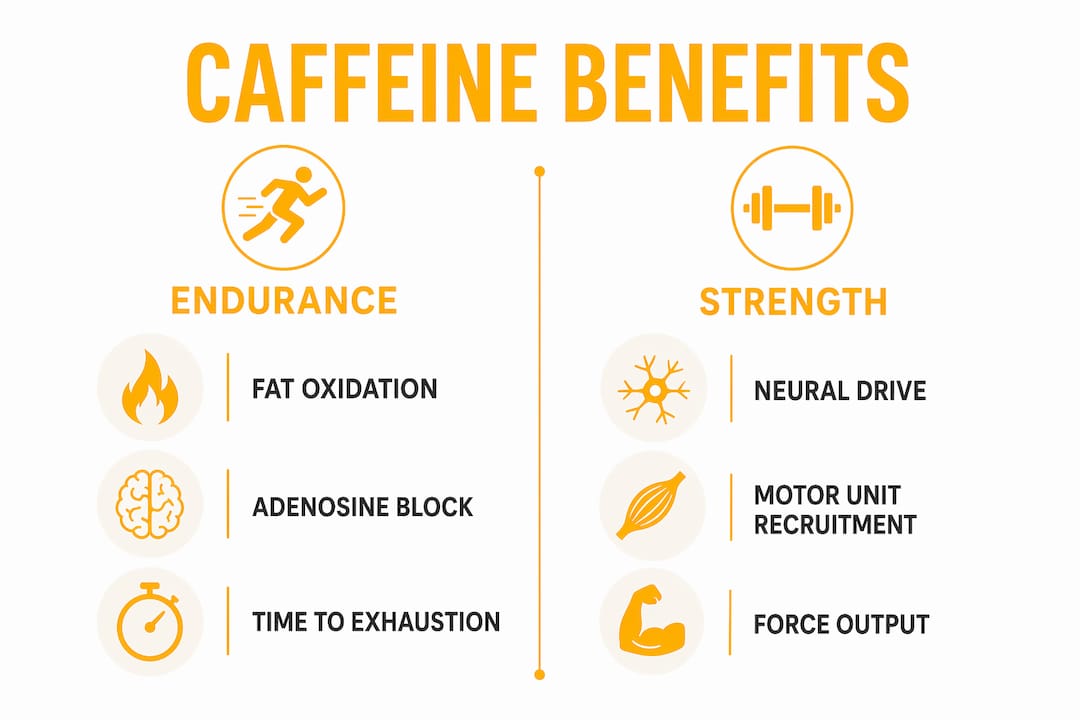
Caffeine’s ergogenic effects operate through two systems simultaneously: the central nervous system and the muscles themselves. This dual action is what separates caffeine from most other legal performance compounds.
Central nervous system effects:
- Adenosine blockade: Adenosine is a byproduct of cellular energy use. It accumulates during exercise and binds to receptors that signal fatigue. Caffeine occupies those receptors first, preventing that signal from reaching the brain.
- Increased neural drive: With fatigue signals suppressed, the brain recruits more motor units. More motor units firing means greater force output per contraction.
- Catecholamine release: Caffeine triggers the release of adrenaline and noradrenaline. These hormones prime the body for high-intensity effort by increasing heart rate and mobilizing fuel.
Peripheral muscle effects:
Caffeine increases neural drive and facilitates calcium release in muscle fibers. Calcium is the trigger for muscle contraction. When more calcium floods the muscle cell, the excitation-contraction coupling process becomes more efficient. The muscle contracts harder for the same neural input. This is why caffeine improves not just endurance but also peak force output.
Pro Tip: If you train fasted in the morning, caffeine’s catecholamine effect also accelerates fat oxidation, giving you a secondary fuel source during longer sessions.
These mechanisms work together. The CNS effect reduces how hard the workout feels. The peripheral effect increases what your muscles can actually do. Together, they explain the consistent performance improvements seen across dozens of controlled trials.
How does caffeine’s impact differ between endurance and strength training?
Caffeine does not affect all exercise types equally. The research is clear that endurance athletes see the largest absolute gains, but strength and power athletes still benefit in specific contexts.
| Exercise type | Performance improvement | Key mechanism | Consistency of effect |
|---|---|---|---|
| Endurance (cycling, running) | 20–50% time-to-exhaustion increase | Adenosine blockade, fat oxidation | High |
| High-intensity intermittent | Over 5% total work capacity increase | Neural drive, reduced breathlessness | High |
| Strength and power | 3–7% force output gains | Calcium release, motor unit recruitment | Moderate |
| Static strength tests | Minimal to inconsistent gains | Limited peripheral effect in isometric tasks | Low |
| Team sports and jumping | Positive with doses above 3 mg/kg | Neural drive and reaction time | Moderate |
Endurance athletes benefit most because adenosine accumulates heavily during prolonged aerobic work. The longer the session, the more fatigue signals caffeine suppresses. For strength athletes, the picture is more nuanced. Dynamic movements like squats, sprints, and jumps respond well. Static holds and maximal single-rep lifts show inconsistent results across studies.
The practical takeaway: if you compete in cycling, running, swimming, or team sports, caffeine is one of the most reliable tools available. If you lift primarily for maximal strength, caffeine still helps, but the effect size is smaller and more dependent on the specific exercise. Pairing caffeine with a solid supplement strategy for competition gives you the best chance of consistent gains.
What are the optimal caffeine dosing and timing strategies for workout performance?
Getting the dose and timing right determines whether caffeine works for you or against you. The research on this is specific enough to follow as a protocol.
- Target 3–6 mg per kilogram of body weight. A 175-pound (80 kg) athlete should aim for 240–480 mg. This range produces reliable performance gains without significant side effects for most people.
- Take caffeine 45–60 minutes before exercise. Plasma caffeine peaks at this window. Timing intake 45–60 minutes prior is the most effective strategy for maximizing the ergogenic window during your session.
- Do not exceed 6–9 mg/kg. Dosages above this threshold increase the risk of tachycardia, digestive distress, and anxiety without adding proportional performance benefit. More is not better past this point.
- Assess your tolerance before competition. Train with caffeine several times before using it in a race or game. Individual responses vary significantly, and your first high-dose experience should not happen on race day.
- Cycle your intake strategically. Regular daily caffeine use builds tolerance. Reducing intake for 7–10 days before a key event can restore sensitivity and amplify the acute ergogenic effect.
Pro Tip: Coffee delivers roughly 80–100 mg of caffeine per 8-ounce cup. Caffeine anhydrous in capsule or powder form gives more precise dosing, which matters when you are targeting a specific mg/kg target.
Understanding recovery nutrition timing alongside caffeine use helps you build a complete pre- and post-workout protocol that maximizes both performance and adaptation.
Are there differences in caffeine’s effects based on sex, time of day, or sport?
The short answer is that caffeine works broadly across populations, but a few variables are worth knowing.
- Sex differences are minimal. Caffeine’s ergogenic effects are comparable across female and male athletes. Studies show no significant performance gap between sexes when doses are matched to body weight.
- Menstrual cycle phase does not matter. Research finds no significant variation in caffeine’s performance effects across different phases of the menstrual cycle. Female athletes can use caffeine consistently without adjusting for cycle timing.
- Morning workouts benefit the most. Circadian rhythms suppress muscle force and alertness in the early morning. Caffeine before morning workouts can increase peak force by up to 45%, effectively restoring morning performance to evening-level output. This is one of caffeine’s most underappreciated benefits.
- Intermittent sport athletes gain specific advantages. In sports like soccer, basketball, and rugby, caffeine improves sprint speed, decision-making speed, and resistance to fatigue in the final minutes of play. These are exactly the moments when games are decided.
- Caffeine does not fix overtraining or sleep debt. Caffeine’s ergogenic effect depends on CNS stimulation and your baseline physiological state. It masks fatigue; it does not reverse it. Athletes using caffeine to push through chronic fatigue are borrowing against recovery they have not made.
For sport-specific guidance on building a complete supplement approach, the Fitnesshealth guide on building a supplement stack covers how caffeine fits alongside creatine, protein, and micronutrients.
Key takeaways
Caffeine improves workout performance by blocking adenosine receptors, increasing motor unit recruitment, and enhancing muscle calcium release, with the strongest effects seen in endurance and intermittent sports.
| Point | Details |
|---|---|
| Core mechanism | Caffeine blocks adenosine receptors, reducing perceived fatigue and increasing neural drive. |
| Endurance vs. strength | Endurance gains reach 20–50%; strength gains are more modest at 3–7% and task-dependent. |
| Optimal dose | Target 3–6 mg/kg body weight, taken 45–60 minutes before exercise. |
| Morning performance | Caffeine can restore morning peak force by up to 45%, offsetting circadian performance dips. |
| Universal applicability | Effects are comparable across male and female athletes regardless of menstrual cycle phase. |
What I have learned from years of watching athletes use caffeine
Most athletes treat caffeine like a light switch. They drink a pre-workout or a double espresso and expect it to carry them through any session. That is not how it works, and the athletes who get the most out of caffeine are the ones who treat it like a training variable, not a habit.
The biggest mistake I see is daily high-dose use with no cycling strategy. Tolerance builds fast. Within two weeks of consistent use, the acute CNS effect flattens out. The athletes who periodize their caffeine intake, pulling back for a week before a key event, consistently report sharper focus and better performance than those who never adjust.
The second mistake is using caffeine to mask fatigue from poor sleep or overtraining. Caffeine does not counteract sleep deprivation at a physiological level. It makes you feel less tired. That gap between feeling and reality is where injuries and performance crashes happen.
My honest recommendation: use caffeine deliberately. Know your dose by body weight, time it properly, and cycle it before events that matter. Treat it with the same respect you give your training program. When you do that, it is genuinely one of the most effective legal performance tools available.
— Rene
Take your performance further with Fitnesshealth
Caffeine is a powerful starting point, but it works best as part of a complete performance system. Fitnesshealth offers a full range of supplements, programs, and equipment designed for athletes who want to train smarter and recover faster.

Whether you are looking for pre-workout formulas with precise caffeine dosing, recovery supplements to complement your training, or expert guides on nutrition timing, Fitnesshealth has the tools to support every stage of your fitness goals. Explore the full range of programs, supplements, and equipment built specifically for serious athletes and fitness enthusiasts who refuse to leave performance on the table.
FAQ
How much caffeine should I take before a workout?
The research-backed dose is 3–6 mg per kilogram of body weight, taken 45–60 minutes before exercise. For an 80 kg athlete, that equals 240–480 mg.
Does caffeine help more with cardio or lifting?
Caffeine produces larger, more consistent gains in endurance and intermittent sports, with time-to-exhaustion improving by 20–50%. Strength gains are real but more modest, ranging from 3–7% and varying by exercise type.
Can female athletes use caffeine the same way as male athletes?
Yes. Research confirms that caffeine’s ergogenic effects are comparable across male and female athletes, with no significant variation tied to menstrual cycle phase.
Is caffeine effective for early morning workouts?
Caffeine is especially effective in the morning. Studies show it can increase peak force by up to 45% during morning sessions, offsetting the natural circadian dip in muscle performance.
What happens if I take too much caffeine before training?
Doses above 6–9 mg/kg increase the risk of tachycardia, digestive distress, and anxiety without adding meaningful performance gains. Stick to the 3–6 mg/kg range for the best results.
Recommended
- Performance supplements for competition: top choices for serious athle – Fitness Health
- Muscle Recovery Supplement Benefits for Athletes in 2026 – Fitness Health
- Why Probiotics Benefit Competitive Athletes: 2026 Guide – Fitness Health
- Vitamins for Strength Training: Top Picks That Work – Fitness Health