

Most athletes focus hard on what happens inside the gym. The sets, the reps, the splits. But why post-workout nutrition matters is a question that deserves just as much attention. What you eat after training directly shapes how fast your muscles recover, how much energy you carry into your next session, and whether you actually progress or just spin your wheels. The old “30-minute anabolic window” rule has confused more people than it helped. New research paints a more flexible picture, and understanding it changes how you approach nutrition entirely.
Table of Contents
- Key Takeaways
- Why post-workout nutrition matters: the biology behind recovery
- Timing and macronutrient targets
- Common myths about post-workout nutrition
- Practical meal ideas and strategies
- My honest take on post-workout nutrition
- Support your recovery with Fitnesshealth
- FAQ
Key Takeaways
| Point | Details |
|---|---|
| Timing is flexible | Muscle protein synthesis stays elevated for 2 to 3 hours post-workout, not just 30 minutes. |
| Protein target matters | Aim for 20 to 40 grams of protein after training to maximally support muscle repair. |
| Carbs are non-negotiable | Consuming at least 1.2 g/kg of body weight per hour restores glycogen faster after hard efforts. |
| Total daily intake wins | Overall caloric and protein adequacy matters more than any single post-workout meal. |
| Hydration is part of recovery | Replacing fluids and electrolytes lost through sweat is a core component of effective recovery. |
Why post-workout nutrition matters: the biology behind recovery
When you finish a tough training session, your body is not simply “done.” It shifts into a repair and rebuild phase that relies heavily on what you give it next. Three core processes drive this, and all three are directly influenced by the importance of post-workout meals.
Glycogen replenishment. Your muscles run primarily on glycogen, which is stored glucose. A hard workout depletes that fuel supply significantly. Post-workout carbohydrates directly affect how quickly glycogen is resynthesized, which determines your readiness for the next session. Skip the carbs and you show up to your next workout already running low.
Muscle protein synthesis. Exercise breaks down muscle tissue. That breakdown is intentional. It’s the stimulus for growth. But the growth only happens if you give your body enough protein to tip the balance from breakdown toward synthesis. Post-workout protein and carbs work together to reduce fatigue and support this rebuilding process.

Fluid and electrolyte restoration. Sweat losses during training are not just water. You lose sodium, potassium, and magnesium alongside fluids. These electrolytes regulate muscle contraction and nerve function. Rehydrating without accounting for electrolytes leaves you feeling flat even after you think you have recovered.
Here is what makes these three processes worth prioritizing together:
- Glycogen depletion without replenishment leads to slower recovery and diminished output in subsequent sessions
- Muscle protein breakdown without adequate protein intake delays adaptation and increases soreness
- Dehydration impairs cognitive function, coordination, and perceived effort in your next workout
- Together, these deficits compound. One missed post-workout meal is not catastrophic. A pattern of skipping nutrition after training absolutely is.
Research consistently shows that skipping post-workout eating leads to fatigue, prolonged muscle soreness, and delayed glycogen replenishment. Your body will eventually recover on its own, but it will take longer and you will feel worse doing it.
Timing and macronutrient targets
Here is where the science has evolved meaningfully in the last decade. The rigid “eat within 30 minutes or lose your gains” rule was always an oversimplification. Current evidence gives you more room to work with.
How much protein you actually need
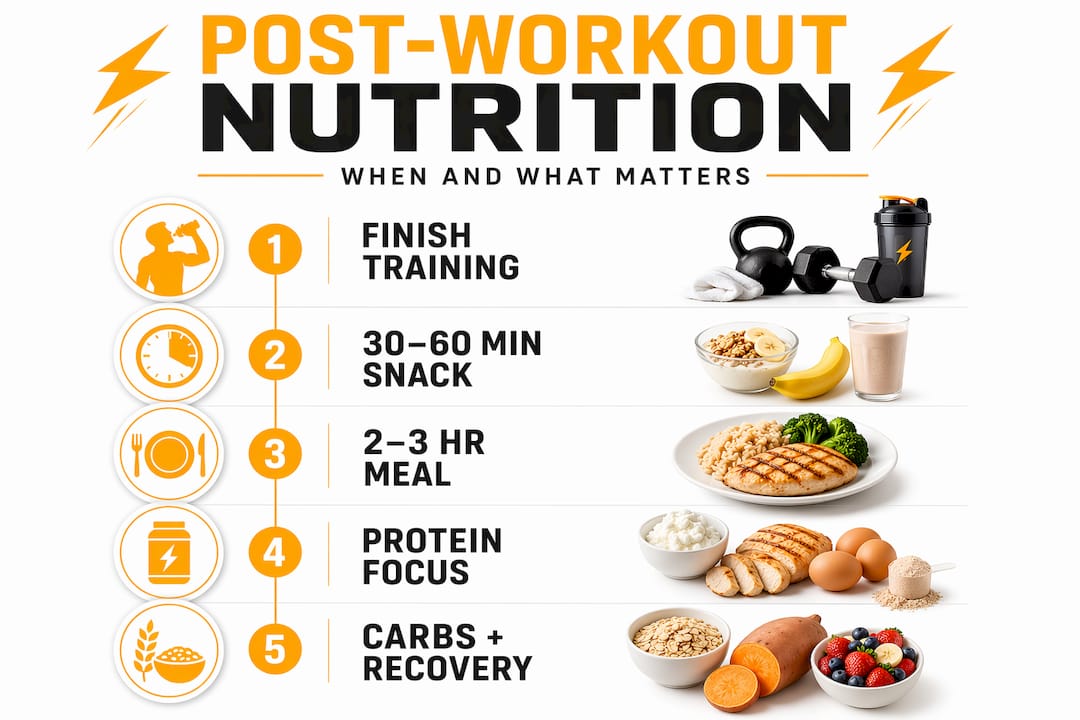
The minimum effective dose is about 20 grams of protein post-exercise to maximally stimulate muscle protein synthesis. After heavy resistance training sessions, the upper end of that range, around 40 grams, may produce better results. More than that in a single dose shows diminishing returns for most people.
When to eat
- Consume a protein-focused snack or shake within 30 to 60 minutes post-workout when your next full meal is more than two hours away. This keeps muscle protein synthesis elevated during a sensitive window.
- Eat a full, balanced meal within 2 to 3 hours of finishing training. Protein timing flexibility of this range still produces solid muscle protein synthesis responses. You do not need to panic if your gym bag does not have a shake in it.
- Prioritize carbohydrates if you train twice in one day. For athletes with same-day sessions, carb intake at 1.2 g/kg per hour post-exercise is the most direct way to maximize glycogen recovery before the second session.
- Replace fluids based on sweat loss. A practical rule is to drink 16 to 24 ounces of water for every pound lost during training. Add an electrolyte source if your session lasted longer than an hour.
- Combine protein and carbohydrates. The synergistic effect of pairing these two macronutrients accelerates both glycogen resynthesis and muscle repair compared to either nutrient alone.
Pro Tip: If you trained in a fasted state or first thing in the morning, move your post-workout meal up. Your body has fewer reserves to draw on, so the earlier timing matters more in that context.
The Cleveland Clinic recommends a quick snack after exercise followed by a carbohydrate and protein-rich meal, which aligns with this tiered approach. It gives you a fast top-up when it counts and a fuller restoration when you sit down to eat properly.
Common myths about post-workout nutrition
The fitness world has a gift for turning research into rules that sound precise but miss the nuance entirely. A few persistent myths are worth dismantling directly.
Myth 1: You must eat within 30 minutes or the window closes. The “anabolic window” concept is real but exaggerated. Muscle protein synthesis responsiveness extends for 2 to 3 hours after training. If you ate a solid pre-workout meal, the urgency drops even further because your body is still processing those nutrients. The 30-minute window matters most when you trained fasted or have back-to-back sessions.
Myth 2: One post-workout shake fixes a poor diet. This is the most damaging misconception. Chronic under-eating negates the benefits of any single post-workout meal. If your total daily protein is too low, if your overall calories are insufficient, or if your sleep is poor, that shake accomplishes very little. Post-workout nutrition is one piece of a larger picture, not a magic fix.
Myth 3: More antioxidants post-workout accelerate recovery. This one surprises people. The ISSN position on antioxidant supplementation notes that high-dose antioxidant supplements taken immediately after training can blunt the beneficial adaptations that exercise is supposed to trigger. Your body uses reactive oxygen species as part of the adaptive signaling process. Suppressing that signal with supraphysiological doses of vitamin C or E at the wrong time can work against you.
“The focus on timing has become so intense that many athletes are thinking about the clock more than the quality of what they eat. That’s backwards. Total daily nutrition drives results. Timing optimizes them.”
Myth 4: Supplements are necessary for good post-workout nutrition. Whole foods can hit every target. Greek yogurt, eggs, rice, fruit, and milk provide protein, fast-digesting carbohydrates, and hydration support without a supplement in sight. Supplements earn their place when convenience is genuinely an issue, when dietary restrictions limit food options, or when you have reviewed performance supplements for athletes and found a specific gap to fill.
Practical meal ideas and strategies
The benefits of post-exercise nutrition only land if you actually apply them. Here are some grounded, realistic options that work for different training goals and schedules.
| Goal | Food Options | Notes |
|---|---|---|
| Muscle building | Grilled chicken, white rice, banana | High protein, fast carbs, easy to prep |
| Endurance recovery | Salmon, sweet potato, leafy greens | Anti-inflammatory, sustained energy |
| Quick refuel (on the go) | Greek yogurt with berries, or a protein shake with oat milk | Portable, 20 to 30g protein, moderate carbs |
| Plant-based athletes | Tofu scramble, quinoa, roasted vegetables | Complete amino acid profile when combined |
| Two-a-day training | Bagel with peanut butter and honey, chocolate milk | Fast glycogen replenishment, protein included |
Anti-inflammatory ingredients are worth including regularly. Salmon, walnuts, cherries, and turmeric-based dishes show up consistently in anti-inflammatory, high-protein meals because they address muscle soreness at the cellular level alongside the macronutrient work. This is especially useful for athletes training four or more days per week.
For workout intensity adjustments: lighter sessions like yoga or a 30-minute walk do not require the same urgency. A normal meal within a couple of hours is sufficient. Heavy strength sessions, interval work, or long endurance efforts are the times when strategic post-workout nutrition pays dividends.
Pro Tip: Prep your post-workout meal before you train. Decision fatigue after a hard session is real, and the athletes who consistently eat well after training are usually the ones who removed the decision from the equation in advance.
When you do consider vitamins and minerals as part of your recovery nutrition, focus on magnesium and zinc. Both support sleep quality and muscle recovery and are commonly depleted in athletes who train frequently. Food sources first, supplementation second.
My honest take on post-workout nutrition
I have worked with a lot of athletes who were more stressed about hitting their post-workout shake within 28 minutes than they were about getting seven hours of sleep or eating enough throughout the day. I get it. Timing feels controllable. It feels like precision. But in my experience, that obsession with the window is usually a way of feeling like you are doing everything right without addressing the bigger variables.
What I have found actually moves the needle is consistent protein distribution across the whole day. Hitting 30 to 40 grams of protein at three to four meals, sleeping well, and eating enough total calories. Once those are locked in, timing your post-workout meal within a reasonable window adds a real but smaller benefit.
The clients who improved the most were not the ones who timed every meal to the minute. They were the ones who stopped stressing about perfection and built eating habits that actually fit their schedule. A whole food meal two hours after training beats a rushed, stressful shake at the 30-minute mark every single time if the overall daily intake is in order.
Chasing the perfect post-workout shake while neglecting sleep, total calories, and meal quality is like polishing the bumper of a car with no engine. The structure has to be there first.
— Rene
Support your recovery with Fitnesshealth

Understanding why post-workout nutrition matters is the foundation. Applying it consistently is where Fitnesshealth comes in. Whether you are looking for protein supplements that fit your schedule, recovery-focused formulas, or equipment that supports your training program, Fitnesshealth has the products to fill the gaps your food alone might not cover.
The Fitnesshealth catalog includes targeted recovery supplements, electrolyte products, and performance-grade protein options that align with the evidence-based guidance in this article. You can also explore the strength and fitness resource hub for meal timing frameworks, recovery programming, and practical guidance tailored to different training goals. Real recovery comes from consistent nutrition and smart supplementation working together.
FAQ
Why does post-workout nutrition matter so much?
Post-workout nutrition directly supports glycogen replenishment, muscle repair, and rehydration. Without it, recovery slows, soreness increases, and performance in your next session suffers.
How soon should you eat after a workout?
Aim for a protein-focused snack within 30 to 60 minutes, then a full meal within 2 to 3 hours. The urgency increases if you trained fasted or have a second session the same day.
How much protein do you need after training?
About 20 to 40 grams of protein post-workout is enough to maximize muscle protein synthesis for most people. The higher end is appropriate after heavy resistance training.
Is the 30-minute anabolic window real?
It is real but overstated. Research shows muscle protein synthesis remains elevated for 2 to 3 hours post-exercise, giving you more flexibility than the classic 30-minute rule suggests.
Can you get good post-workout nutrition without supplements?
Yes. Whole foods like Greek yogurt, eggs, rice, and fruit can meet protein, carbohydrate, and hydration targets without any supplements. Supplements add convenience, not necessity.










