Adaptogens are natural plant compounds that balance hormones primarily by regulating the hypothalamic-pituitary-adrenal (HPA) axis, the body’s central stress control system. When chronic stress drives cortisol out of range, every downstream hormone from testosterone to thyroid hormones gets disrupted. Herbs like ashwagandha, Rhodiola rosea, and Panax ginseng modulate HPA axis signaling to push the body back toward homeostasis. The result is not direct hormone replacement. It is a restoration of the stress environment that allows your endocrine system to self-correct. Clinical trials now back this mechanism with measurable data.
Why adaptogens balance hormones through the HPA axis
The HPA axis is the command chain that runs from your hypothalamus to your pituitary gland to your adrenal glands, and it controls how much cortisol your body releases under stress. Cortisol is not just a stress marker. It directly suppresses reproductive hormones, disrupts thyroid signaling, and impairs insulin sensitivity when it stays elevated for too long. Chronic HPA overactivation is one of the most common and underappreciated drivers of hormonal imbalance in active adults.
Adaptogens interrupt this cycle at the molecular level. Ashwagandha’s active compounds, called withanolides, exhibit GABA-mimetic activity that calms HPA axis overactivation. Ginsenosides in Panax ginseng modulate the PI3K/Akt pathway and suppress NF-κB inflammatory signaling, which reduces the cellular stress load that triggers cortisol release. Rhodiola rosea acts on serotonin and dopamine pathways, improving stress resilience at the neurotransmitter level. These are not vague herbal effects. They are specific molecular pathways mapped in peer-reviewed research.
The key distinction is directionality. Adaptogens do not tell your ovaries to produce more estrogen or instruct your thyroid to increase T4 output. They normalize the stress signaling environment, and your endocrine system responds by rebalancing itself. This indirect mechanism is both the strength and the limitation of adaptogenic herbs for hormone support.
- Cortisol elevation suppresses luteinizing hormone (LH), reducing testosterone and estrogen production
- Chronic HPA activation impairs thyroid-stimulating hormone (TSH) sensitivity
- Adaptogens reduce HPA hyperactivity, allowing downstream hormones to recover
- Effects are bidirectional: adaptogens raise low cortisol and lower high cortisol, depending on baseline
Pro Tip: If you are tracking your hormone health, measure cortisol first. Salivary cortisol testing across four time points in a day gives you a clearer picture of HPA function than a single morning blood draw.
What does the clinical evidence actually show?
The strongest evidence for adaptogens and endocrine health centers on ashwagandha. A meta-analysis of 23 trials covering 1,706 patients published in 2026 found ashwagandha reduced cortisol with a standardized mean difference of negative 1.18, a statistically significant result. The same analysis found serotonin increased by 31.75 ng/mL on average, and testosterone rose meaningfully in men but not in women. That sex-specific difference matters. It tells you the effects are context-dependent, not universal.
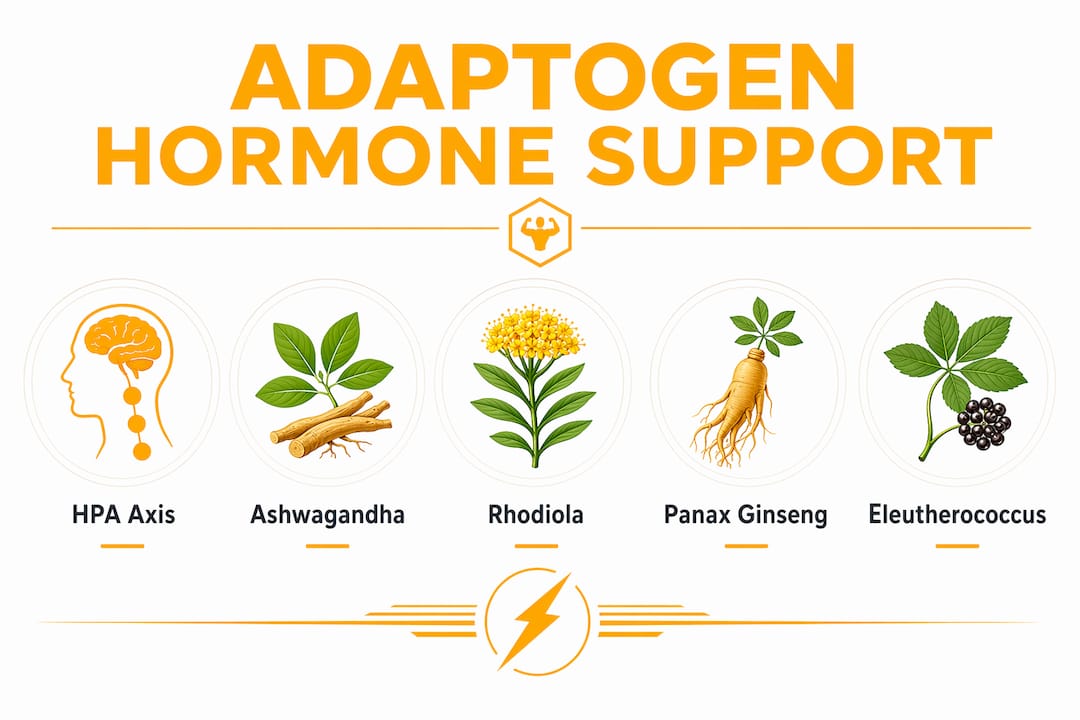
| Adaptogen | Primary hormone effect | Evidence strength |
|---|---|---|
| Ashwagandha | Cortisol reduction, testosterone increase (men) | Strong: multiple RCTs and meta-analyses |
| Rhodiola rosea | Cortisol modulation, serotonin/dopamine support | Moderate: clinical trials, smaller samples |
| Panax ginseng | Cortisol regulation, modest sex hormone effects | Moderate: mixed results across populations |
| Eleutherococcus | HPA axis support, immune modulation | Emerging: fewer large-scale human trials |
Thyroid hormone effects are modest and inconsistent. The 2026 ashwagandha meta-analysis noted a small increase in T4, but the effect size was not large enough to treat ashwagandha as a thyroid intervention. For menopausal women specifically, a 2026 randomized controlled trial found ashwagandha improved menopausal symptom scores and linked the benefit to HPA modulation rather than direct estrogen activity.
“Adaptogens primarily regulate stress hormones and should not be overhyped as direct hormone balancers.” — EatingWell, 2026
Dosage and extract standardization drive a significant portion of the variability in clinical results. Studies using standardized withanolide content in ashwagandha consistently outperform those using unstandardized root powder. This is not a minor detail. It is the difference between a measurable cortisol reduction and no effect at all.
Which adaptogenic herbs work best for hormone support?
Not all adaptogens act through the same pathway, and choosing the right one depends on your specific hormonal pattern and stress profile. Here is how the four most studied herbs differ in their mechanisms and effects.
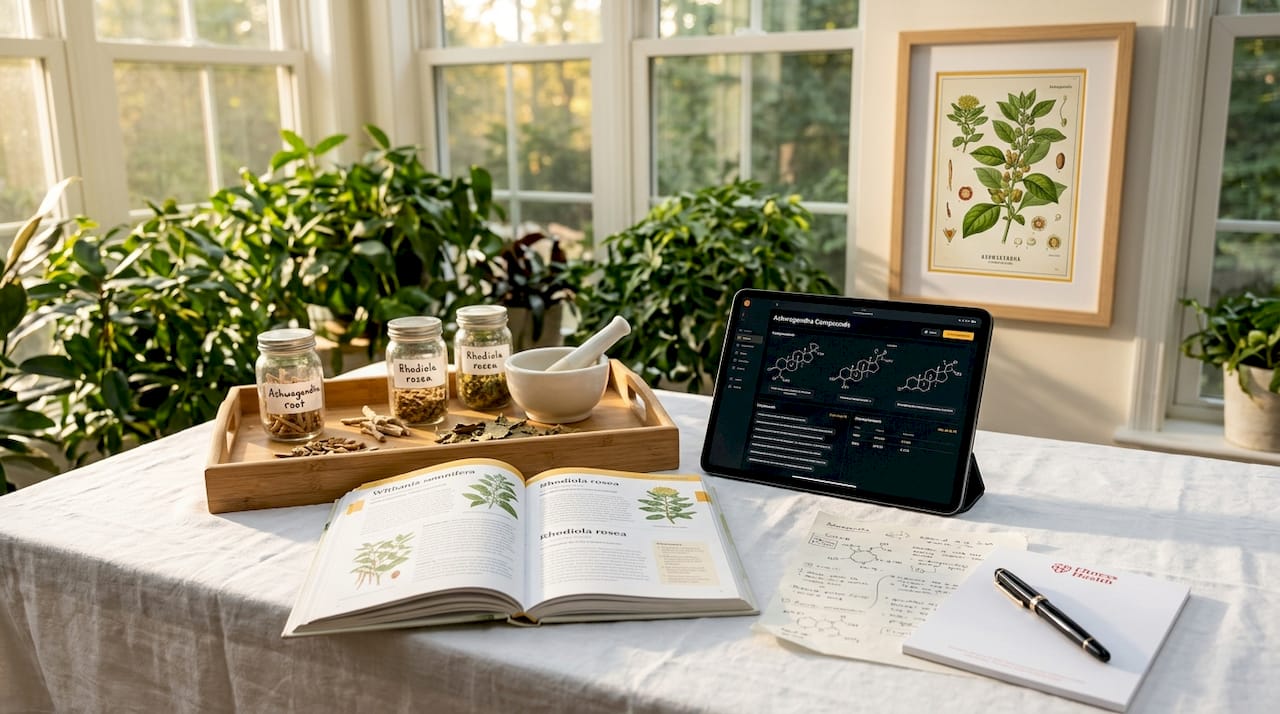
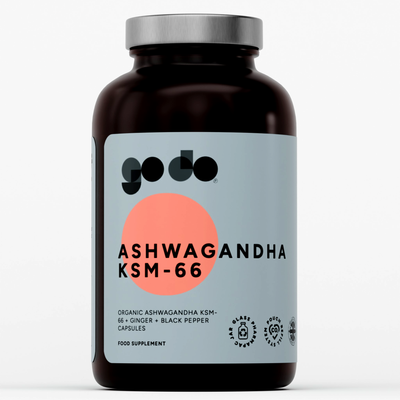
Ashwagandha (Withania somnifera) is the most clinically validated adaptogen for hormonal balance and adaptogens research. Its withanolides inhibit cortisol synthesis directly and exhibit GABA-mimetic activity that reduces HPA axis reactivity. For women in perimenopause, this translates to reduced hot flashes and improved mood. For men under chronic stress, it supports testosterone recovery by reducing cortisol’s suppressive effect on the HPG axis.
Rhodiola rosea targets the nervous system more than the adrenal glands. Its active compounds, rosavins and salidroside, increase serotonin and dopamine availability, which reduces the perceived intensity of stress and lowers the HPA response. Rhodiola is particularly useful for mental fatigue and burnout patterns where cortisol is blunted rather than elevated.
Panax ginseng works through ginsenosides that modulate the HPA axis and support mitochondrial energy production. Its anti-inflammatory effects via NF-κB suppression reduce the cellular stress burden that drives cortisol dysregulation. Ginseng also has antioxidant and immune effects that support overall endocrine resilience.
Eleutherococcus senticosus (Siberian ginseng) is the least studied of the four but shares HPA axis modulation properties. It is commonly used for physical endurance and immune support, with secondary benefits for stress-related hormonal disruption. Evidence in humans remains thinner than for ashwagandha or Rhodiola.
Pro Tip: Ashwagandha and Rhodiola are not interchangeable. If your cortisol is chronically high and you feel wired but tired, ashwagandha is the better fit. If you feel flat, unmotivated, and mentally foggy, Rhodiola’s dopamine support is more aligned with your pattern.
Common misconceptions about adaptogens and hormone balance
The biggest misconception about adaptogenic herbs for hormones is that they directly normalize estrogen, progesterone, or thyroid hormones on demand. They do not. Adaptogens influence cortisol regulation and nervous system balance rather than directly regulating classic sex or thyroid hormones. Treating them as a substitute for hormone therapy in cases of diagnosed deficiency is a clinical error.
The second misconception is speed. Many people expect results within days. The reality is that cortisol and hormone changes from adaptogen supplementation emerge over several weeks of consistent use. Multi-week trials are the standard in clinical research for a reason. If you stop after two weeks because you feel nothing, you have not given the mechanism time to operate.
Here is what adaptogens can and cannot do for natural hormone regulation:
- Can do: Reduce elevated cortisol, support HPA axis recovery, improve stress resilience, modestly support testosterone in men, ease menopausal symptoms
- Cannot do: Replace estrogen in menopause, correct hypothyroidism, substitute for progesterone, override a diet that chronically spikes blood sugar
- Requires: Consistent use over 6 to 12 weeks, standardized extracts, and a foundation of adequate sleep and nutrition
- Needs professional oversight: Any diagnosed hormone disorder, pregnancy, or use alongside hormone medications
Adaptogens work best as one layer in a broader strategy. Nutrition supports hormone balance at a foundational level, and adaptogens amplify that foundation. They do not replace it. Stress management practices, consistent sleep, and resistance training all move the same cortisol and testosterone levers that adaptogens target. The combination is more powerful than any single intervention.
How to use adaptogens effectively for hormone health
Getting results from adaptogens depends on three variables: product quality, dosing consistency, and lifestyle context. Here is a practical sequence for incorporating them into your routine.
-
Choose standardized extracts. For ashwagandha, look for products standardized to at least 5% withanolides. For Rhodiola, seek extracts standardized to 3% rosavins and 1% salidroside. Generic root powders with no standardization deliver unpredictable bioactive content and inconsistent results.
-
Start with one adaptogen. Adding ashwagandha, Rhodiola, and ginseng simultaneously makes it impossible to identify what is working. Start with the herb most aligned with your stress pattern, use it for eight weeks, then assess.
-
Use clinically relevant doses. Ashwagandha studies showing cortisol reduction typically use 300 to 600 mg of standardized extract daily. Rhodiola studies use 200 to 400 mg. Doses below these ranges are unlikely to produce measurable hormonal effects.
-
Time your doses strategically. Ashwagandha taken at night leverages its GABA-mimetic calming effect to improve sleep quality, which itself lowers cortisol. Rhodiola taken in the morning supports daytime mental energy without disrupting sleep.
-
Pair with foundational lifestyle habits. Adaptogens support stress resilience but do not replace sleep, nutrition, and stress management as the primary drivers of hormone health. Aim for seven to nine hours of sleep, adequate protein intake, and at least one structured stress-reduction practice weekly.
-
Monitor and adjust. Track energy, sleep quality, mood, and any hormone-related symptoms across your first eight to twelve weeks. If you have access to cortisol testing, a follow-up salivary panel at week eight gives you objective data on whether the intervention is working.
Key takeaways
Adaptogens balance hormones indirectly by normalizing cortisol-driven HPA axis dysregulation, which allows downstream endocrine systems to self-correct over time.
| Point | Details |
|---|---|
| HPA axis is the primary target | Adaptogens regulate cortisol signaling, not estrogen or thyroid hormones directly. |
| Ashwagandha has the strongest evidence | A 2026 meta-analysis of 23 trials confirmed significant cortisol reduction and testosterone support in men. |
| Standardization determines effectiveness | Extracts standardized to specific bioactive content consistently outperform unstandardized powders. |
| Effects take weeks, not days | Clinical trials show measurable hormone changes after multi-week continuous use. |
| Lifestyle is non-negotiable | Sleep, nutrition, and stress management amplify adaptogen effects and cannot be replaced by supplementation. |
My take on adaptogens and hormone health
I have followed the adaptogen research closely for years, and the pattern I keep seeing is this: the people who get the most from these herbs are the ones who treat them as a support layer, not a solution. The clinical data on ashwagandha is genuinely impressive. A cortisol reduction with an SMD of negative 1.18 across nearly 1,700 patients is not a placebo signal. But I have also seen people take high-quality ashwagandha while sleeping five hours a night and wondering why nothing changed.
The honest truth about adaptogens and endocrine health is that the HPA axis responds to everything. Your sleep debt, your training load, your blood sugar swings, your relationship stress. Adaptogens modulate one input into that system. They cannot override the others. What they can do, when used correctly with standardized extracts at clinical doses over eight or more weeks, is meaningfully reduce the cortisol burden that is suppressing your testosterone, disrupting your thyroid, and keeping your body in a state of low-grade alarm.
My practical advice: start with ashwagandha if you are dealing with high-stress, poor sleep, or perimenopausal symptoms. Use Rhodiola if your dominant pattern is mental fatigue and low motivation. Check the standardization on the label before you buy anything. And give it twelve weeks before you decide it is not working. The women’s health applications in particular are underappreciated, especially for perimenopause where cortisol management has a direct line to symptom severity.
The research gaps are real. We need more large-scale trials on Eleutherococcus, more data on women’s sex hormone responses, and better standardization across the supplement industry. But the core mechanism, HPA axis modulation driving indirect hormonal rebalancing, is well-supported and worth acting on.
— Rene
Support your hormone health with Fitnesshealth
Fitnesshealth carries a curated range of adaptogen supplements formulated to clinical standards, including ashwagandha extracts standardized to 5% withanolides and Rhodiola products with verified rosavin content. Every product on the platform is selected to match the dosing ranges validated in clinical research, so you are not guessing at bioactive content. Alongside the supplement range, Fitnesshealth offers fitness and nutrition programs that integrate stress management, recovery, and hormonal health into a single structured approach. If you are ready to move beyond generic wellness advice and build a protocol grounded in evidence, Fitnesshealth is the place to start.
FAQ
What does “adaptogens balance hormones” actually mean?
It means adaptogens normalize cortisol-driven HPA axis dysregulation, which allows downstream hormones like testosterone and thyroid hormones to recover indirectly. They do not directly alter estrogen, progesterone, or thyroid hormone levels.
How long does it take for adaptogens to affect hormone levels?
Clinical trials consistently show measurable cortisol and hormone changes after several weeks of use, typically six to twelve weeks of continuous supplementation at clinically relevant doses.
Is ashwagandha the best adaptogen for hormone balance?
Ashwagandha has the strongest clinical evidence for hormonal effects, with a 2026 meta-analysis confirming significant cortisol reduction and testosterone support in men. Rhodiola rosea is a strong alternative for stress-related mental fatigue and burnout patterns.
Can women use adaptogens for hormone balance?
Yes. Research on menopausal women shows ashwagandha improves symptom scores through HPA modulation. However, effects on female sex hormones like estrogen are indirect and modest, and adaptogens should not replace prescribed hormone therapy when clinically indicated.
Do adaptogens work without lifestyle changes?
The evidence is clear that adaptogens work best alongside sleep, nutrition, and stress management. Used in isolation without addressing foundational lifestyle factors, their hormonal effects are significantly reduced.