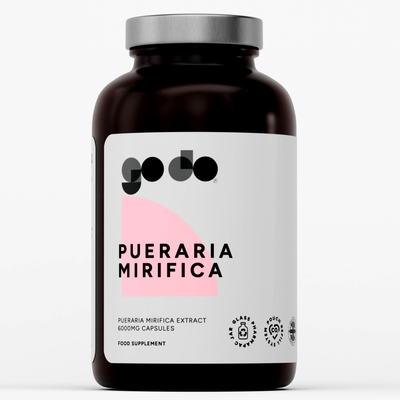
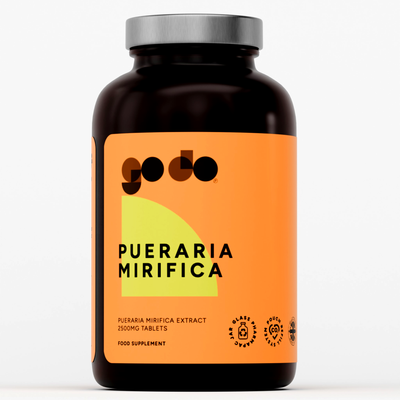
Pueraria mirifica is often promoted online as a natural way to change breast size, ease menopause symptoms or support transition. But “natural” doesn’t mean inactive: this Thai herb contains compounds that can interact with oestrogen receptors. Human research is limited, and the changes shown in online before-and-after posts are rarely independently verified. For a useful starting point, the systematic review of clinical studies in menopausal women explains why the evidence is still far from conclusive.
Table of contents
- What is Pueraria mirifica?
- Pueraria mirifica results: what the evidence says
- Before-and-after claims and timelines
- Pueraria mirifica for men
- Pueraria mirifica for women and menopause
- Pueraria mirifica and MTF transition
- Safety, side effects and who should avoid it
- How to evaluate a supplier
- Frequently asked questions
- Recommended reading
What is Pueraria mirifica?
Pueraria mirifica, also called kwao krua, is a plant native to Thailand. Its roots contain phytoestrogens, including compounds known as miroestrol and deoxymiroestrol. These can act on oestrogen receptors, although the strength and effects of a commercial product in a person are not predictable from the label alone.
That matters because this is not simply a cosmetic ingredient. A product marketed for breast growth or “hormone balancing” may have biological activity, yet still lack dependable evidence about its dose, effects or long-term safety. Different plant material and manufacturing processes can also produce extracts with different compositions.
Pueraria mirifica results: what the evidence says
The research doesn’t support the dramatic promises often attached to Pueraria mirifica. Human studies are few, generally small and short, and do not establish consistent, lasting results.
Research has mainly explored:
- Menopause symptoms: A systematic review found eight small studies involving 309 menopausal participants. Some reported improvements in symptom scores, but differences in study design, product preparation and controls make the overall evidence inconclusive.
- Short-term safety in postmenopausal women: One controlled study followed 71 women for 24 weeks. Its results apply only to the particular preparation, doses and participants studied; they can’t establish safety for other products or longer-term use.
- Vaginal symptoms: Small studies have examined local vaginal preparations. Their findings cannot be used to assume that oral supplements have the same effects or safety profile.
- Breast enlargement: There is no strong clinical evidence that Pueraria mirifica reliably increases breast size in men or women. Advertising claims are not a substitute for well-designed trials that objectively measure breast volume.
In other words, a possible biological effect is not the same as a proven health benefit. The limited research on symptoms does not confirm that Pueraria mirifica is an effective treatment, and it is not a proven alternative to prescribed hormone therapy.

Before-and-after claims and timelines
Search for “Pueraria mirifica before and after” and you’ll find plenty of striking claims. The hard part is checking whether the images show the same person, taken under comparable conditions, over a documented period, with the product and dose independently verified. Lighting, posture, camera angle, clothing and other changes can affect appearance too.
We’ve deliberately left before-and-after photos out of this article. We cannot identify a credible set of independently verified, standardised public images that demonstrates results from Pueraria mirifica. Marketing pictures, unverifiable user posts or generated images could easily give a misleading impression.
There is also no reliable timeline for Pueraria mirifica results. Because effects are not well established, claims that promise specific changes within a set number of days or weeks should be treated as a red flag. No trustworthy evidence-based schedule can tell you when, or whether, you will notice a change.
Pueraria mirifica for men
For men searching “Pueraria mirifica male before after,” the main point is simple: there is no good evidence that it provides a desired male-enhancement benefit. Its oestrogenic activity is a reason for caution, not a reason to experiment.
Possible effects people should be aware of include breast tenderness or gynaecomastia (breast tissue growth). Reduced libido is also reported anecdotally, but that does not establish how often it happens or prove the cause. Long-term safety in men has not been established.
We don’t recommend using Pueraria mirifica for male enhancement or self-directed hormone changes. If you notice breast changes, a lump, nipple discharge, pain or other new symptoms, stop taking the product and speak with a GP.
Pueraria mirifica for women and menopause
Some small Thai studies have explored Pueraria mirifica for menopause-related symptoms, including vaginal dryness and other discomforts. This is an area of research, not proof that the herb works or that it is a safe, regulated replacement for hormone replacement therapy (HRT). Breast-enhancement claims remain supported by weak evidence.
If menopause symptoms are affecting your day-to-day life, discuss options with a GP or pharmacist. Prescribed treatments can be chosen and monitored for your circumstances; a supplement’s “natural” label does not make it interchangeable with them.
Avoid using Pueraria mirifica without medical advice if you are pregnant or breastfeeding, have a history of hormone-sensitive cancer (including breast, ovarian or uterine cancer), endometriosis, fibroids or liver disease, or take hormonal contraception or HRT. If you are unsure whether a condition or medication is relevant, ask your clinician or pharmacist before taking it.
Pueraria mirifica and MTF transition
If you’re exploring transition-related care, you deserve respectful support and reliable medical information. Pueraria mirifica is not a substitute for gender-affirming hormone therapy prescribed by a specialist. Its oestrogenic activity is not medically supervised, dose-controlled or monitored in the way prescribed care can be.
Taking it could also complicate conversations about your medicines, hormone measurements and possible interactions. If you’re considering transition-related care, speak with your GP or an NHS gender specialist. They can discuss evidence-based options and appropriate monitoring. Please don’t rely on Pueraria mirifica as a DIY transition route.

Safety, side effects and who should avoid it
The full safety picture is not known. Potential concerns include hormonal effects such as menstrual changes and breast tenderness, alongside uncertainty about long-term use. Supplements can vary in quality, and the contents may not always match the label. Misidentified, contaminated or adulterated products are another reason to be cautious.
Avoid self-use and ask a clinician for advice if you have a hormone-related condition or take HRT, hormonal contraception or other hormone medicines. Also seek advice before use if you are pregnant or breastfeeding, or have a history of hormone-sensitive cancer, endometriosis, fibroids or liver disease.
A few clear safety rules are worth keeping in mind:
- Don’t use it as a replacement for prescribed HRT or gender-affirming care.
- Don’t assume that products with the same plant name have the same composition or effects.
- If you have a hormone-related condition, take hormone medication, or notice unexpected changes while using it, stop and consult a GP.
- Seek urgent medical help for severe or rapidly worsening symptoms.
- If health problems persist, or you have ongoing symptoms such as insomnia or anxiety, speak with a GP rather than trying to manage them with an unverified supplement.
How to evaluate a supplier
We’re not ranking UK brands. Independent, verified information on specific Pueraria mirifica products is limited, and a brand comparison could imply a level of evidence we don’t have. If you’re assessing a supplier, these are useful questions to ask. They are not a guarantee that a product is suitable or safe.
| What to check | What a more transparent supplier should provide |
|---|---|
| Batch testing | A certificate of analysis that matches the product’s batch, ideally from an independent, accredited laboratory. |
| Ingredient identity | Clear botanical identification, plant part used and extract details. |
| Standardisation and labelling | A plain explanation of the extract and any standardised markers, rather than a vague ingredient listing. |
| Compliance | Evidence that the product meets applicable food-supplement rules in the market where it is sold. UK requirements may differ between Great Britain and Northern Ireland. |
| Sourcing and quality controls | Information about origin, traceability and testing for relevant contaminants. |
| Marketing claims | Realistic language. Promises of dramatic, guaranteed breast growth or precise timelines are warning signs. |
| Ingredient blends | A complete ingredient list with amounts. Be wary of “proprietary blends” that hide quantities. |
A label or quality logo by itself does not prove clinical effectiveness, safety or regulatory approval. If a supplier cannot explain its testing, ingredients and legal status clearly, it may be better to avoid the product.
Frequently asked questions
Does Pueraria mirifica work for breast enhancement?
There is no strong clinical evidence that it reliably enlarges breasts in men or women. Before-and-after marketing claims are not proof of effectiveness.
How long before you see results?
There is no dependable timeline. Effects are not well established, so promises of specific changes within a certain number of weeks are not evidence-based.
What are the side effects for men?
Hormonal effects are a concern. Breast tenderness or gynaecomastia are potential risks, and reduced libido is reported anecdotally. The evidence is limited, and long-term safety in men is unknown.
Is Pueraria mirifica safe?
Its safety is not established for everyone or for long-term use. Product quality and composition can vary. People with hormone-related conditions or taking hormone medicines should consult a GP or pharmacist before use.
Can it be used during menopause?
Small studies have explored menopause symptoms, but the evidence is inconclusive. It is not a proven or regulated alternative to prescribed HRT. Discuss persistent or disruptive symptoms with a GP.
Is it safe for MTF transition?
It is not a substitute for prescribed gender-affirming care. Speak with a GP or NHS gender specialist about safe, evidence-based options and monitoring.
Can it interact with HRT or the pill?
An interaction is possible because Pueraria mirifica contains compounds with oestrogenic activity. Don’t combine it with HRT or hormonal contraception without medical advice.
Recommended reading
- Explore Fitness Health’s Women’s Health articles for more general wellbeing content.
- Browse the Health blog for evidence-aware health topics.
- For guidance on choosing general supplements, visit our Vitamins & Minerals articles.
At Fitness Health, we believe supplement decisions should start with clear information, not dramatic promises. Subscribe to our newsletter for more evidence-minded wellness guidance, and speak with a GP or pharmacist before trying a product that may affect your hormones.