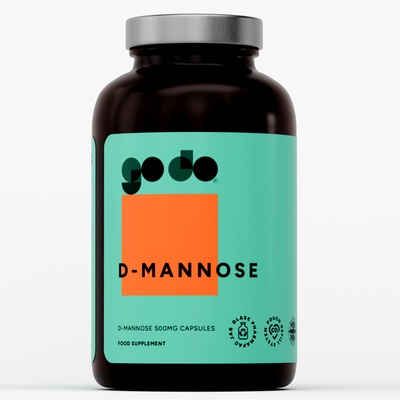
Yes, for most healthy adults, taking a probiotic during an antibiotic course is reasonable, and it has the best evidence for one job: lowering the chance of antibiotic-associated diarrhea. Start within the first two days of your first antibiotic dose, take the probiotic about two hours apart from the antibiotic, and choose a product that names the exact strain and a clinically studied dose. What probiotics have not been shown to do is rebuild your gut microbiome to where it was before. This guide covers timing, strains, doses, the Macrobid question, and who should talk to a clinician first.
Key Takeaways
- A 2021 meta-analysis of 42 studies found that taking probiotics alongside antibiotics reduced the risk of antibiotic-associated diarrhea in adults by 37%.
- Start within 2 days of your first antibiotic dose and separate the two by about 2 hours. Yeast-based probiotics are the exception.
- Strain and dose matter more than the label “probiotic”: look for a named strain such as Lactobacillus rhamnosus GG or Saccharomyces boulardii at a studied dose.
- Probiotics do not restore your microbiome to its pre-antibiotic state, and people with weakened immune systems or serious illness should ask their prescriber first.
Table of Contents
- Why antibiotics upset your gut
- What the evidence says probiotics can do
- When to take probiotics with antibiotics
- Choosing a probiotic: strain and dose
- Probiotics with Macrobid (nitrofurantoin)
- Who should ask a clinician first
- What if you skip the probiotic?
- Food that supports your gut during a course
- Our perspective
- Shop gut health support
- FAQ
- Sources
Why antibiotics upset your gut
Antibiotics kill the bacteria causing your infection, but they also hit the bacteria that live in your intestines. According to the NIH Office of Dietary Supplements, this disruption can reduce the microbiome’s normal metabolic functions and its ability to keep invaders out, and it speeds up intestinal motility. Up to 30% of people who take antibiotics develop antibiotic-associated diarrhea.
That is why loose stools, cramping and bloating are so common in the middle of a course. In a smaller number of people, the disruption lets Clostridioides difficile overgrow, which causes a more serious diarrheal illness that needs medical care. Severe, watery or bloody diarrhea, high fever or intense abdominal pain during or after antibiotics is a reason to call your doctor, not to reach for a supplement.
What the evidence says probiotics can do
The supported benefit is prevention of diarrhea, not a general gut reset.
- Antibiotic-associated diarrhea: The 2021 meta-analysis of 42 studies and 11,305 participants linked co-administration of probiotics and antibiotics to a 37% lower risk in adults.
- C. difficile diarrhea: A 2025 Cochrane review of 39 studies and 9,955 participants found probiotics reduced the risk of C. difficile-associated diarrhea by 60% in the complete case analysis. The same review concluded that short-term probiotic use during antibiotics is likely not linked to adverse effects in people who are not immunocompromised.
- Microbiome recovery: This is where the claims outrun the data. A 2024 review in Nature Reviews Gastroenterology & Hepatology states that current evidence does not support probiotics restoring the gut microbiota to its pre-antibiotic state, and that no data yet causally connect the clinical benefits to microbiome recovery.
Both things are true at once. A probiotic can make a diarrhea-free course more likely, and it will not undo what the antibiotic did to your bacterial diversity. Your microbiome tends to rebound on its own over time, helped by what you eat.
When to take probiotics with antibiotics

Timing has two parts: when you start, and how you separate the doses.
Start early
The NIH Office of Dietary Supplements notes that systematic reviews report a benefit when certain probiotic treatments are started within 2 days of the first antibiotic dose for children and for adults aged 18 to 64. Waiting until the diarrhea shows up misses the point. Begin the probiotic the same day you pick up the prescription, or the next.
Space the doses
Most probiotic bacteria are sensitive to antibiotics. The International Scientific Association for Probiotics and Prebiotics (ISAPP) says that spacing doses by about 2 hours may reduce the chance of the antibiotic inactivating the probiotic. Yeast-based probiotics such as Saccharomyces boulardii are naturally unaffected by antibacterial drugs.
A simple schedule for someone on an antibiotic twice a day:
| Time | What to take |
|---|---|
| 8:00 a.m. | Antibiotic, with food if your label says so |
| 10:00 a.m. to noon | Probiotic |
| 8:00 p.m. | Antibiotic |
| Bedtime or midafternoon | Second probiotic dose, if your product calls for one |
Follow the food instructions on your antibiotic label first. Your pharmacist can tell you whether your antibiotic has any food or timing rules the probiotic schedule must work around.
Keep going after the last pill?
Continuing a probiotic for 7 to 14 days after the antibiotic ends is a commonly tested strategy, but ISAPP says the best duration is still under study. If you want a practical rule, finish the bottle or package you started, and treat the extra days as optional, not as a proven requirement.
Choosing a probiotic: strain and dose
The best probiotic to take with antibiotics is not a brand. It is a specific strain at a dose that has been tested in people. ISAPP emphasizes that probiotic benefits are strain-specific, so recommendations should rely on clinically tested doses of specific strains for the intended population.
Strains with the most data
The NIH fact sheet highlights Lactobacillus rhamnosus GG (LGG) and Saccharomyces boulardii. A 2023 ESPGHAN position paper recommends 5 billion CFU per day or more of LGG or S. boulardii, started together with the antibiotic, for children at risk of antibiotic-associated diarrhea. If you want to know more about the first, we cover it in our guide to Lactobacillus rhamnosus benefits.
The yeast S. boulardii has a practical advantage: because it is not a bacterium, the antibiotic does not target it, so you can take it at the same time as your dose.
Dose
The Royal Australian College of General Practitioners summarizes evidence that higher doses (above 5 billion CFU a day) work better than lower doses for preventing antibiotic-associated diarrhea. Many shelf products contain far less, or list a total blend without naming strains.
A label checklist
- Full strain name, not just genus and species (for example “GG” after rhamnosus).
- CFU count at expiration, not only at manufacture.
- A dose in the studied range, generally 5 billion CFU a day or more.
- Storage instructions you can follow. Some products need refrigeration.
- Third-party testing or a maker that explains how it checks potency and purity.
Do not choose by the highest number on the front of the bottle alone. A 100 billion blend of unnamed strains tells you less than a 10 billion product with a strain that has a trial behind it.
Probiotics with Macrobid (nitrofurantoin)
People ask this one a lot, since Macrobid is a common prescription for urinary tract infections. Drug interaction references flag the pairing as a timing issue, not a danger. Drugs.com lists the interaction between nitrofurantoin and Lactobacillus acidophilus as one where the antibiotic may reduce the probiotic’s efficacy, says the clinical significance has not been established, and suggests taking the probiotic at least 1 to 2 hours before or after the antibiotic.
In plain terms: you can usually take both, with a gap, and a yeast-based product avoids the issue. A short UTI course is a good moment to ask your pharmacist, since they can check your full medication list. Keep in mind that probiotics are not a treatment for the infection itself, so take every dose of the antibiotic as prescribed.

Who should ask a clinician first
Short-term probiotic use is generally well tolerated by healthy people, but this is a live-organism product, and some people should not self-start. Talk to your prescriber or pharmacist before taking one if any of these apply:
- You are immunocompromised, for example during chemotherapy or after a transplant.
- You have a central venous catheter, a serious illness, or are in the hospital.
- You have a history of C. difficile or are on broad-spectrum antibiotics for a serious infection. A UK hospital protocol reserves probiotics for high-risk patients on broad-spectrum antibiotics, with excluded patients getting a risk and benefit assessment by the prescribing team.
- You are pregnant, or you are giving a probiotic to an infant.
The World Gastroenterology Organisation advises that patients at high risk of C. difficile diarrhea should be told about both the potential benefits and risks of probiotics during antibiotics. Even in healthy people, mild gas or bloating can occur; our page on probiotic side effects explains what is common and what is rare.
What if you skip the probiotic?
Nothing dramatic happens to most people. Many go through an antibiotic course with no digestive problems at all. Without a probiotic, your odds of antibiotic-associated diarrhea are simply higher than they could be, based on the pooled trial data above. Not taking one is not a mistake, and it does not mean your gut will fail to recover.
Mixed expert opinion exists here. Some dietitians advise against supplements during and just after antibiotics unless a doctor says otherwise, and prefer gentle food-based support. That is a fair position if you have a complicated condition such as inflammatory bowel disease. For a healthy adult with a standard course, the trial evidence leans toward taking a well-chosen strain.
Food that supports your gut during a course
Food will not replace a studied probiotic strain, but it helps your gut while you wait to recover. Harvard Health notes that some doctors suggest adding fermented foods such as yogurt or kefir while on certain antibiotics, which is worth raising with your own doctor.
Practical choices:
- Plain yogurt or kefir with live cultures, a few times a week.
- Fiber from oats, beans, lentils, bananas and cooked vegetables, once your stomach settles.
- Plenty of fluids if you have loose stools.
- Fewer ultra-processed foods and less alcohol, which can both irritate a stressed gut. (Many antibiotics also carry their own alcohol warnings, so read your label.)
For a deeper look at eating for gut health, see our gut microbiome health improvement guide and our probiotic best practices.
Our perspective
We sell supplements, and we think the honest line is narrower than most marketing. A probiotic is a reasonable tool for lowering the odds of diarrhea on antibiotics, and only when the strain, dose and timing match what has been studied. It is not a way to “repair” your gut, and no product we could sell you changes that.
Our approach is to explain the evidence first and the product second. We test what we sell in-house, we favor formulations with a scientific basis, and we would rather you ask your pharmacist a question than guess. If you are immunocompromised or on a complicated regimen, the decision belongs with your prescriber, and we would tell you the same in person.
— Rene Harwood
Shop gut health support
If you have decided a probiotic fits your plan, our gut health collection brings together probiotics and digestive support products, with the education to match. Read the strain and CFU details on each product page, compare them against the label checklist above, and pair your choice with the Vitamins & Minerals range if your diet took a hit during illness.

Athletes who train through a course of antibiotics may also want to read how probiotics benefit competitive athletes.
FAQ
Is it worth taking probiotics when you’re on antibiotics?
For most healthy adults, yes, if your goal is preventing diarrhea. Pooled trial data show a meaningful reduction in antibiotic-associated diarrhea risk. It is less clear that probiotics help your microbiome recover, so do not expect more than that.
Which probiotic is best to take while on antibiotics?
Look for a strain with trial evidence, mainly Lactobacillus rhamnosus GG or Saccharomyces boulardii, at roughly 5 billion CFU a day or more. Check that the label names the full strain. The yeast option is simpler to time, since antibiotics do not affect it.
How far apart should I take probiotics and antibiotics?
About 2 hours is the common guidance for bacterial probiotics. Start the probiotic within 2 days of your first antibiotic dose. If you take a yeast-based product, spacing matters less.
Should I keep taking probiotics after the antibiotics end?
Many studies continue for 7 to 14 days after the course, but the best duration is still unknown. It is a reasonable option, not a requirement. If symptoms persist or get worse after you finish, see your clinician.
Can I take a probiotic with Macrobid?
Usually yes, with a gap of 1 to 2 hours between the two. Interaction references describe it as a timing question with an unestablished clinical impact. Ask your pharmacist if you take other medicines or have a weakened immune system.
Sources
- Probiotics for the prevention of antibiotic-associated diarrhea, 2021 meta-analysis (PubMed)
- Cochrane review: probiotics to prevent C. difficile diarrhea associated with antibiotic use
- NIH Office of Dietary Supplements: Probiotics, Health Professional Fact Sheet
- ISAPP clinician resource: probiotic use alongside antibiotics
- RACGP: probiotics for the prevention of antibiotic-associated diarrhea
- Nature Reviews Gastroenterology & Hepatology: antibiotic-perturbed microbiota and the role of probiotics
- Protocol for the use of probiotics (NHS formulary)
- World Gastroenterology Organisation practice guideline on probiotics and prebiotics
- Harvard Health: Should you take probiotics with antibiotics?
- Drugs.com: interactions between Lactobacillus acidophilus and Macrobid