Antioxidants are defined as compounds that neutralize reactive oxygen species (ROS), protecting cells from oxidative damage caused by intense exercise. The role of antioxidants in recovery is not simply about taking more supplements. It requires understanding when, what, and how much to use. Vitamins C and E, polyphenols like tart cherry anthocyanins, curcumin, and thiol donors such as N-acetylcysteine each work through distinct mechanisms. The core principle: antioxidants reduce short-term muscle damage and soreness, but poorly timed or excessive doses can interfere with the very training signals your body needs to grow stronger.
How do antioxidants aid muscle recovery after exercise?
Every hard training session generates ROS as a byproduct of elevated oxygen consumption and metabolic stress. These free radicals attack cell membranes, proteins, and DNA, contributing to the muscle damage and inflammation you feel as soreness in the 24 to 72 hours after a workout. Antioxidants neutralize these free radicals before they accumulate to damaging levels, which is the central mechanism behind their role in exercise recovery.
Your body runs two lines of defense. The endogenous system includes enzymes like superoxide dismutase, catalase, and glutathione peroxidase, which your body produces in response to regular training. Dietary antioxidants from food and supplements form the second line, stepping in when the endogenous system is overwhelmed, particularly during high-volume training blocks, competition periods, or recovery from injury.
The critical nuance most athletes miss: ROS are functional signals. They trigger mitochondrial biogenesis, muscle protein synthesis, and hypertrophic adaptation. Scavenging all ROS indiscriminately does not just reduce soreness. It can mute the biological instructions your muscles need to adapt to training stress. This is why antioxidant strategy requires precision, not volume.
- Oxidative stress from exercise peaks within 1 to 4 hours post-workout, then gradually resolves over 24 to 72 hours.
- Inflammatory cytokines like IL-6 and TNF-alpha rise alongside ROS, contributing to DOMS and reduced force production.
- Dietary polyphenols from sources like tart cherry, pomegranate, and blueberries reduce both oxidative stress markers and inflammatory cytokines without fully suppressing ROS signaling.
- Vitamins C and E at high doses near training sessions present a different risk profile, discussed in detail below.
Pro Tip: Target antioxidant-rich foods and lower-dose polyphenol supplements in the 24 to 72 hour recovery window, not immediately before or during training, to support repair without blocking adaptation signals.
Which antioxidants actually work for soreness and recovery?
The evidence base for antioxidants and muscle recovery is not uniform. Some compounds have strong, consistent data. Others show modest or context-dependent effects. Here is what the research actually supports.
Tart cherry (Montmorency and Vistula varieties) is the most studied polyphenol source for athlete recovery. Montmorency tart cherry consumption showed significant muscle strength recovery effects in 7 of 14 studies, and significant DOMS reduction in 6 of 22 studies up to 72 hours post-exercise. That is not a perfect record, but it is among the strongest in the polyphenol category. A separate study using freeze-dried Vistula tart cherry around a marathon found lower hs-CRP levels post-race (7.9 vs. 12.5 mg/L in the control group), confirming anti-inflammatory effects even when functional recovery differences were modest.
Curcumin from turmeric shows consistent reductions in DOMS and inflammatory markers in resistance-trained athletes, though bioavailability is low without piperine or phospholipid delivery systems. Pomegranate extract has demonstrated reduced muscle soreness and faster strength recovery in several trials. N-acetylcysteine (NAC) replenishes glutathione and shows benefits during high oxidative load periods, though daily use is not recommended for healthy athletes in normal training.
| Antioxidant | Primary evidence | Best use case |
|---|---|---|
| Tart cherry (Montmorency) | DOMS reduction, strength recovery | Pre and post competition blocks |
| Curcumin + piperine | Inflammation, soreness reduction | High-volume training phases |
| Pomegranate extract | Strength recovery, oxidative markers | Resistance training recovery |
| Vitamin C (low dose) | Immune support, collagen synthesis | Deficiency correction, travel |
| N-acetylcysteine | Glutathione replenishment | Extreme training or illness stress |
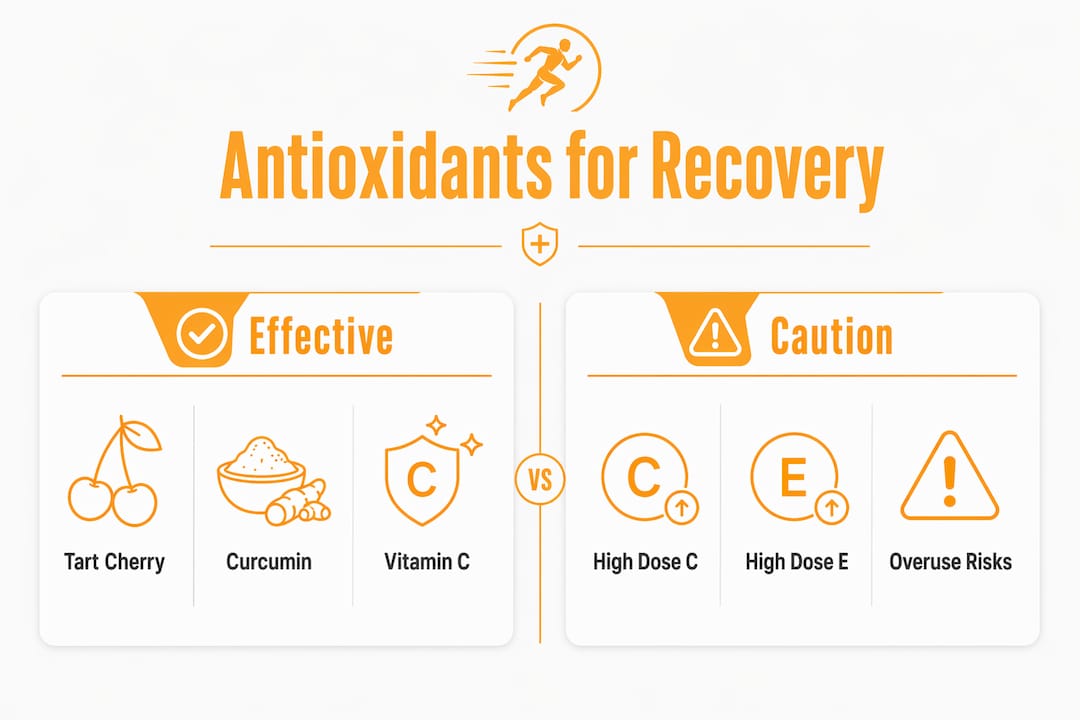
Vitamins C and E deserve separate attention. At moderate dietary levels, they support immune function and collagen repair. At high supplemental doses (1000 mg vitamin C and 235 mg vitamin E daily), mitochondrial signaling is measurably blunted after 11 weeks of training. This does not mean you should avoid these vitamins. It means dose and context determine whether they help or hinder.
Pro Tip: When choosing a tart cherry supplement, look for products that report anthocyanin content in milligrams. Standardized polyphenol dosing allows you to compare products accurately and replicate the doses used in clinical studies.
What are the risks of antioxidant overuse near training?
The concept of Redox-Adaptive Periodization captures the most sophisticated current thinking on antioxidant use for athletes. The framework, supported by the 2026 ISSN position stand, recognizes that antioxidant supplementation is context-dependent and most appropriate for correcting nutrient insufficiencies or managing high-stress periods, not as a daily default.
Here is how the risk profile breaks down across different scenarios:
- Chronic high-dose vitamins C and E during adaptation phases directly attenuate redox-sensitive signaling pathways that drive mitochondrial biogenesis and muscle hypertrophy. If you are in a strength or endurance-building block, daily megadose supplementation works against your goals.
- Peri-exercise antioxidant loading (taking high-dose supplements immediately before or during training) is the highest-risk timing window. ROS generated during the session serve as the primary training signal, and scavenging them at that moment reduces the adaptive stimulus.
- Targeted use during competition congestion or travel is where antioxidants earn their place. Environmental stressors like heat and altitude amplify oxidative load and compress recovery windows. Short-term antioxidant buffering during these periods protects performance without the chronic adaptation-blunting risk.
- Food-first polyphenol strategies carry the lowest risk. Whole foods deliver antioxidants alongside fiber, micronutrients, and phytochemicals that modulate absorption and reduce the likelihood of overshooting therapeutic doses.
“The goal is not to eliminate oxidative stress. It is to prevent excessive oxidative damage while preserving the redox signals that make training productive.” This distinction separates athletes who use antioxidants intelligently from those who simply take more supplements and hope for the best.
Your body’s own antioxidant capacity also grows with consistent training. Superoxide dismutase and glutathione levels rise in response to repeated exercise stress. This is one of the strongest arguments for prioritizing training consistency over supplement volume. Supplements fill gaps. They do not replace the adaptations built through progressive overload and recovery.
How to integrate antioxidants into your recovery plan
Practical application comes down to four decisions: food first, supplement selection, timing, and monitoring. Here is how to structure each one.
- Build your dietary foundation first. Berries, tart cherries, leafy greens, nuts, and colorful vegetables provide polyphenols, vitamins C and E, selenium, and zinc at doses that support recovery without the risks of megadose supplementation. Post-workout nutrition built around whole foods covers most athletes’ antioxidant needs during standard training.
- Use tart cherry extract strategically. The strongest evidence supports a 7 to 10 day loading window around competitions, high-volume training blocks, or back-to-back race days. This is not a year-round daily supplement for most athletes.
- Avoid high-dose vitamin C and E supplements during adaptation phases. If you are building a base, adding muscle, or developing aerobic capacity, chronic megadose supplementation is counterproductive. Reserve these for deficiency correction or immune support during illness or travel.
- Account for environmental load. Training in heat, at altitude, or during congested competition schedules increases oxidative burden. These are the windows where targeted antioxidant support from tart cherry, curcumin, or pomegranate extract provides the clearest benefit.
- Track your recovery markers. DOMS severity, grip strength, and subjective readiness scores give you real feedback on whether your antioxidant strategy is working. If soreness is consistently limiting your next session, that is a signal to reassess both training load and recovery nutrition.
Pro Tip: Pair tart cherry juice or extract with a protein-rich recovery meal in the 24 to 48 hour window after your hardest sessions. The muscle recovery benefits of polyphenols are most pronounced when combined with adequate protein for tissue repair.
Key takeaways
The most effective antioxidant strategy for athletes targets the 24 to 72 hour recovery window with food-first polyphenols and selective supplementation, while avoiding chronic high-dose vitamins C and E during adaptation phases.
| Point | Details |
|---|---|
| Antioxidants neutralize ROS | They protect cells from oxidative damage during the 24 to 72 hour post-exercise window. |
| Timing determines benefit or harm | High-dose vitamins C and E near training blunt mitochondrial and hypertrophic signaling. |
| Tart cherry has the strongest data | Montmorency varieties reduce DOMS and support strength recovery in multiple studies. |
| Food-first is the safest baseline | Whole food polyphenols deliver recovery support without the adaptation-blunting risk of megadoses. |
| Periodize your antioxidant use | Reserve supplements for competition blocks, high stress phases, or confirmed deficiencies. |
Why I think most athletes are using antioxidants backward
After years of reviewing sports nutrition research and watching athletes supplement their way through training blocks, the pattern I see most often is this: athletes load up on vitamin C and E during their hardest training phases, exactly when those supplements are most likely to work against them. Then they skip antioxidant support entirely during competition week, when the evidence for tart cherry and polyphenols is actually strongest.
The food-first principle is not a compromise. It is genuinely the smarter strategy for most athletes in most situations. A diet built around berries, cherries, leafy greens, and colorful vegetables delivers antioxidants in the doses and combinations that human physiology evolved to process. The ISSN’s 2026 position stand reinforces this: prioritize endogenous antioxidant capacity through training, and supplement selectively during periods of genuine need.
The athletes I have seen get this right treat antioxidant supplementation the way they treat training load: periodized, purposeful, and tied to specific goals. They use tart cherry extract in the week before and after a major competition. They skip the vitamin megadoses during their strength-building block. They monitor recovery markers and adjust. That is not complicated. It is just disciplined application of what the evidence actually says.
— Rene
Support your recovery with Fitnesshealth

Fitnesshealth carries a curated range of recovery supplements built around the same evidence discussed in this article, including tart cherry extracts with verified anthocyanin content, polyphenol blends, and targeted recovery formulas. Every product is selected to complement a food-first strategy, not replace it. Whether you are managing a heavy competition schedule or pushing through a high-volume training block, the right supplement at the right time makes a measurable difference. Explore the full range of recovery programs and supplements at Fitnesshealth and find the tools that fit your training phase and goals.
FAQ
What is the role of antioxidants in recovery?
Antioxidants neutralize exercise-generated free radicals that cause oxidative stress, cell damage, and inflammation. Their primary benefit appears in the 24 to 72 hour window post-exercise, where they reduce DOMS and support muscle strength recovery.
Can too many antioxidants hurt athletic performance?
Yes. Chronic high-dose vitamins C and E near training sessions attenuate the redox-sensitive signals that drive mitochondrial biogenesis and hypertrophy. The risk is highest with megadose supplementation during adaptation-focused training phases.
What are the best antioxidants for post-workout recovery?
Montmorency tart cherry extract has the strongest evidence base for reducing DOMS and supporting strength recovery. Curcumin with piperine and pomegranate extract also show consistent results in resistance-trained athletes.
When should athletes take antioxidant supplements?
The safest and most effective window is 24 to 72 hours post-exercise, not immediately before or during training. Strategic use around competitions or high-stress training blocks delivers the clearest benefit with the lowest risk of blunting adaptation signals.
Do natural food sources of antioxidants work as well as supplements?
For most athletes in standard training, whole food sources including berries, tart cherries, leafy greens, and nuts provide sufficient antioxidant support without the adaptation-blunting risk of high-dose supplements. Supplements add value during deficiency, illness, or competition congestion periods.