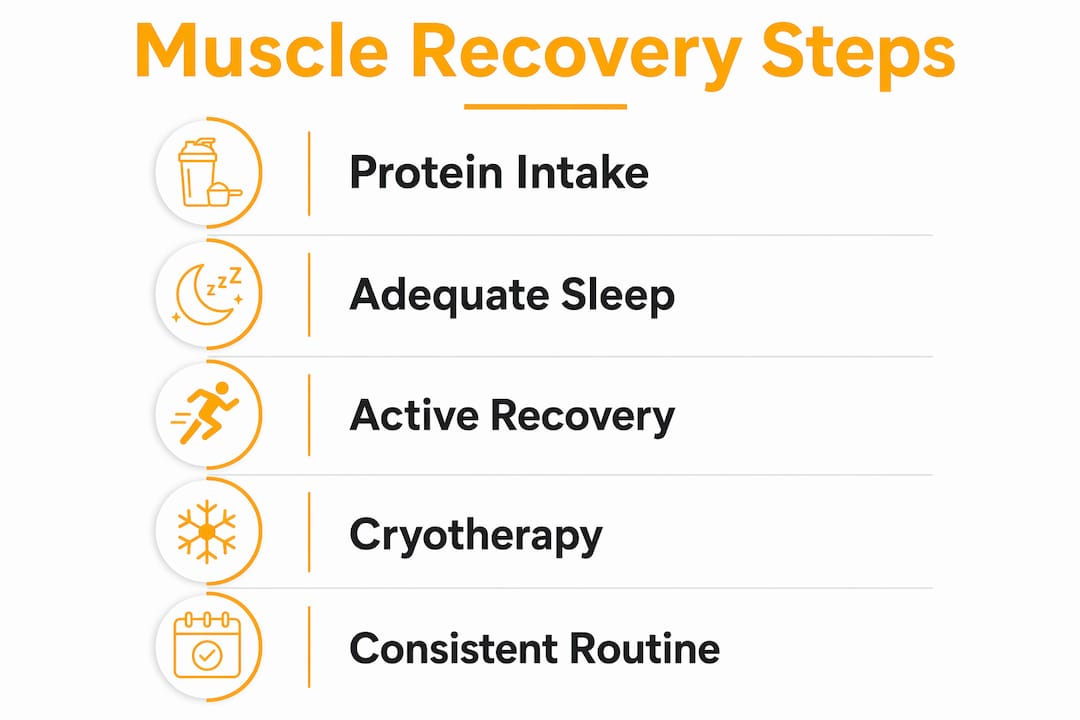
Muscle recovery after training is defined as the biological process by which your body repairs microdamaged muscle fibers, restores energy stores, and adapts to become stronger. The speed of that process depends on four pillars: nutrition, sleep, active recovery, and targeted modalities like cryotherapy. Athletes who treat recovery as a structured discipline rather than passive rest consistently outperform those who rely on time alone. This guide draws on 2026 research to show you exactly how to speed up muscle recovery using evidence-based strategies that work together, not in isolation.
How nutrition supports muscle recovery faster after training
Protein is the raw material your muscles need to rebuild after every session. The ISSN position stand recommends spreading protein intake across the day in doses of 20 to 40 grams every three to four hours rather than chasing a narrow post-workout window. This matters because muscles remain sensitized to protein for at least 24 hours after exercise, meaning total daily intake drives results far more than the exact timing of your shake.
The myth of the 30-minute anabolic window has caused athletes to stress over meal timing when the bigger lever is consistency across the whole day. A practical approach: aim for four protein-rich meals spread evenly, each built around sources like chicken breast, Greek yogurt, eggs, or whey protein. Pairing each meal with complex carbohydrates, such as oats, sweet potato, or brown rice, supports glycogen replenishment and keeps energy available for the next session.
Carbohydrate urgency is also frequently overstated. A moderate resistance session depletes only about 39% of muscle glycogen, so rushing carbs within minutes of finishing is unnecessary unless you train twice in the same day. Athletes with a single daily session can rely on their overall daily carb intake to restore glycogen well before the next workout.
- Consume 20 to 40 grams of protein per meal, four times per day
- Prioritize leucine-rich sources like whey, eggs, and chicken for maximal muscle protein synthesis
- Add complex carbs to every post-workout meal to restore glycogen without spiking insulin unnecessarily
- Athletes training twice daily should prioritize carb intake within one to two hours between sessions
- Hydration supports nutrient transport, so pair every meal with adequate fluid intake
Pro Tip: Before a long overnight fast, increase your protein dose toward the upper end of 40 grams. Research in Sports Medicine shows higher doses are more effective when muscles face a prolonged period without amino acid availability, such as during sleep.
For a deeper look at how spreading protein doses affects recovery outcomes, Fitnesshealth has a dedicated breakdown worth reading alongside this guide.
Does sleep actually speed up muscle healing?
Sleep is the single most underutilized recovery tool in most athletes’ programs. A 2023 randomized controlled trial found that sleep restriction to four hours markedly reduces muscle protein synthesis compared to eight hours, directly slowing the repair of microdamaged fibers. That reduction is not marginal. It means a night of poor sleep can undo the nutritional work you did all day.
The minimum threshold for optimal recovery is seven hours, but elite athletes regularly target eight to ten. During deep sleep, growth hormone secretion peaks, testosterone remains elevated, and cortisol drops. These hormonal conditions create the anabolic environment where muscle fibers actually rebuild. Cutting sleep short disrupts all three simultaneously.
Practical steps to protect sleep quality:
- Set a consistent sleep and wake time, even on rest days, to anchor your circadian rhythm
- Keep your room below 67°F (19°C), since cooler temperatures accelerate sleep onset and improve deep sleep duration
- Avoid screens for 30 minutes before bed to reduce blue light interference with melatonin production
- Limit caffeine after 2 p.m. if you train in the morning or early afternoon
- Consider a casein protein shake before bed to sustain amino acid availability through the night
Pro Tip: If your schedule limits total sleep time, a 20-minute nap between sessions can partially restore neuromuscular readiness. It does not replace full-night sleep, but it reduces perceived fatigue enough to improve training quality.
Fitnesshealth covers the connection between sleep and hormonal recovery in detail, including which supplements support sleep quality for athletes.
What active recovery actually does for sore muscles
Active recovery is defined as low-intensity movement performed after hard training to support circulation, reduce stiffness, and clear metabolic byproducts from muscle tissue. It is not a light workout. The goal is movement, not load. Light walking, easy cycling, and mobility work improve blood flow to damaged tissue and reduce the stiffness associated with delayed-onset muscle soreness (DOMS) more effectively than complete rest.
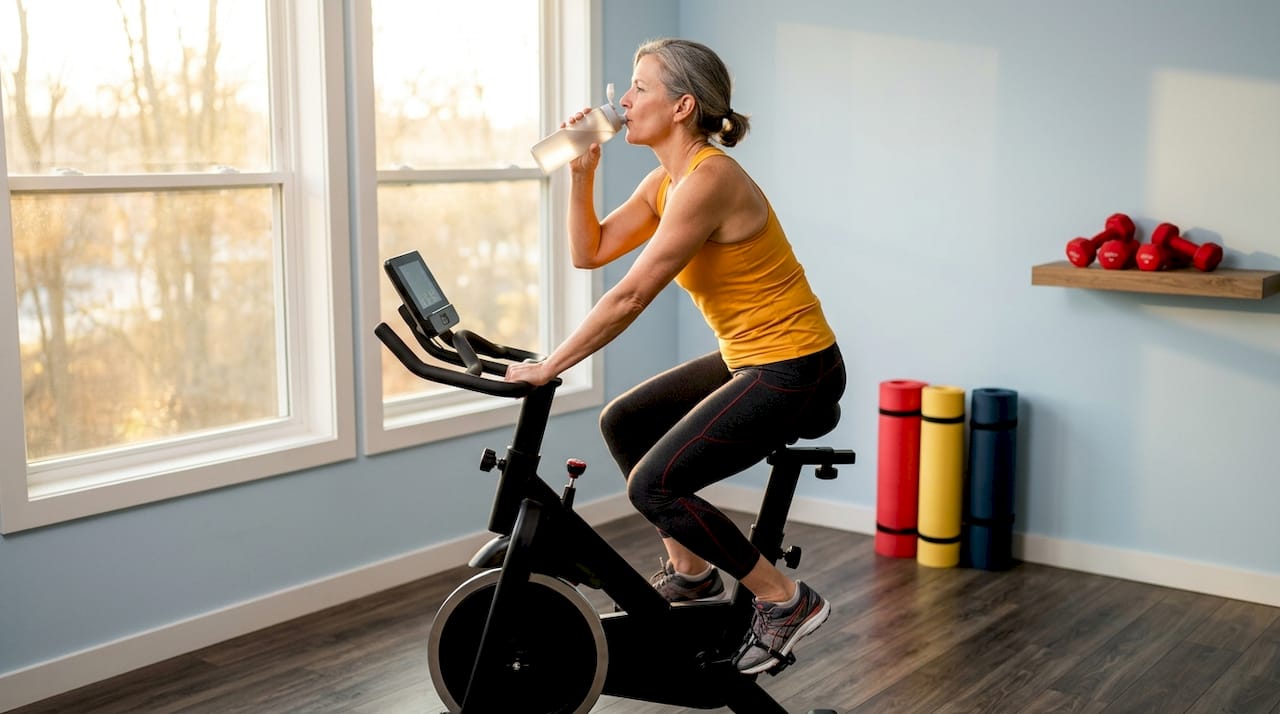
The mechanism is straightforward. Gentle movement increases local circulation without adding mechanical stress to already-damaged fibers. More blood flow means faster delivery of amino acids and oxygen to repair sites, and faster removal of lactate and inflammatory byproducts. Complete inactivity slows that exchange and allows stiffness to accumulate, which makes the next hard session feel worse and perform worse.
Here is how to schedule active recovery effectively:
- Schedule active recovery the day after any high-intensity or high-volume session
- Keep intensity below 50% of maximum heart rate for the entire session
- Choose activities that do not load the same muscle groups trained the previous day
- Limit duration to 20 to 40 minutes to avoid adding meaningful fatigue
- Include five to ten minutes of dynamic mobility work targeting the most affected areas
Active recovery is not optional for athletes training four or more days per week. It is the mechanism that keeps the body functional between hard sessions without requiring full rest days that interrupt training momentum.
For athletes dealing with joint stiffness alongside muscle soreness, Fitnesshealth’s guide on low-intensity movement and joint support offers additional context on managing both simultaneously.
Which cryotherapy method works best and when?
Cryotherapy is not a single tool. It includes cold water immersion (CWI), whole-body cryotherapy (WBC), local cold therapy (LCT), contrast therapy, and phase-change material (PCM) cooling. Each method has a different optimal timing window, and using the wrong one at the wrong time produces minimal benefit.
A 2026 systematic review confirms that DOMS peaks 24 to 72 hours after exercise, which means recovery strategies need to match the inflammatory timeline rather than front-load everything immediately post-session. CWI is most effective within the first hour after training for reducing early soreness and inflammatory biomarkers. LCT becomes more effective at the 48-hour mark, when localized inflammation is at its peak.
A 2026 PCM cryotherapy study published in PLOS One found that short-duration cooling improves perceived exertion and early neuromuscular power output but does not change muscle stiffness or peak torque. Those neuromuscular gains last roughly one hour, making cryotherapy most valuable for athletes who need to perform again quickly, not for long-term structural repair.
| Method | Best timing | Primary benefit |
|---|---|---|
| Cold water immersion (CWI) | Within 1 hour post-exercise | Reduces early soreness and inflammatory markers |
| Whole-body cryotherapy (WBC) | 24+ hours post-exercise | Reduces systemic inflammation, improves perceived recovery |
| Local cold therapy (LCT) | 48 hours post-exercise | Targets localized inflammation at peak DOMS |
| Phase-change material (PCM) | Immediately post-exercise | Improves neuromuscular readiness for ~1 hour |
| Contrast therapy | 24-48 hours post-exercise | Combines circulatory flushing with anti-inflammatory effect |
The most effective cryotherapy strategy for athletes combines CWI immediately after training with WBC or LCT 24 to 48 hours later, matching each modality to the stage of the inflammatory process.
Pro Tip: Do not use cold water immersion immediately after a strength session if your primary goal is hypertrophy. Cold applied right after resistance training blunts the inflammatory signal that drives muscle adaptation. Save CWI for competition periods or when readiness for the next session matters more than long-term muscle growth.
Common mistakes that slow down your recovery
Most athletes do not fail at recovery because they lack knowledge. They fail because they prioritize the wrong variables or mistime the right ones.
- Chasing the post-workout window instead of daily totals. Spending mental energy on getting protein within 30 minutes post-session while eating only two meals per day is a net negative. Total daily protein intake drives muscle protein synthesis far more than timing precision.
- Treating sleep as optional. Four to six hours of sleep is not a recovery strategy. It is a performance tax. The hormonal disruption from chronic sleep restriction compounds over weeks and directly reduces the gains from training.
- Resting completely instead of moving lightly. Lying on the couch all day after a hard leg session feels logical but increases stiffness and slows circulation to damaged tissue. A 20-minute walk does more for recovery than four hours of inactivity.
- Applying cryotherapy without matching the DOMS timeline. Using an ice pack immediately after every session regardless of soreness type or training goal ignores the time-dependent nature of the inflammatory process. DOMS peaks at 24 to 72 hours, and recovery tools should align with that curve.
- Stacking hard sessions without recovery days. Training hard every day without scheduled active recovery or rest days accumulates fatigue faster than the body can clear it, leading to performance decline rather than adaptation.
The fix is not more complexity. It is applying the fundamentals consistently: spread protein across the day, protect sleep, move lightly between hard sessions, and use cooling tools at the right time.
Key takeaways
Faster muscle recovery after training requires matching the right strategy to the right phase of the recovery process, not applying every tool at once.
| Point | Details |
|---|---|
| Spread protein across the day | Consume 20 to 40 grams every three to four hours rather than focusing on post-workout timing. |
| Prioritize sleep above all else | Seven to eight hours minimum preserves anabolic hormones and drives muscle protein synthesis overnight. |
| Use active recovery, not full rest | Light movement the day after hard training improves circulation and reduces DOMS more than inactivity. |
| Match cryotherapy to the DOMS timeline | Use CWI within one hour post-exercise and LCT or WBC at 24 to 48 hours for best results. |
| Fix daily habits before adding modalities | Nutrition and sleep deliver more recovery benefit than any cooling or supplementation protocol. |
Why I think most athletes recover wrong
Here is what I have seen consistently across years of working with athletes at every level: the obsession with recovery tools is often a way to avoid fixing the boring stuff. Athletes will invest in cryotherapy chambers and recovery boots while sleeping six hours and eating two meals a day. The tools feel productive. The fundamentals feel ordinary.
The research is unambiguous. Cooling improves perceived readiness and short-term neuromuscular output, but it does not replace what nutrition and sleep do at the structural level. A cold plunge after a poor night’s sleep is theater, not recovery.
What actually changed my thinking was understanding that protein distribution across the day is a more powerful lever than I initially gave it credit for. Most athletes eat one or two protein-heavy meals and wonder why recovery stalls. Spreading intake across four meals, with a larger dose before sleep, consistently produces better results than any supplement stack I have recommended.
Active recovery also does something that pure rest cannot: it keeps the athlete mentally engaged with their body. A 20-minute walk or easy bike ride the day after a hard session gives you feedback on how your muscles are responding. That feedback loop makes you a smarter athlete over time.
Sleep remains non-negotiable. I have never seen an athlete who consistently sleeps eight hours and eats well fail to recover adequately. The athletes who struggle are almost always the ones cutting corners on one or both of those fundamentals, then looking for a modality to compensate.
— Rene
Support your recovery with Fitnesshealth
The strategies in this guide work best when your nutritional foundation is solid. Fitnesshealth offers a range of recovery-focused supplements and programs designed specifically for athletes who train hard and need to recover faster between sessions. From high-quality protein formulas that make hitting your daily targets easier, to sleep and recovery stacks that support the hormonal environment your muscles need to rebuild, the platform covers every pillar discussed in this guide.
Whether you are optimizing protein distribution, supporting joint health, or building a structured recovery routine, Fitnesshealth provides both the products and the educational resources to help you train consistently without breaking down. Browse the full catalog at Fitnesshealth to find the right fit for your training load and recovery goals.
FAQ
How long does muscle recovery take after training?
Most muscle soreness resolves within 72 hours, but full structural repair of muscle fibers can take three to five days depending on training volume and intensity. DOMS typically peaks at 24 to 72 hours post-exercise.
What is the fastest way to recover after a hard workout?
The fastest recovery approach combines adequate protein intake spread across the day, seven to eight hours of sleep, light active recovery movement, and cold water immersion within one hour of finishing a hard session.
Does protein timing matter for muscle recovery?
Total daily protein intake matters more than precise timing. The ISSN recommends 20 to 40 grams per meal every three to four hours, since muscles remain sensitized to protein for at least 24 hours after training.
Is cold water immersion good for muscle recovery?
Cold water immersion reduces soreness and inflammatory markers most effectively within the first hour after exercise. It improves perceived readiness and short-term neuromuscular output but does not accelerate long-term structural muscle repair.
How much sleep do athletes need for optimal recovery?
Athletes need a minimum of seven hours per night, with eight to ten hours being the target for those in high training loads. Sleep restriction to four hours significantly reduces muscle protein synthesis and disrupts the hormonal balance needed for recovery.