

Hormonal imbalance is the disruption of chemical messenger systems that regulate metabolism, hunger, fat storage, and energy use, and it causes weight gain independently of calorie intake or exercise habits. If you’ve been eating well, staying active, and still watching the scale climb, your hormones may be the reason. The key players include thyroid hormones, cortisol, insulin, leptin, ghrelin, and sex hormones like estrogen and testosterone. Each one controls a different piece of the weight regulation puzzle, and when any of them fall out of range, the effects compound quickly. Understanding how hormone imbalance causes weight gain is not just reassuring. It’s the first step toward doing something about it.
How hormone imbalance causes weight gain through thyroid dysfunction
The thyroid gland produces hormones, primarily T3 and T4, that set your body’s metabolic rate. When thyroid output drops, a condition called hypothyroidism, your cells burn less energy at rest. Hypothyroidism slows metabolism, causing gradual weight gain that develops over months rather than weeks. The weight gain is real but typically modest, averaging 5 to 10 pounds in most cases, and it reflects both fat accumulation and fluid retention.
The relationship between thyroid function and body weight runs in both directions. Obesity can impair thyroid function, meaning excess fat tissue can push TSH levels higher even without true thyroid disease. This bidirectional effect makes diagnosis more complex. A clinician evaluating unexplained weight gain needs to assess the full symptom picture, including fatigue, cold intolerance, dry skin, and hair loss, not just a single lab value.
Treating hypothyroidism with levothyroxine restores normal hormone levels, but weight loss following treatment is often modest. Most patients lose the fluid retained during the hypothyroid state rather than significant fat mass. If you’ve been diagnosed and treated but still struggle with weight, other hormonal or metabolic factors are almost certainly involved.
Pro Tip: If your TSH is in the “normal” range but you still have classic hypothyroid symptoms, ask your doctor to test free T3 and free T4 separately. TSH alone does not always capture the full picture of thyroid hormone activity.
| Thyroid state | Effect on metabolism | Weight impact |
|---|---|---|
| Optimal thyroid function | Normal energy expenditure | Stable weight |
| Hypothyroidism | Reduced metabolic rate | Gradual, modest weight gain |
| Treated hypothyroidism | Restored metabolism | Partial weight loss, mainly fluid |
| Obesity-induced TSH elevation | Impaired hormone biosynthesis | Compounded weight gain risk |
How cortisol and chronic stress drive fat storage and appetite
Cortisol is your body’s primary stress hormone, produced by the adrenal glands in response to physical or psychological threat. Short bursts of cortisol are protective. Chronically elevated cortisol, the kind produced by ongoing work stress, poor sleep, or unresolved anxiety, is a direct driver of weight gain. Chronic stress raises cortisol, which increases appetite, disrupts sleep, and promotes visceral fat storage around the abdomen.
The mechanisms are specific and worth understanding:
- Appetite amplification: Cortisol raises blood glucose and simultaneously increases cravings for high-calorie, high-fat foods by activating reward pathways in the brain.
- Visceral fat preference: Cortisol directs fat storage toward the abdominal region, where fat cells have more cortisol receptors. This is why chronic stress produces the characteristic “stress belly.”
- Muscle breakdown: Prolonged cortisol elevation is catabolic, meaning it breaks down muscle tissue. Less muscle means a lower resting metabolic rate, making further weight gain easier.
- Sleep disruption: Elevated cortisol at night suppresses melatonin and prevents deep sleep, which then worsens hunger hormone regulation the following day.
Sleep disruption alters ghrelin and leptin dramatically. Even one night of poor sleep raises ghrelin, the hunger hormone, and reduces leptin, the fullness hormone, driving increased calorie intake the next day. This creates a feedback loop where stress raises cortisol, cortisol disrupts sleep, and poor sleep amplifies hunger. Breaking this cycle requires addressing the stress source directly, not just the diet.
Pro Tip: Resistance training three times per week lowers cortisol more effectively than steady-state cardio for most people under chronic stress. Pair it with a consistent sleep schedule and you address two hormonal disruptions at once. For more on managing stress hormones and appetite, Fitnesshealth has a dedicated resource worth reading.
What is insulin resistance and how does it cause weight gain in PCOS?
Insulin is the hormone that moves glucose from your bloodstream into your cells for energy. When cells stop responding to insulin signals properly, a condition called insulin resistance develops. The pancreas compensates by producing more insulin, and those elevated insulin levels actively promote fat storage, particularly in the abdominal region. This is one of the most direct hormonal causes of obesity.

Polycystic ovary syndrome (PCOS) is the most common endocrine disorder in women of reproductive age, affecting roughly 1 in 10 women globally. Insulin resistance is a core driver of weight gain in PCOS, operating through post-receptor insulin signaling defects that impair GLUT4 expression and glucose transport into cells. This means the problem is not just about how much insulin is produced. It’s about how poorly cells respond to it at a molecular level.
Managing insulin-driven weight gain in PCOS requires more than calorie restriction alone:
- Dietary timing: Eating the majority of carbohydrates earlier in the day aligns glucose intake with peak insulin sensitivity, reducing fat storage.
- Resistance training: Skeletal muscle is the primary site of glucose disposal. Building muscle mass directly improves insulin sensitivity without medication.
- Fiber-first eating: Starting meals with vegetables and protein before carbohydrates blunts the post-meal glucose spike and reduces the insulin response.
- Sleep prioritization: Insulin sensitivity drops measurably after even partial sleep deprivation, compounding the metabolic dysfunction already present in PCOS.
PCOS-related weight gain responds best to strategies that target insulin signaling directly. Learning how nutrition influences hormone levels can give you a practical framework for making those dietary changes sustainable.
| Insulin state | Mechanism | Weight outcome |
|---|---|---|
| Normal insulin sensitivity | Glucose enters cells efficiently | Stable energy and weight |
| Insulin resistance | Glucose stays in bloodstream | Fat storage increases, especially abdominal |
| PCOS insulin resistance | Post-receptor signaling defects | Amplified fat storage and metabolic imbalance |
| Improved insulin sensitivity | Better GLUT4 function | Reduced fat storage, improved body composition |
How leptin, ghrelin, and sex hormones affect hunger and body weight
Leptin is produced by fat cells and signals the brain that you have enough stored energy. Ghrelin is produced in the stomach and signals hunger. When these two hormones work correctly, appetite is self-regulating. When they don’t, eating behavior becomes disconnected from actual energy needs.
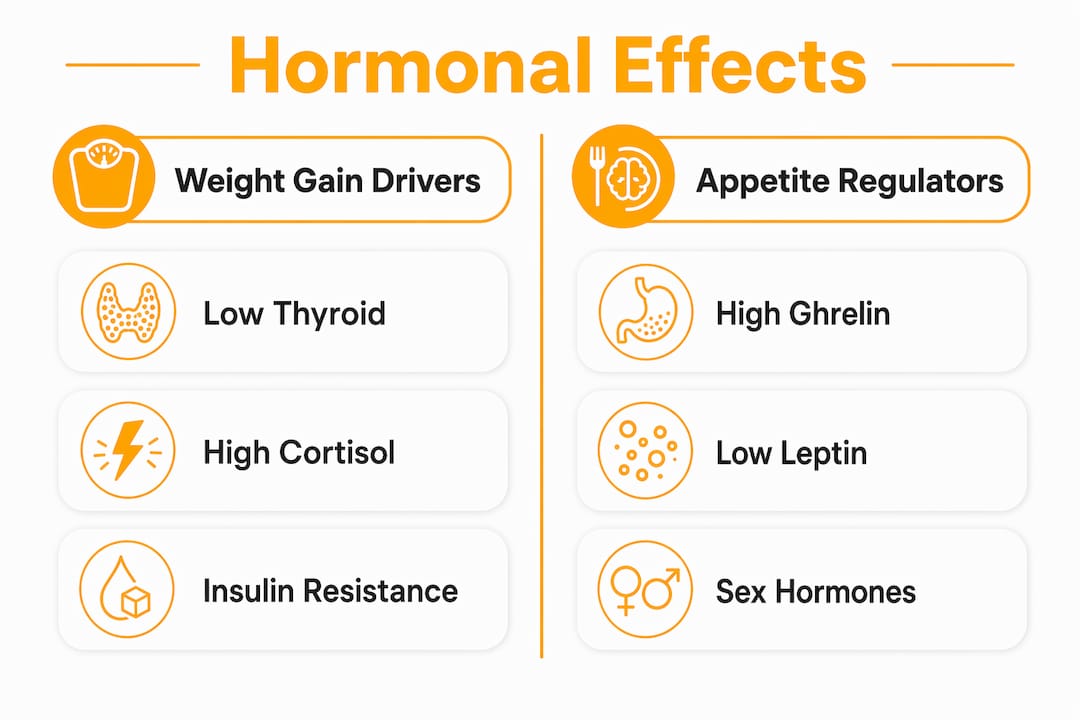
Leptin resistance impairs satiety signaling and promotes overeating even when fat stores are adequate. The brain simply stops receiving the “full” signal. This is common in people with obesity, creating a cruel irony: the more fat tissue present, the more leptin is produced, but the brain becomes increasingly deaf to it. Ghrelin compounds the problem. Elevated ghrelin levels, driven by poor sleep or chronic dieting, increase appetite and make calorie restriction feel physically unbearable rather than just uncomfortable.
Sex hormones add another layer to the picture:
- Estrogen regulates fat distribution and metabolic rate in women. Declining estrogen during perimenopause and menopause shifts fat storage from the hips and thighs toward the abdomen, increasing metabolic risk.
- Progesterone fluctuations during the menstrual cycle affect water retention and appetite, contributing to cyclical weight changes that are hormonal in origin.
- Testosterone supports muscle mass and metabolic rate in both men and women. Low testosterone accelerates muscle loss and fat gain, particularly in men over 40.
Understanding hormonal balance and body weight requires looking at these hormones as a system rather than in isolation. Disruption in one area typically cascades into others.
Do hormonal contraceptives cause weight gain? Myths vs. facts
Combined hormonal contraceptives, meaning those containing both estrogen and progestin, are among the most studied medications in history. Clinical trials found no consistent fat gain from combined hormonal contraceptives. The weight changes many women report are primarily fluid retention driven by estrogen’s effect on the renin-angiotensin-aldosterone system (RAAS), not actual fat accumulation.
The exception is depot medroxyprogesterone acetate (DMPA), the injectable contraceptive sold as Depo-Provera. DMPA carries verified evidence of true fat mass gain, likely through appetite stimulation and metabolic effects of high-dose progestin. Weight gain concerns with contraceptives often stem from nocebo effects and age-related changes that coincide with when women start contraception, not the contraceptive itself.
| Contraceptive type | Weight change mechanism | Evidence level |
|---|---|---|
| Combined pill (estrogen + progestin) | Fluid retention via RAAS | No consistent fat gain in trials |
| Progestin-only pill | Minimal metabolic effect | No significant weight change |
| DMPA injection (Depo-Provera) | Appetite stimulation, fat gain | Verified fat mass increase |
| Hormonal IUD (Mirena) | Localized progestin effect | No systemic weight change |
Pro Tip: If you notice weight gain after starting a combined pill, track it for 8 to 12 weeks. Fluid-based weight gain typically stabilizes or reverses. If it continues past three months, discuss switching formulations with your doctor, as progestin type varies significantly between brands.
Key takeaways
Hormone imbalance causes weight gain through at least five distinct mechanisms, and addressing only diet or exercise without evaluating hormonal status produces incomplete results.
| Point | Details |
|---|---|
| Thyroid and metabolism | Hypothyroidism slows metabolic rate, causing gradual weight gain that treatment only partially reverses. |
| Cortisol and fat storage | Chronic stress drives visceral fat accumulation and disrupts sleep, compounding hunger hormone dysregulation. |
| Insulin resistance | Impaired insulin signaling, especially in PCOS, promotes abdominal fat storage beyond what calorie restriction alone can address. |
| Leptin and ghrelin | Disrupted satiety and hunger signals disconnect eating behavior from actual energy needs, making overeating feel involuntary. |
| Contraceptives and weight | Combined hormonal contraceptives do not cause fat gain; DMPA is the verified exception. |
Why I think most people are looking at hormonal weight gain the wrong way
Most people who suspect a hormonal cause for their weight gain want a single answer. They want to hear “your thyroid is off” or “your cortisol is high” and have that explain everything. In my experience working with health-conscious individuals, that single-cause framing almost always leads to frustration.
The reality is that hormones are only one piece of the weight regulation puzzle. Sleep, stress, diet quality, and activity patterns all feed directly into hormonal function. A person with mild hypothyroidism who sleeps seven hours, manages stress well, and eats mostly whole foods will almost always weigh less than someone with the same thyroid numbers who sleeps five hours and lives on processed food. The labs don’t tell the whole story.
What I’ve found actually works is treating hormonal health as a system. Adaptogens like ashwagandha and rhodiola have genuine evidence for lowering cortisol and supporting thyroid function. Resistance training is the single most underused tool for improving insulin sensitivity. And sleep quality, not just duration, determines how well leptin and ghrelin regulate appetite the next day. Fitnesshealth covers adaptogen science in depth if you want to explore that angle further.
The uncomfortable truth is that hormonal evaluation is the starting point, not the solution. Patience and a willingness to address multiple systems simultaneously are what actually produce lasting results.
— Rene
Support your hormonal health with Fitnesshealth

Fitnesshealth offers programs and supplements designed specifically for people navigating hormone-related weight issues. Whether you’re dealing with the metabolic effects of cortisol, the appetite disruption of leptin resistance, or the insulin sensitivity challenges of PCOS, the Fitnesshealth platform connects you with targeted nutritional support, structured wellness programs, and science-backed supplements. The approach integrates stress management, sleep optimization, and activity guidance because no single product fixes a systemic hormonal issue. If you’re ready to move beyond generic diet advice and address the actual drivers of your weight gain, Fitnesshealth is built for exactly that. Consult a healthcare professional for personalized diagnosis before starting any supplement program.
FAQ
What hormones are most responsible for weight gain?
Thyroid hormones, cortisol, insulin, leptin, and ghrelin are the primary hormones involved in weight regulation. Disruptions to any of these can cause weight gain through slowed metabolism, increased fat storage, or impaired hunger signaling.
Can fixing a hormone imbalance lead to weight loss?
Treating the underlying imbalance, such as hypothyroidism or insulin resistance, can support weight loss, but results are typically modest without accompanying lifestyle changes. Hormonal treatment restores the conditions for normal metabolism rather than directly burning fat.
Does stress really cause weight gain through hormones?
Yes. Chronic cortisol elevation increases appetite, promotes visceral fat storage, and disrupts sleep, all of which compound weight gain over time. Stress management is a direct hormonal intervention, not just a wellness recommendation.
How does PCOS cause weight gain specifically?
PCOS involves post-receptor insulin signaling defects that impair glucose uptake and promote fat storage, particularly in the abdomen. Targeting insulin resistance through dietary timing and resistance training addresses the root mechanism more effectively than calorie restriction alone.
Do birth control pills make you gain weight?
Combined hormonal contraceptives do not cause fat gain according to placebo-controlled clinical evidence. Temporary weight increases are typically fluid retention. The DMPA injection is the one contraceptive with verified fat mass gain as a side effect.










