Hormonal balance is one of the most searched and least understood concepts in wellness. Most people picture it as a fixed, perfect number on a lab report. That’s not how it works. What is hormonal balance explained correctly? It’s a dynamic, constantly shifting state where your hormones stay within ranges appropriate for your body’s needs at any given moment. Your age, stress levels, sleep, nutrition, and even the time of day all influence where those levels land. This article cuts through the noise, explains the real science, and gives you practical tools to actually support your hormonal health.
Table of Contents
- Key Takeaways
- What is hormonal balance, really?
- Recognizing symptoms and causes of imbalance
- Natural ways to support hormonal health
- Myths vs. facts about hormonal balance
- My take: stop chasing numbers, start building habits
- Supporting your hormonal health with Fitnesshealth
- FAQ
Key Takeaways
| Point | Details |
|---|---|
| Balance is dynamic, not fixed | Hormone levels shift daily and across life stages; a single “ideal” number is a myth. |
| Symptoms need clinical context | Fatigue, mood swings, and weight changes overlap many conditions, so self-diagnosis is unreliable. |
| Lifestyle is your biggest lever | Consistent sleep, nutrition, and stress management do more for hormonal health than most supplements. |
| Lab tests alone are not enough | Clinicians interpret results alongside your cycle phase, age, and symptoms for accurate evaluation. |
| Myths cost you real results | Many marketed hormone supplements lack scientific support and may cause harm without medical oversight. |
What is hormonal balance, really?
The clinical term you’ll see in endocrinology is hormonal homeostasis. Hormonal balance is the everyday version of the same idea. It refers to your body maintaining hormone levels that are appropriate for your current biological needs, not a rigid number that never changes.
Hormones naturally rise and fall due to life stages and daily rhythms. Estrogen, for example, peaks around ovulation and drops sharply before menstruation. That drop is completely normal. It becomes a concern only when levels stay persistently high or low outside expected ranges, or when symptoms arise that suggest something is dysregulated.
Here’s what that looks like in practice:
- Estrogen fluctuates throughout the menstrual cycle, rises during pregnancy, and declines at menopause. All of this is expected.
- Cortisol peaks in the morning to help you wake up and decreases through the day. Chronically elevated cortisol from ongoing stress is where the problem starts.
- Insulin spikes after eating and returns to baseline. When it stays elevated or cells stop responding, that’s a functional imbalance.
- Thyroid hormones regulate metabolism and energy. Subtle shifts outside normal ranges can produce significant symptoms even when levels look “borderline.”
The key distinction is between physiological variation (normal, expected shifts) and pathological dysregulation (sustained levels that impair function). That line is what a clinician evaluates, and it’s why context matters more than a single data point.
Pro Tip: If you’re tracking your cycle or symptoms, note where you are in your cycle when you experience changes. Hormonal symptoms often follow predictable patterns, and that timing information helps your doctor far more than a one-time snapshot.
Recognizing symptoms and causes of imbalance
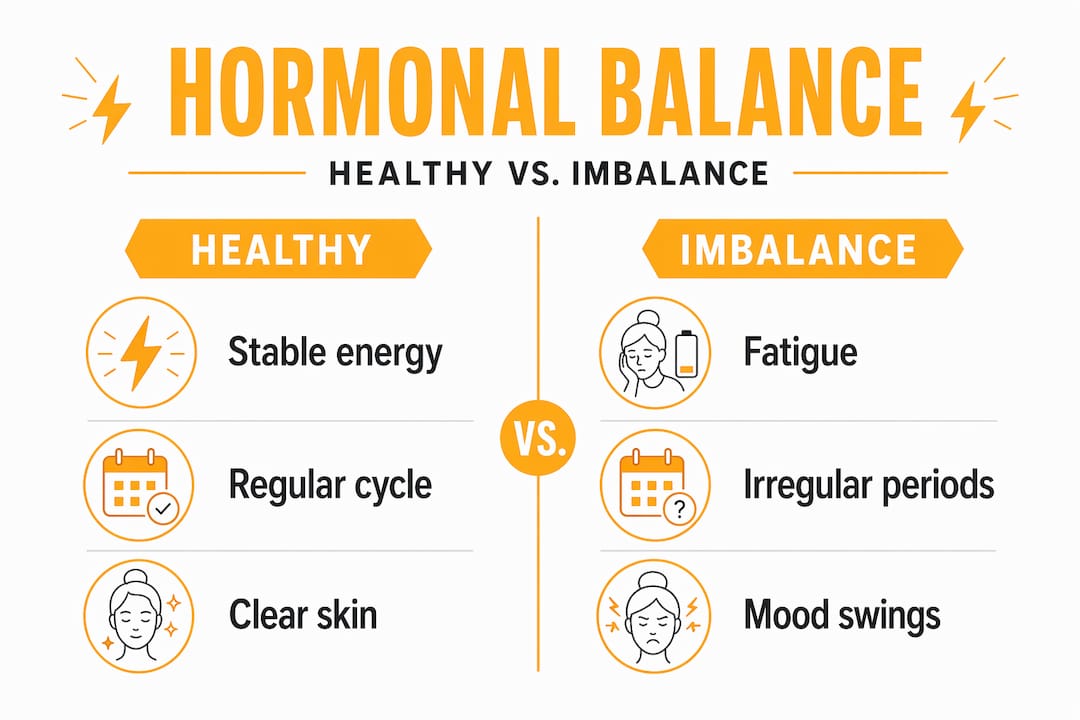
Hormonal imbalance symptoms are notoriously non-specific. Fatigue, mood changes, weight fluctuations, brain fog, and skin problems show up on the list for dozens of hormonal and non-hormonal conditions. That overlap is exactly why self-diagnosis tends to fail.
That said, recognizing patterns is still useful. Common symptoms that may signal something worth investigating include:
- Persistent fatigue not explained by poor sleep
- Irregular, very heavy, or absent menstrual periods
- Unexplained weight gain or difficulty losing weight despite consistent effort
- Severe mood swings, anxiety, or low mood outside your normal range
- Hair thinning or excess hair growth in unexpected areas
- Low libido over an extended period
- Skin changes such as sudden adult acne or increased oiliness around your cycle (a known effect of the estrogen drop and androgen rise that stimulates sebaceous glands)
What actually causes hormonal imbalance? The list is wide. Underlying causes include chronic stress, disrupted sleep, poor nutrition, diabetes, thyroid disorders, polycystic ovary syndrome (PCOS), adrenal dysfunction, and natural life transitions like puberty, perimenopause, and menopause. Some causes are modifiable through lifestyle. Others require medical treatment.
When should you see a doctor? If your symptoms are severe, sudden, or worsening over time, that’s your cue. Don’t wait for a symptom to become debilitating before getting it evaluated. Hormonal conditions caught early are significantly easier to manage.

Natural ways to support hormonal health
The most credible thing research tells us about hormonal health is also the least exciting: consistent lifestyle habits do more for hormone regulation than any single supplement or quick fix. Here’s how to actually apply that.
-
Prioritize sleep above almost everything else. Seven to eight hours of consistent sleep regulates cortisol, growth hormone, and the appetite-regulating hormones leptin and ghrelin. Cutting sleep short for even a few nights noticeably disrupts these systems. This is not a suggestion; it’s biology.
-
Eat to support hormone production. Hormones are made from raw materials your diet provides. Healthy fats from sources like avocado, olive oil, and fatty fish support sex hormone production. Fiber from vegetables and legumes helps the body clear excess estrogen. Adequate protein stabilizes blood sugar and provides amino acids for hormone synthesis. Cruciferous vegetables like broccoli and cauliflower contain compounds that support estrogen metabolism.
-
Move regularly but don’t over-train. Exercise improves insulin sensitivity and hormonal receptor sensitivity across the board. However, excessive high-intensity training without adequate recovery raises cortisol and can suppress reproductive hormones in women. The sweet spot is consistent moderate activity with strength training a few times per week. If you need help fitting structured workouts into a packed schedule, practical fitness scheduling tips can make it more manageable.
-
Manage stress with real strategies, not just intentions. Chronic stress keeps cortisol elevated, which suppresses thyroid function, disrupts sleep, and interferes with reproductive hormones. The impact of elevated stress on hormone systems is well documented. Meditation, breathwork, consistent downtime, and simply protecting your schedule from overload all reduce this burden.
-
Be skeptical of supplements. Most marketed hormone-balancing supplements have limited scientific support. Well-supported supplementation in this area is largely limited to addressing documented deficiencies, such as low vitamin D, magnesium, or iron, where lab work confirms a need. Taking random blends marketed as “hormone support” without knowing your actual status can do more harm than good.
Pro Tip: Rather than overhauling everything at once, start with sleep and stress. These two levers affect nearly every hormone in your body. Get those right first, then build your nutrition and exercise habits on top.
Myths vs. facts about hormonal balance
The wellness industry has done a great job of making hormonal balance sound like something you can achieve with a $60 supplement and a 30-day reset. It’s worth knowing what’s actually supported by evidence and what isn’t.
| Claim | Reality |
|---|---|
| “One blood test tells you if your hormones are balanced” | Single lab tests are often misleading; results vary by cycle phase, time of day, and life stage. |
| “Hormone supplements balance your hormones naturally” | Most lack strong evidence; risks exist without medical oversight. |
| “If your symptoms match, you have a hormone problem” | Symptoms overlap dozens of conditions; clinical evaluation is required to differentiate. |
| “Balancing hormones fixes weight and mood immediately” | Hormonal health supports these functions; it’s not a switch, and results take time. |
| “You can self-test your way to optimal hormones” | Clinicians interpret test results alongside your complete symptom picture, history, and life stage. |
The phrase “hormone balancing” itself is often used as a marketing term with minimal scientific grounding. That doesn’t mean hormonal health isn’t real. It means the oversimplified version sold to you in ads rarely reflects how complex and individualized these systems actually are.
Persistently abnormal estrogen levels, for instance, may signal conditions like PCOS or osteoporosis risk. But that determination requires sustained lab evidence combined with symptoms, not a single off-cycle result. Context is everything.
My take: stop chasing numbers, start building habits
I’ve seen a lot of people come to health and fitness communities frustrated that their hormone labs “look fine” while they still feel terrible. And I’ve seen the opposite too: people obsessing over minor lab variations that fall well within normal physiological range.
What I’ve learned over years of engaging with this topic is that the pursuit of a perfect hormone number is a distraction. Biology doesn’t work in fixed targets. Your hormones are part of integrated feedback loops, and when you support the system, the system tends to find its own equilibrium. You don’t micromanage it into balance.
The people I’ve seen feel best long-term are rarely the ones who found a specific supplement protocol. They’re the ones who got serious about sleep, cleaned up their diet, moved consistently, and reduced the chronic stress that was quietly wrecking everything. That’s not a sexy answer. But it’s the real one.
My honest take on the “hormone test at home” trend: treat those results as a prompt to have a real conversation with your doctor, not as a diagnosis. One number, taken once, tells you almost nothing without the clinical story around it. The test is a starting point, not a conclusion.
— Rene
Supporting your hormonal health with Fitnesshealth

If you’ve recognized yourself in some of these symptoms or you’re simply ready to give your hormonal health a stronger foundation, Fitnesshealth has resources built for exactly that. The nutrition guide for hormonal balance walks through specific dietary strategies tied to the science covered here. And the broader Fitnesshealth programs and supplements catalog includes evidence-informed options across sleep support, stress management, and nutritional gaps that affect hormone function. Every product is paired with educational content so you’re not guessing. If your goal is long-term hormonal health rather than a quick fix, this is the kind of resource worth bookmarking.
FAQ
What does hormonal balance actually mean?
Hormonal balance means your hormone levels are appropriate for your body’s current needs, not a fixed number. Levels shift naturally across your menstrual cycle, life stages, and even throughout the day.
What are the most common symptoms of hormonal imbalance?
Common symptoms include fatigue, mood swings, irregular periods, weight changes, hair loss, and skin issues. These overlap with many conditions, so a clinical evaluation is needed for accurate diagnosis.
What causes hormonal imbalance?
Chronic stress, poor sleep, nutritional gaps, thyroid disorders, PCOS, diabetes, and natural life transitions like menopause can all disrupt hormone levels. Some causes respond well to lifestyle changes; others need medical treatment.
Can you fix hormonal imbalance naturally?
Many people see meaningful improvement through consistent sleep, balanced nutrition, regular exercise, and stress reduction. Supplements may help in specific deficiency cases but should be used based on lab-confirmed needs, not marketing claims.
How do doctors test for hormonal imbalance?
Doctors use blood tests interpreted alongside your symptoms, cycle phase, age, and medical history. A single test result without that context is rarely enough to confirm or rule out a hormonal condition.