

Use an oral rehydration solution, sipped in small amounts every few minutes, to replace the sodium, potassium, and fluid that diarrhea drains from your body. Premixed ORS from a pharmacy is the most reliable choice, and broths or a properly mixed homemade version work as backups. Skip sports drinks, juice, and soda. Get medical care fast if you notice dark urine, dizziness, bloody stools, or an inability to keep any fluid down.
TL;DR:
- Premixed oral rehydration solutions are the most reliable and effective options for replacing lost electrolytes during diarrhea, especially when mixed in proper ratios.
- Drinking small, frequent sips of ORS or broth over several hours is crucial to prevent vomiting and ensure adequate rehydration, particularly for moderate dehydration.
- Homemade ORS can be safely prepared with precise measurements but should be discarded after 24 hours or replaced by store-bought formulas for consistency and safety.
- Signs such as dark urine, severe dizziness, persistent vomiting, blood in stool, or high fever indicate the need for urgent medical care and possibly intravenous fluids.
- Infants, older adults, and individuals with kidney disease or on certain medications require closer monitoring and should consult healthcare professionals before self-managing dehydration.
Table of Contents
- What to Drink for Electrolytes During Diarrhea
- How Much ORS to Drink and How Often
- How to Make Homemade ORS Safely
- Warning Signs That Mean You Need Medical Care
- Who Needs Extra Caution With Electrolyte Replacement
- Simple Tricks to Keep Fluids Down
- Why FitnessHealth.co Treats Rehydration as a Protocol, Not a Guess
- Restock Your Electrolytes the Right Way
- Sources
What to Drink for Electrolytes During Diarrhea
Diarrhea doesn’t just drain water. It strips out sodium, potassium, and other electrolytes your gut needs to pull fluid back into your bloodstream, which is exactly why plain water often fails to fix the problem. Water has no sodium to replace what you’re losing, and drinking too much of it can actually dilute the electrolytes you have left, according to the Mayo Clinic.
Oral rehydration solution solves this through a mechanism most people never think about: sodium absorption in the gut depends on glucose being present at roughly the same time. ORS formulas are built around that pairing, which is why they contain both sugar and salt in specific ratios rather than one or the other. Under World Health Organization guidance, standard ORS carries about 75 mmol/L of sodium, tuned to match gut losses during diarrhea, according to the Merck Manual.
Here’s what actually belongs in your glass when you’re sick:
- Premixed ORS (Pedialyte, generic pharmacy versions, or WHO-formula packets) — the gold standard, formulated specifically for diarrheal losses
- Clear broths — chicken or vegetable broth supplies sodium, though it lacks the glucose ratio ORS is built around
- Diluted, low-osmolarity ORS when available — reduces vomiting and stool output compared to older high-osmolarity formulas, per clinical guidance
And here’s what to leave on the shelf. Sports drinks like the typical electrolyte beverage carry significantly less sodium than ORS and are built for sweat replacement, not gut losses, so they under-deliver exactly when you need more sodium, not less, according to the Merck Manual. Coconut water has a similar gap. Fruit juice and regular soda are worse than useless: their high sugar content can pull additional water into the intestine and worsen the diarrhea itself.
How Much ORS to Drink and How Often
Rehydration isn’t about chugging a big glass and calling it done. It’s a maintenance process, and pacing matters as much as volume.
Clinical dosing for oral rehydration therapy breaks down by severity:
For mild dehydration, a moderate amount of ORS is given over a few hours; moderate dehydration requires about twice that amount during the same period, with extra fluid added for ongoing loose stools.
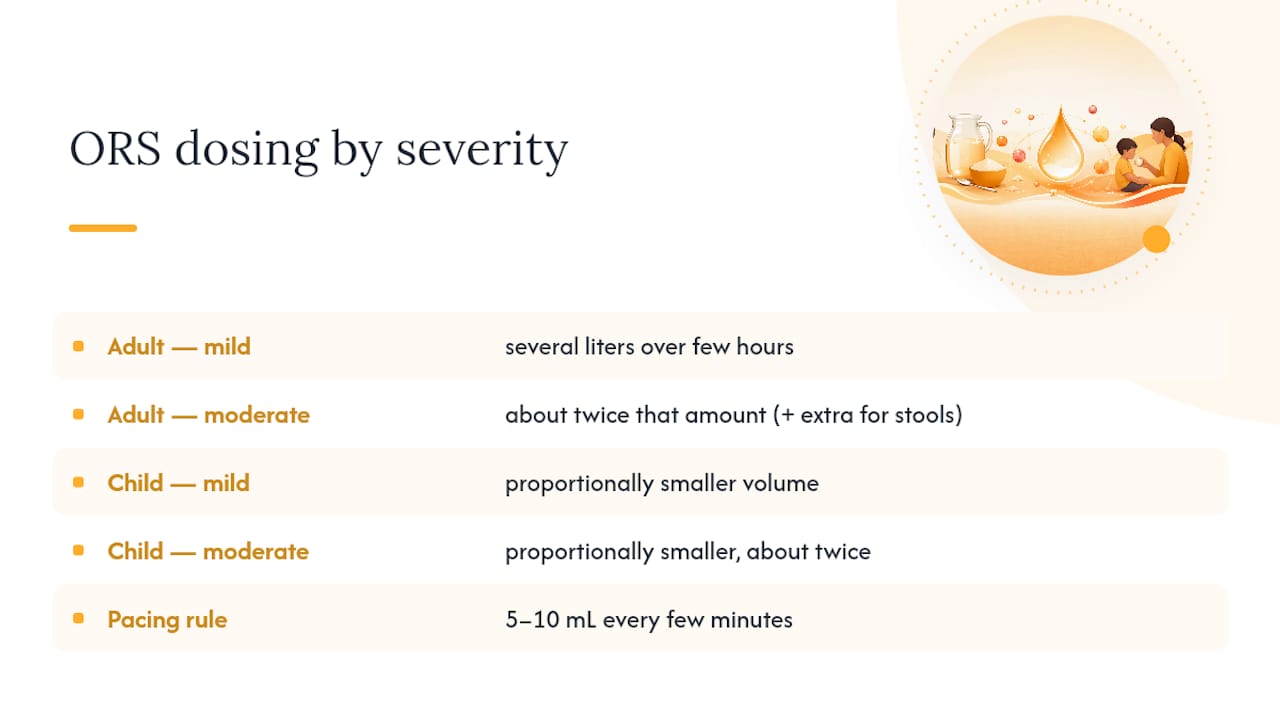
For example, a typical adult with mild dehydration may require several liters of ORS over a few hours, while a child with moderate dehydration will need a proportionally smaller but still significant volume during that time frame. These figures come from Merck Manual dosing protocols for oral rehydration therapy.
The reason clinicians push small, frequent sips instead of a few large gulps comes down to how an irritated stomach behaves. A big bolus of fluid can trigger vomiting, which wastes the fluid you just drank and discourages you from trying again. Taking in 5 to 10 mL every few minutes, roughly a spoonful, gives the stomach time to absorb what it gets without being overwhelmed, and it measurably improves the odds that home rehydration succeeds instead of ending in an ER visit, per the Merck Manual.

How to Make Homemade ORS Safely
A pharmacy packet or bottle is the safer, more consistent choice, since commercial ORS is manufactured to a validated sodium to glucose ratio and available premixed or as powder at most drugstores. Ask the pharmacist which formula fits your situation, especially for a child.
If you genuinely have no access to premixed ORS, a WHO-style homemade version can work as a stopgap. The ratio matters more than most home recipes admit:
- 1 liter (about 4 cups) of clean, boiled and cooled water
- 6 level teaspoons of sugar
- 1/2 level teaspoon of salt
- Stir until fully dissolved before drinking
Pro Tip: Measure with actual measuring spoons, not kitchen spoons. Too much sugar or salt can pull more fluid into the gut and make diarrhea worse, which defeats the entire purpose.
Mix only what you’ll use within 24 hours and store it in the refrigerator; discard anything older than that rather than risk contamination. When in doubt, buy premixed. It removes the guesswork entirely.

Warning Signs That Mean You Need Medical Care
Home rehydration works for the vast majority of diarrhea cases, but certain signals mean you’ve moved past what sipping ORS can fix. Watch for:
- Urinating far less than usual, or urine that’s noticeably dark
- Severe dizziness or lightheadedness when standing
- Vomiting that won’t let you keep any fluid down
- Blood in the stool
- A high fever that doesn’t break
- Unusual lethargy, confusion, or a child who’s unusually hard to wake
Persistent vomiting, signs of shock, or severe electrolyte disturbance are the specific triggers that push treatment from oral rehydration to IV fluids in a clinic or emergency room. ORS is highly effective, but it was never designed to substitute for emergency care once the body stops absorbing what you give it.
If a caregiver is watching over someone showing these signs, the next step is a call to a doctor or urgent care, not another attempt at home fluids.
Who Needs Extra Caution With Electrolyte Replacement
Some people can’t afford to wait and see. Infants dehydrate faster than adults because their bodies hold proportionally less fluid reserve, and older adults often have a blunted thirst response that hides how dehydrated they’ve become. Both groups need closer monitoring and a lower threshold for calling a doctor.
People with kidney disease face a different risk: their kidneys may struggle to excrete excess sodium or potassium, so a standard ORS regimen could push electrolytes in the wrong direction. Diarrhea itself can also cause low potassium, which is part of why ORS formulas include potassium alongside sodium, according to Verywell Health.
- Talk to a clinician before using homemade ORS if you have kidney disease, heart failure, or diabetes
- Diuretics and ACE inhibitors both affect electrolyte handling, so mention any current medications
- Infants and older adults should generally be seen by a provider rather than managed purely at home
Simple Tricks to Keep Fluids Down
Getting fluids in without triggering another round of vomiting is mostly about pacing and small adjustments, not willpower.
- Offer a tablespoon (about 15 mL) every 10 to 15 minutes instead of a full glass at once
- Try ORS slightly chilled. Many people tolerate cold liquid better than room temperature
- Flavor unflavored ORS lightly with a splash of sugar-free flavoring if the taste is the barrier to drinking enough
- Stick to bland foods, like the classic BRAT staples, and skip dairy, fried food, and caffeine until stools firm up
Pro Tip: Keep a few travel-size ORS packets in a bag or car for kids prone to stomach bugs. A reluctant toddler is far more likely to drink from a favorite cup with a straw than from an unfamiliar bottle.
Why FitnessHealth.co Treats Rehydration as a Protocol, Not a Guess
Fitnesshealth builds its hydration content around the same dosing math clinicians use, drawn from NIDDK and MSD guidance, because vague advice like “drink fluids” doesn’t help someone counting stools at 2 a.m. Every recommendation here traces back to published clinical protocols, not guesswork. For readers who want the next step once the acute phase passes, our guides on dehydration recovery and returning to training after fluid loss go deeper into rebuilding electrolyte reserves.
— Rene
Restock Your Electrolytes the Right Way
Once the acute stage passes, your body still needs help rebuilding what diarrhea drained, and that’s where a targeted electrolyte formula earns its place over guessing with sports drinks. Fitnesshealth carries electrolyte products formulated for real depletion, not just sweat replacement, giving you an option built for the specific gap diarrhea leaves behind rather than a general-purpose sports beverage. If you’re an athlete or active adult trying to get back to normal training after a stomach bug, pairing your recovery with the right supplement matters more than most people assume. Check out our electrolyte restoration options or browse aerobic endurance and electrolyte support at Fitnesshealth to find a formula that fits where you are in recovery.
This article is general information, not a substitute for advice from a qualified doctor. Consult a qualified healthcare professional about your own circumstances before acting on anything here.
Sources
- Merck Manual – Oral rehydration therapy
- NIDDK – Treatment of Diarrhea
- Clinical guidance chapter on ORT (NCBI Bookshelf)
- Mayo Clinic – Diarrhea diagnosis & treatment










