![[HERO] How to Remember to Take Your Supplements: 7 Habit Stacking Tips for Busy Professionals](https://cdn.marblism.com/Q8rAZ7UAwx9.webp)
You've invested in quality supplements. You know they support your energy, focus, and overall health. But there's one problem: you keep forgetting to take them.
If you're a busy professional juggling meetings, deadlines, and a packed schedule, remembering another task feels impossible. The solution isn't willpower or setting endless phone reminders. It's habit stacking: a practical method that links your supplement routine to actions you already do automatically.
This guide breaks down seven habit stacking strategies specifically designed for professionals who need consistency without mental overload.
What Is Habit Stacking and Why Does It Work?
Habit stacking pairs a new behaviour (taking supplements) with an existing habit you perform without thinking. Instead of forcing yourself to remember, you create a trigger that makes supplement intake automatic.
Your brain already has established neural pathways for daily routines like brushing your teeth or making coffee. When you attach supplement intake to these existing habits, you reduce the cognitive load required to maintain the new behaviour.
Research shows habit formation typically takes 21-66 days depending on complexity. Habit stacking accelerates this process by leveraging routines that already feel effortless.

1. Identify Your Most Consistent Daily Anchor Habits
Start by mapping out actions you perform every single day without fail. These become your anchor habits: the triggers for supplement intake.
Common anchor habits for busy professionals:
- Making your morning coffee or tea
- Brushing your teeth (morning and evening)
- Checking your phone after waking up
- Eating breakfast or lunch
- Starting up your laptop or computer
- Getting dressed for work
- Preparing dinner
- Setting your alarm before bed
Choose anchors that happen at consistent times and locations. If your morning routine varies wildly, select a midday or evening anchor instead. The key is reliability, not perfection.
Write down 3-5 anchor habits you perform daily. These will form the foundation of your supplement routine.
2. Keep Your Supplements Where You'll Actually See Them
Visual cues eliminate the need to remember. If your supplements sit in a cupboard behind other items, you'll forget them regardless of good intentions.
Strategic placement for maximum visibility:
- Next to your coffee maker or kettle
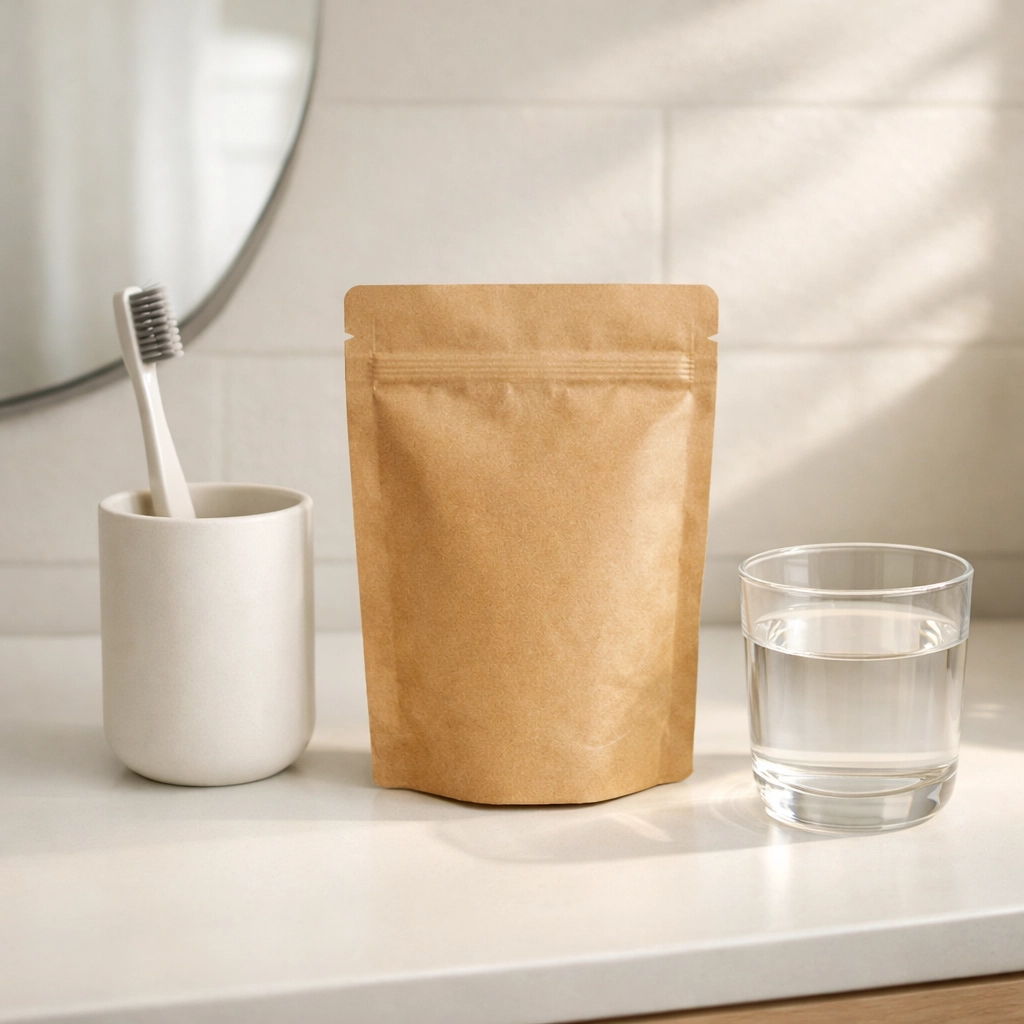
- On your bathroom counter beside your toothbrush
- On your desk next to your laptop
- On your bedside table
- In your kitchen next to breakfast essentials
Here's where eco-friendly packaging becomes an advantage. Paper pouches from sustainable brands like Fitness Health are designed to sit flat and visible on countertops without taking up excessive space. Unlike bulky plastic bottles that get shoved to the back of cupboards, paper pouches remain in your line of sight: creating a natural visual prompt.
If you travel frequently, keep a small designated container in your work bag or briefcase. This ensures consistency regardless of location.
3. Stack Your Morning Supplements with Your Coffee or Tea Routine
For most busy professionals, the morning beverage ritual is non-negotiable. You'll make coffee or tea even on your most chaotic days. This makes it an ideal anchor habit.
The formula: After I pour my coffee/boil the kettle, I take my morning supplements.
Place your supplements directly next to your coffee maker or kettle. When you reach for your mug, you'll automatically see your supplements. The action becomes as automatic as adding milk or sugar.
If you take multiple supplements with different timing requirements, separate morning supplements from others. Keep only your morning stack near your coffee station to avoid confusion.
Within 2-3 weeks, this sequence will feel as natural as drinking the coffee itself. You won't need to think about it consciously.
4. Match Supplement Timing to Its Intended Purpose
Strategic timing reinforces the connection between your supplement and its benefit. This creates a logical link your brain recognizes, making the habit stick faster.
Purpose-based timing examples:
- Cognitive support supplements: Take when you start your laptop or begin your workday. This connects the supplement with mental performance.
- Energy-boosting supplements: Stack with breakfast or your pre-work routine. The timing aligns with when you need the energy boost.
- Sleep-supporting supplements: Link to your evening tooth-brushing routine or bedtime tea. This creates a clear wind-down signal.
- Digestive enzymes: Take immediately before meals. The natural meal schedule becomes your trigger.
If you're taking omega-3 supplements for brain health, pair them with your morning computer startup. If you're using supplements for gut wellness during winter, take them with your evening meal preparation.
The key is creating a meaningful association between when you take the supplement and why you're taking it.

5. Create a Midday Movement and Hydration Stack
Many busy professionals hit an afternoon slump between 2-4pm. Instead of reaching for another coffee, use this time to create a wellness stack that includes supplement intake.
The midday stack formula:
- Stand up from your desk
- Take a 5-minute walk (even if it's just around your office or home)
- Fill your water bottle or glass
- Take your midday supplements while hydrating
- Return to work refreshed
This approach combines multiple health behaviours into one efficient sequence. You're not just remembering supplements: you're also moving your body and staying hydrated. The compound effect makes each element easier to maintain.
If you work from home, this could include making a herbal tea. If you're office-based, pair it with a walk to the kitchen or a lap around the building.
6. Prepare Tomorrow's Supplements the Night Before
Evening preparation removes morning friction. When supplements are already laid out, you eliminate the decision-making step that often leads to skipping doses on busy mornings.
Evening preparation stack:
After I finish dinner/after I wash up, I prepare tomorrow's supplements.
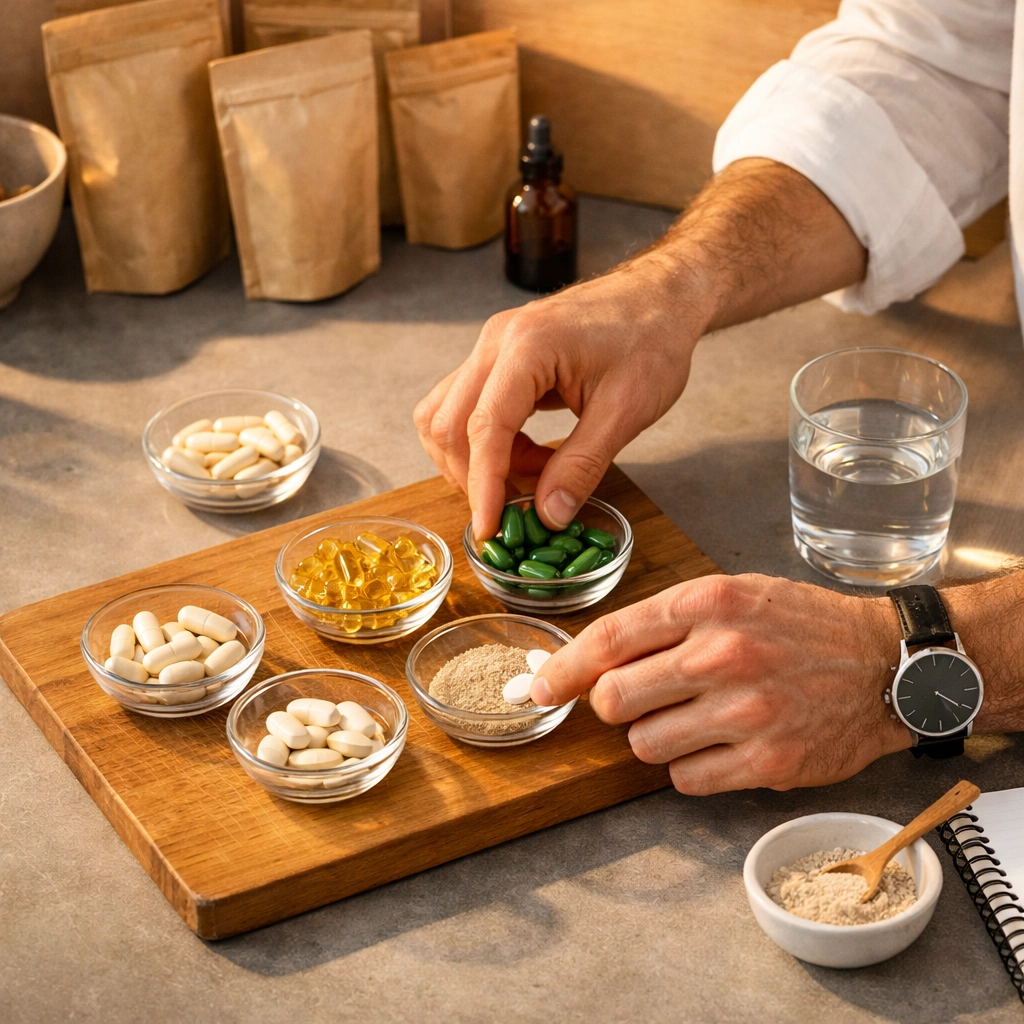
This takes 30-60 seconds but dramatically increases morning consistency. Place tomorrow's supplements in a small dish or designated spot next to your coffee maker.
If you use weekly pill organizers, Sunday evening becomes your prep time. Make it part of your weekend wind-down routine: perhaps while watching TV or after setting out clothes for the week.
For professionals with unpredictable schedules, prepare 2-3 days' worth in small travel containers. This provides flexibility without requiring daily preparation.
7. Use Portable Solutions for Irregular Schedules
If your schedule changes daily: client meetings, business travel, early starts, late finishes: rigid routines won't work. You need portable habit stacks that adapt to your circumstances.
Flexible strategies for unpredictable schedules:
- Keep a small supplement stash in your desk drawer, car, and travel bag
- Use paper pouches or travel-sized containers that fit in briefcases or handbags
- Focus on non-negotiable anchors that happen regardless of schedule (like brushing teeth)
- Create "minimum viable" stacks for chaotic days (1-2 essential supplements rather than full routine)
The goal isn't perfection: it's maintaining consistency despite chaos. If you travel three days per week, taking supplements 80% of the time beats taking them 0% because your system is too rigid.
Identify your absolute non-negotiables and build flexibility around everything else.
Making Habit Stacking Work Long-Term
Most people notice improved supplement consistency within 1-2 weeks of implementing habit stacking. Full automation: where you take supplements without conscious thought: typically occurs between 21-66 days.
Tips for long-term success:
- Start with one anchor habit rather than trying to implement all seven simultaneously
- Track completion for the first 30 days using a simple checkmark system
- Adjust placement or timing if something isn't working after 1-2 weeks
- Forgive missed days without abandoning the system: consistency matters more than perfection
- Review your anchor habits quarterly as schedules and routines evolve
If you're exploring supplements for mental health support or considering how different wellness strategies fit your routine, understanding supplement options helps you make informed decisions about what to include in your stacks.
Your Next Steps
Choose one anchor habit from your daily routine. Place your supplements next to the location where that habit occurs. For the next seven days, practice the connection: After I [anchor habit], I take my supplements.
That's it. No complex systems, no multiple reminders, no willpower required. Just one reliable trigger that turns supplement intake from a forgotten task into an automatic behaviour.
The key to remembering supplements isn't better memory: it's better systems. Habit stacking removes the need to remember by making supplements part of what you already do automatically.
Start with one stack today. Your future self will thank you for the consistency.