Ashwagandha has reached "superstar" status in the wellness world, and for good reason. From the gym floor to the high-pressure corporate office, people are turning to this ancient herb to manage stress, improve sleep, and boost physical performance. However, as its popularity has exploded, so has the amount of misinformation regarding how to actually use it.
At Fitness Health, we see many customers who start taking Ashwagandha but don't see the results they expected. Usually, it isn't the herb's fault: it’s a mistake in how it’s being consumed. Because Ashwagandha is an adaptogen, it works differently than a standard vitamin or a caffeine pill. If you aren't paying attention to the dosage, the timing, and the quality of your extract, you’re likely leaving most of the benefits on the table.
Let’s dive into the most common Ashwagandha mistakes and how you can fix them to get the most out of your supplementation routine.
1. Choosing Low-Quality "Root Powder" Over Extracts
One of the biggest mistakes happens before you even take your first dose: buying the wrong product. When you browse the aisles or search online, you’ll see two main types of Ashwagandha: "root powder" and "standardized extract."
Plain root powder is exactly what it sounds like: dried Ashwagandha root ground into a powder. While traditional, it is often very weak. The active compounds in Ashwagandha that do the heavy lifting are called withanolides. Plain root powder usually contains only about 1% withanolides.
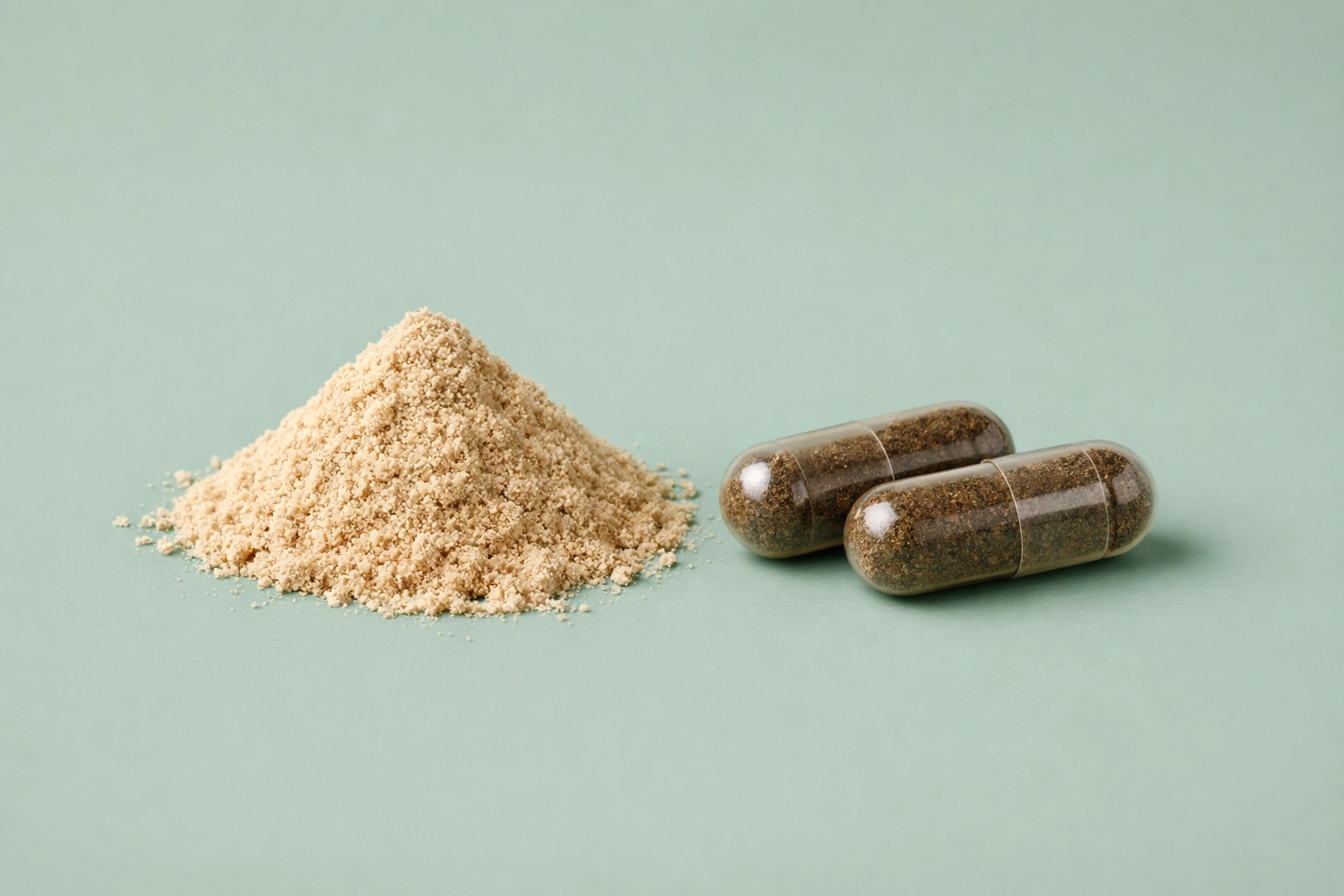
To get a therapeutic effect, you would need to consume massive amounts of raw powder. Instead, you should look for standardized extracts like KSM-66 or Sensoril. These are concentrated versions that guarantee a specific percentage of withanolides (usually 5% or higher). If your supplement label doesn't specify the withanolide content, you are essentially guessing at the potency.
The Fix: Always look for standardized extracts. At Fitness Health, our Ashwagandha capsules are formulated to provide a high-potency dose that ensures you are actually getting the bioactive compounds needed to lower cortisol and improve focus.
2. Taking Ashwagandha on an Empty Stomach
It is a common habit to take all your supplements first thing in the morning on an empty stomach. With Ashwagandha, this is a recipe for a stomach ache.
Ashwagandha can be quite heavy on the digestive system. Taking it without food often leads to:
- Nausea
- Upper abdominal discomfort
- Loose stools or diarrhea
Furthermore, the active compounds in Ashwagandha are fat-soluble. This means they are absorbed much more efficiently when consumed alongside healthy fats. If you take it with just a glass of water, your body may not be able to process and utilize the herb effectively.
The Fix: Take your Ashwagandha with a meal that contains some fat: think eggs, avocado, or even a splash of milk in your coffee. This protects your stomach lining and boosts bioavailability.
3. Getting the Timing Wrong (Day vs. Night)
Timing is everything, and with Ashwagandha, the "right" time depends entirely on your goals.
- For Stress and Focus: If you are using Ashwagandha to manage daytime anxiety or to stay calm during a busy workday, taking it in the morning is ideal. It helps modulate your body's stress response as the day unfolds. You can learn more about herbal options for this in our guide on herbal supplements for pre-workout focus.
- For Sleep and Recovery: If you struggle with a racing mind at night, taking Ashwagandha about 30 to 60 minutes before bed is the better move. It has a mild sedative effect that helps prepare the body for rest.
Taking a "sleep-focused" dose in the morning might leave you feeling slightly too relaxed or "foggy" during a meeting. Conversely, taking a morning dose might not be enough to help you wind down if your cortisol levels spike in the evening.
The Fix: Identify your primary goal. If it's sleep, head over to our Sleep Collection. If it's daytime calm, check out our Stress Collection. Some users find the "split dose" (half in the morning, half at night) works best for 24-hour coverage.
4. Expecting Instant Results (The "Ibuprofen" Fallacy)
We live in an age of instant gratification. If we have a headache, we take an aspirin and expect it to be gone in 20 minutes. Ashwagandha does not work like that.
As an adaptogen, Ashwagandha works by balancing the hypothalamic-pituitary-adrenal (HPA) axis. This is a gradual process. Most clinical studies showing significant reductions in cortisol and improvements in muscle recovery measure results after 6 to 8 weeks of consistent use.
Many people take it for three days, feel "the same," and decide the supplement doesn't work. In reality, the herb was just starting to interface with your hormonal system.
The Fix: Commit to a minimum of 30 days of daily use before evaluating its effectiveness. Consistency is the only way to see true physiological changes.
5. Using Extreme Dosages
When it comes to supplements, "more" is rarely "better." Because Ashwagandha is marketed as a natural herb, some people assume they can take double or triple the recommended dose for faster results.
High doses (typically above 1,000mg to 2,000mg of extract per day) are not only unnecessary but can be counterproductive. Excessive Ashwagandha intake has been linked to:
- Excessive drowsiness
- Severe digestive upset
- Potential interference with thyroid function (hyperthyroidism)
Most clinical research suggests that the "sweet spot" for most adults is between 300mg and 600mg of a high-quality extract daily.
The Fix: Stick to the recommended dosage on the bottle. If you are using Fitness Health's Ashwagandha, we’ve already calculated the optimal dose for safety and efficacy. Start low and only increase if you feel your body needs more support after several weeks.

6. Not Cycling Your Supplements
While Ashwagandha is generally safe for short-to-medium-term use, we don't yet have enough long-term data to recommend taking it every single day for years on end.
The body is highly adaptable. If you take any substance that modifies your hormones or neurotransmitters for too long, your body may begin to downregulate its own natural responses. This is why many herbalists recommend "cycling."
The Fix: A common and effective cycle is 8 weeks on, 2 weeks off. This "reset" period allows your body to maintain its own natural equilibrium and ensures that the herb remains effective when you start your next cycle.
7. Ignoring Potential Interactions
Ashwagandha is powerful, which means it can interact with other medications. This is a mistake that can have actual health consequences.
You should be particularly cautious if you are on:
- Thyroid Medication: Ashwagandha may increase thyroid hormone production. If you are already taking medication for an overactive or underactive thyroid, this can throw your levels out of whack.
- Blood Sugar Medication: It can lower blood sugar levels, which might interfere with diabetes medications.
- Sedatives: Since it has a calming effect, it can amplify the effects of benzodiazepines or sleep medications.
- Immunosuppressants: Because it may boost the immune system, it could interfere with medications used for autoimmune conditions.
The Fix: If you are on any prescription medication, a quick chat with your GP is essential before starting Ashwagandha. Safety should always come before optimization.

Summary of Key Takeaways
To make sure your Ashwagandha routine is actually helping you rather than just costing you money, remember these points:
- Extracts > Powders: Only buy standardized extracts with clear withanolide percentages.
- Eat First: Always take your capsules with food and healthy fats to avoid nausea.
- Target Your Timing: Morning for stress/focus, evening for sleep.
- Be Patient: Give it at least 4-6 weeks of daily use to feel the full effects.
- Don't Overdose: Stay within the 300mg-600mg range unless directed otherwise.
- Cycle Off: Take a 2-week break every couple of months to keep your system responsive.
If you’re looking for a high-quality, reliable source for your supplements, you can explore our full range of Health Care products. Whether you are looking for Nootropics to boost your brainpower or Joint Health support for your training, we prioritize purity and potency in everything we make.
Don't let simple mistakes hold back your progress. Treat your supplements with the same precision you treat your diet and training, and you’ll see the results you're after.