Ashwagandha (Withania somnifera) has transitioned from a staple of traditional Ayurvedic medicine to one of the most clinically researched adaptogens in modern nutritional science. According to the National Institutes of Health (NIH), adaptogens are substances that help the body manage stress and maintain homeostasis. As stress-related health concerns continue to rise globally, ashwagandha capsules have emerged as a primary intervention for those seeking natural support for cortisol regulation, sleep quality, and physical performance.
Table of Contents
- The Science of Stress: How Ashwagandha Works
- Key Takeaways: Is Ashwagandha Right for You?
- Clinical Evidence: What the Data Says About Cortisol
- Beyond Stress: Sleep and Cognitive Support
- Real-World View: Hype vs. Scientific Reality
- Safety, Dosage, and Contraindications
- Step-by-Step Guide to Supplementing
- Frequently Asked Questions
Key Takeaways: Is Ashwagandha Right for You? {#key-takeaways}
| Feature | Scientific Consensus |
|---|---|
| Primary Benefit | Significant reduction in perceived stress and serum cortisol levels. |
| Active Compounds | Standardized extracts should contain at least 5% withanolides. |
| Effective Dose | 300mg to 600mg daily (standardized extract). |
| Time to Effect | Measurable changes typically seen within 4–8 weeks. |
| Safety Profile | Generally safe for healthy adults; high compliance in clinical trials. |
The Science of Stress: How Ashwagandha Works {#science-stress}
Ashwagandha operates primarily by modulating the Hypothalamic-Pituitary-Adrenal (HPA) axis, the body's central stress response system. When we encounter a stressor, the HPA axis triggers the release of cortisol, often called the "stress hormone." While cortisol is essential for the "fight or flight" response, chronically elevated levels can lead to fatigue, weight gain, and impaired cognitive function.
Research suggests that the bioactive compounds in ashwagandha, known as withanolides, act as mimics or modulators of specific neurotransmitters. Specifically, they may influence GABAergic signaling, which promotes a calming effect on the nervous system.
"Ashwagandha's role in stress management is largely attributed to its ability to attenuate the HPA axis, thereby reducing the production of stress markers like cortisol and DHEA-S." , Scientific Summary from PubMed Central.

Clinical Evidence: What the Data Says About Cortisol {#clinical-evidence}
The most compelling reason to consider ashwagandha capsules is the robust data regarding cortisol reduction. Unlike many supplements that rely on anecdotal evidence, ashwagandha has undergone numerous randomized, double-blind, placebo-controlled trials, the gold standard of clinical research.
Cortisol Reduction Data Comparison
| Study Duration | Daily Dosage | Result: Cortisol Reduction | Result: Stress Scale (HAM-A) |
|---|---|---|---|
| 60 Days | 300 mg (KSM-66) | 27.9% Decrease | 44.0% Improvement |
| 90 Days | 600 mg | 23.0% Decrease | Significant Improvement |
| 30 Days | 240 mg | 11.0% Decrease | Moderate Improvement |
As shown in the table above, the most significant results are often correlated with higher quality, standardized extracts like KSM-66.
Pro Tip: Look for "KSM-66" on the label. This is a highly concentrated, full-spectrum root extract that has been used in the majority of successful clinical trials.
Beyond Stress: Sleep and Cognitive Support {#beyond-stress}
While stress management is the headline benefit, ashwagandha provides broader wellness support.
- Sleep Quality: Studies using the Pittsburgh Sleep Quality Index (PSQI) have shown that participants taking ashwagandha experienced significantly better sleep efficiency and reduced sleep latency (the time it takes to fall asleep).
- Physical Performance: Research published in the Journal of the International Society of Sports Nutrition indicates that ashwagandha may improve muscle strength and recovery by supporting healthy testosterone levels in men and reducing exercise-induced muscle damage.
- Cognitive Clarity: By reducing the "noise" of chronic stress, many users report improved focus and memory retention.

Real-World View: Hype vs. Scientific Reality {#real-world-view}
It is important to distinguish between marketing hype and what the science actually supports:
- The Hype: "Ashwagandha is a miracle cure for anxiety that works instantly."
- The Reality: Ashwagandha is a powerful tool, but it is not a "magic pill." It typically requires consistent daily dosing for at least 30 to 60 days before the full benefits are realized. It works best as part of a holistic approach that includes proper nutrition and sleep hygiene.
- The Hype: "Everyone should take the highest dose possible (e.g., 8000mg)."
- The Reality: High-potency extracts (like 8000mg equivalent) are effective, but "more" isn't always "better" if the quality of the extract is low. Standardized withanolide content is more important than raw powder weight.
Safety, Dosage, and Contraindications {#safety-dosage}
While ashwagandha is generally well-tolerated, it is not suitable for everyone.
Safety Warnings and Contraindications:
- Thyroid Conditions: Ashwagandha may increase thyroid hormone levels. If you have hyperthyroidism or take thyroid medication, consult your doctor.
- Autoimmune Diseases: Because it can stimulate the immune system, those with conditions like Lupus or Rheumatoid Arthritis should use caution.
- Pregnancy and Breastfeeding: There is insufficient evidence to guarantee safety; avoid use during these periods.
- Interactions: May interact with sedatives (benzodiazepines), immunosuppressants, and blood sugar medications.
Standard Dosage Guide:
- Standardized Extract: 300mg – 600mg per day.
- Timing: Can be taken in the morning for all-day stress support or in the evening to assist with sleep.
Step-by-Step Guide to Supplementing {#step-by-step}
- Consult Your Professional: Before starting, check for any contraindications with your GP, especially if you take existing medications.
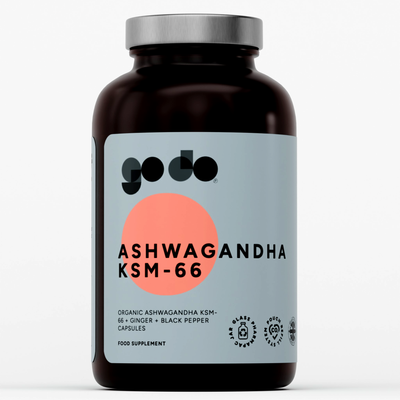
- Select Quality: Choose a supplement standardized to at least 5% withanolides. Our Organic Ashwagandha KSM-66 provides a clinically backed 3-in-1 complex.
- Establish a Routine: Take your capsule at the same time every day to maintain consistent blood levels.
- Monitor Your Response: Keep a simple log of your stress levels and sleep quality over 8 weeks.
- Cycle if Necessary: While not strictly required, some practitioners suggest a "5 days on, 2 days off" approach or a break every 3 months to assess your baseline.

Optimize Your Resilience with Fitness Health
At Fitness Health, we provide premium, UK-made supplements designed for those who refuse to settle for average health. Our Organic Ashwagandha KSM-66 is formulated for maximum bioavailability, packed in eco-conscious, plastic-free packaging.
Shop Our Stress & Wellness Collection
Frequently Asked Questions {#faq}
How long does it take for ashwagandha to start working?
While some users feel a subtle calming effect within a few days, clinical trials show significant results usually appear after 4 to 8 weeks of consistent use.
Can I take ashwagandha with my morning coffee?
Yes. In fact, many people find that ashwagandha helps take the "jittery edge" off caffeine while maintaining focus.
Does it matter if I take it with food?
Ashwagandha can be taken with or without food. However, taking it with a small meal may help prevent mild stomach upset in sensitive individuals.
Is ashwagandha vegan-friendly?
Our capsules at Fitness Health are 100% vegan-friendly and made without animal-derived gelatin.
Recommended Reading
- Supplements for Energy and Focus
- Understanding Modern Recovery Techniques
- Natural Support for Nerve Health
Article generated by Penny