

Fermented foods are defined as foods transformed by microbial activity, producing probiotics, postbiotics, and bioactive compounds that directly improve how your gut functions. This is why fermented foods benefit digestion at a biochemical level, not just as a folk remedy. Foods like kimchi, kefir, sauerkraut, yogurt, and sourdough bread deliver live bacteria, short-chain fatty acids (SCFAs), and digestive enzymes that strengthen the gut lining, reduce inflammation, and improve nutrient absorption. Research shows a 10-week study of daily fermented food intake reduced 19 inflammatory proteins, including interleukin 6. That finding alone signals how powerful these foods are for your gut and immune system.
Why fermented foods benefit digestion at the molecular level
Fermentation predigests complex carbohydrates before food ever reaches your gut. Microbes break down starches, sugars, and plant fibers into simpler compounds your digestive system handles with far less effort.
This process also reduces digestive irritants like FODMAPs, phytic acid, and oxalates. That reduction matters because these compounds trigger bloating, cramping, and discomfort in people with sensitive digestive systems. Sourdough bread is the clearest example: the long fermentation process breaks down gluten proteins and FODMAPs to levels that many gluten-sensitive people tolerate without symptoms.
Here is what fermentation specifically removes or reduces in food:
- FODMAPs (fermentable oligosaccharides, disaccharides, monosaccharides, and polyols): short-chain carbs that pull water into the gut and feed gas-producing bacteria
- Phytic acid: an antinutrient in grains and legumes that blocks mineral absorption, particularly iron and zinc
- Oxalates: compounds in leafy greens and seeds that bind calcium and can contribute to kidney stones in high amounts
- Lectins: plant proteins that irritate the gut lining in their unfermented form
Each of these compounds becomes less problematic after fermentation. The result is food that your gut absorbs more efficiently and with less inflammatory response.
Pro Tip: If you have irritable bowel syndrome (IBS) or a sensitive gut, start with sourdough bread or low-FODMAP fermented options before moving to higher-fiber choices like kimchi or raw sauerkraut.
How probiotics and postbiotics from fermented foods support your gut
Probiotics are live bacteria delivered by fermented foods. Postbiotics are the chemical compounds those bacteria produce during fermentation. Both matter, but the distinction changes how you think about which foods to eat.

Probiotics from foods like kefir and yogurt temporarily colonize the gut and compete with harmful microbes for space and nutrients. This competition shifts the balance of your gut microbiome toward beneficial species. The role of probiotics in digestion goes beyond just adding good bacteria. They also produce lactic acid, which lowers gut pH and creates an environment where pathogens struggle to survive.
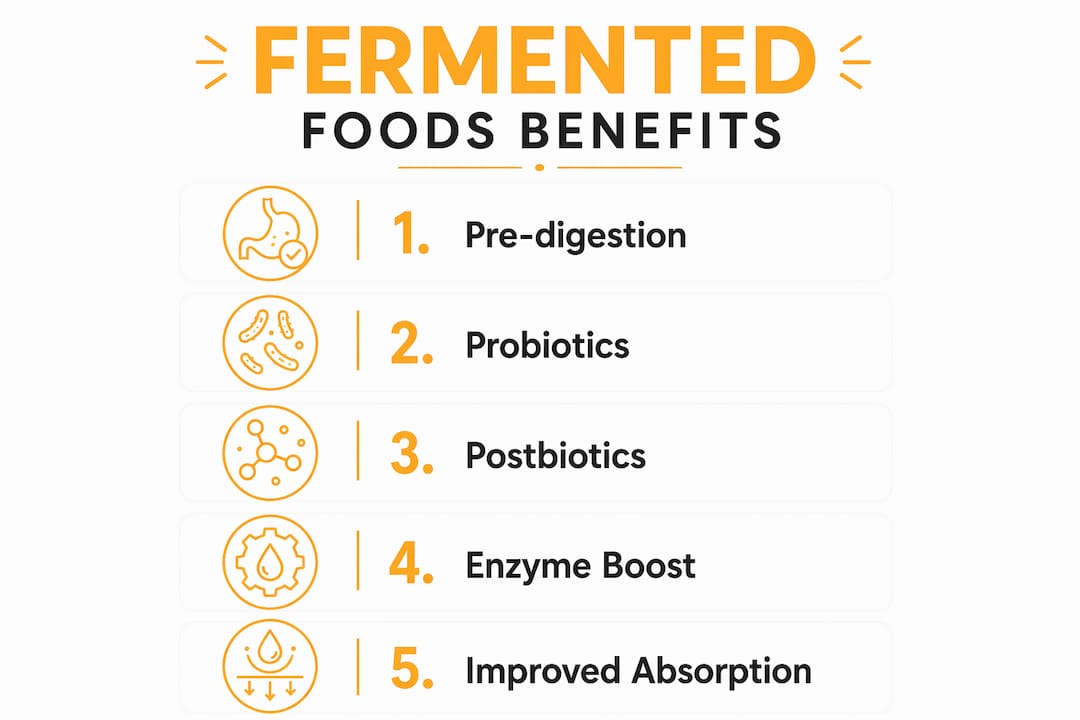
Postbiotics are often more important than the live bacteria themselves. Many bacteria in fermented foods never colonize the gut permanently, but their chemical byproducts interact directly with immune cells and feed existing gut bacteria. SCFAs like butyrate are the most studied postbiotic. Butyrate upregulates tight junction proteins in the intestinal wall, reducing the leakage of pro-inflammatory compounds like lipopolysaccharide into the bloodstream.
| Compound | Source | Primary digestive benefit |
|---|---|---|
| Butyrate (SCFA) | Fermentation of fiber by gut bacteria | Feeds colon cells, strengthens gut barrier |
| Lactic acid | Yogurt, kefir, kimchi | Lowers gut pH, inhibits pathogens |
| Bioactive peptides | Fermented dairy, legumes | Supports immune signaling, reduces inflammation |
| Vitamin B12 | Fermented vegetables | Supports nerve function and red blood cell production |
Fermented vegetables provide vitamin B12 not otherwise available from plant sources. That makes fermented foods particularly valuable for people eating mostly plant-based diets.
Pro Tip: Heat-treated fermented foods like shelf-stable miso or pasteurized kimchi still deliver postbiotic benefits even without live bacteria. Do not skip them just because they lack active cultures.
How fermentation affects enzyme activity and blood sugar
Probiotic strains in fermented foods do more than populate your gut. They produce enzymes that interfere with carbohydrate digestion in a way that benefits blood sugar control.
Specifically, probiotic isolates from traditional fermented foods inhibit alpha-glucosidase and alpha-amylase, the two enzymes your body uses to break down starches into glucose. Research on traditional Indian fermented foods found inhibition rates of up to 86.97% for alpha-glucosidase and 75.87% for alpha-amylase. Those numbers mean glucose enters your bloodstream more slowly after a meal containing fermented foods.
Slower glucose absorption has direct digestive benefits:
- Reduced post-meal bloating: rapid glucose spikes trigger faster gut motility, which can cause cramping and loose stools
- Better satiety signals: a slower glucose curve extends the feeling of fullness, reducing overeating
- Lower fermentation in the colon: when starches are digested higher in the gut, less undigested material reaches the colon to be fermented by gas-producing bacteria
Fermented foods also release bioactive peptides during protein digestion that stimulate insulin release and improve glucose uptake at the cellular level. This metabolic effect connects gut health to broader energy regulation, which is why athletes and active people notice improved recovery and energy stability when they eat fermented foods consistently.
How to add fermented foods to your diet for real results
The biggest mistake people make with fermented foods is adding too much too fast. Your gut microbiome needs time to adjust to new microbial populations and increased fiber loads.
- Start with one serving per day. Begin with a mild option like plain yogurt or a small portion of kefir. This gives your gut bacteria time to adapt without triggering gas or bloating.
- Pair fermented foods with dietary fiber. Fiber acts as fuel for the beneficial bacteria introduced by fermented foods. Without fiber, those bacteria have nothing to eat and their population declines quickly.
- Rotate your sources. Different fermented foods deliver different bacterial strains and postbiotics. Eating only yogurt limits your microbiome diversity. Rotate between kefir, kimchi, miso, tempeh, and sauerkraut across the week.
- Stay hydrated. Adequate hydration supports the gut as it adjusts to increased microbial activity. Dehydration slows gut motility and worsens any temporary bloating.
- Choose live-culture products when possible. Refrigerated sauerkraut and kimchi contain active bacteria. Shelf-stable versions are still beneficial for postbiotics, but live-culture products offer both probiotic and postbiotic effects.
Pro Tip: Add a tablespoon of sauerkraut or kimchi to a meal that already contains vegetables or legumes. The fiber from those foods feeds the bacteria you are introducing, making the combination more effective than either food alone.
For athletes specifically, the gut microbiome guide from Fitnesshealth covers how microbial diversity affects performance and recovery in detail.
Key Takeaways
Fermented foods improve digestion by delivering probiotics, postbiotics, and enzyme-modifying compounds that work together to strengthen the gut barrier, reduce inflammation, and improve nutrient absorption.
| Point | Details |
|---|---|
| Fermentation predigests food | Breaking down FODMAPs, phytic acid, and oxalates reduces digestive irritants before food reaches your gut. |
| Postbiotics drive gut barrier strength | Butyrate and SCFAs reinforce tight junction proteins, reducing gut permeability and systemic inflammation. |
| Enzyme inhibition slows glucose | Probiotic strains inhibit alpha-glucosidase and alpha-amylase, reducing post-meal blood sugar spikes. |
| Fiber pairing multiplies benefits | Fermented foods work best alongside a fiber-rich diet that feeds and sustains beneficial bacteria. |
| Gradual introduction prevents discomfort | Starting with one serving daily and increasing slowly lets your gut microbiome adapt without bloating or gas. |
The postbiotic effect most people completely miss
Most people who start eating fermented foods focus entirely on live bacteria. They check labels for CFU counts and worry about whether their yogurt has “active cultures.” That focus misses the bigger picture.
The fermentation metabolites, specifically butyrate, lactic acid, and bioactive peptides, are doing the heaviest lifting for your gut. I have seen people get real digestive improvements from heat-treated miso and cooked tempeh, foods with no live bacteria at all. The postbiotic compounds survive cooking and still interact with gut immune cells and the intestinal barrier.
The other thing I would push back on is treating fermented foods as a standalone fix. Fermented foods are a catalyst, not a cure. A diet low in fiber and high in ultra-processed foods will undermine any benefit from kefir or kimchi within days. The bacteria need something to eat. Without a diverse, plant-rich diet underneath them, the microbial shifts from fermented foods are temporary at best.
If you want lasting gut health benefits, build the fiber foundation first, then layer in fermented foods. That sequence produces results that hold. Anything else is just expensive yogurt.
— Rene
Fitnesshealth resources for better gut health
Improving your digestion through diet takes more than a single food swap. Fitnesshealth provides evidence-based guides, supplement recommendations, and practical nutrition content designed for people who want real results from their gut health efforts.

Whether you are managing digestive discomfort, supporting athletic recovery, or building a stronger microbiome from the ground up, the Fitnesshealth gut health content library covers probiotic best practices, fermented food strategies, and supplement guidance in one place. For athletes looking at how digestion connects to performance, the probiotics for athletes guide is a strong starting point. Visit Fitnesshealth to find the resources that match where you are in your gut health goals.
FAQ
What makes fermented foods good for digestion?
Fermented foods deliver probiotics, postbiotics like butyrate, and predigested nutrients that strengthen the gut lining and reduce inflammation. They also break down digestive irritants like FODMAPs and phytic acid before the food reaches your gut.
Do fermented foods need live bacteria to help digestion?
No. Heat-treated fermented foods still provide postbiotic compounds that feed gut bacteria and support the intestinal barrier. Live cultures add probiotic benefits on top of those postbiotic effects.
How quickly do fermented foods improve gut health?
Research shows measurable reductions in inflammatory proteins after 10 weeks of daily fermented food intake. Individual results vary based on diet diversity, fiber intake, and baseline gut microbiome composition.
Can fermented foods cause digestive problems?
Introducing too many fermented foods too quickly can cause temporary bloating and gas as your gut microbiome adjusts. Starting with one small serving daily and increasing gradually prevents most discomfort.
Which fermented foods are best for a sensitive gut?
Sourdough bread and plain kefir are the most tolerable starting points for people with digestive sensitivities. Sourdough fermentation significantly reduces FODMAPs, making it easier to digest than standard bread.










