If you skip mobility, you’re leaving strength on the table.
We’ve all been there. You walk into the gym, short on time, and head straight for the squat rack or the bench. You might do a couple of arm circles or a quick quad stretch, but then it’s straight into the heavy plates. You feel "fine," but you notice your squat depth isn't quite what it used to be, or your shoulders feel a bit "clicky" during overhead presses.
In the world of strength training, there is a massive difference between being flexible and being mobile. Flexibility is the passive range of motion (how far someone can push your leg into a stretch). Mobility is the active control over that range of motion. If you want to lift heavier, stay in the game longer, and avoid the nagging aches that plague most lifters over 30, you need a dedicated mobility routine.
This isn't about sitting in a pretzel shape for an hour. This is about "Longevity Lifting." It’s a joint-friendly approach that allows you to train smarter, not longer. By spending just 10 minutes before your session: or even on your off days: you can unlock better positions, produce more force, and keep your joints feeling like high-performance machinery.
Why Mobility Equals More Weight on the Bar
It sounds counterintuitive. How does moving around without weights make you stronger? It comes down to physics and leverage.
When your joints are restricted: say, your ankles are stiff: your body has to find that missing range of motion elsewhere. If your ankles won't bend, your heels lift during a squat. To compensate, your torso leans too far forward, putting unnecessary shear force on your lower back. You aren't "weak"; you’re just out of position.
By improving your mobility, you:
- Achieve better depth: Especially in squats and lunges.
- Improve force production: When you are in the "correct" mechanical position, your muscles can fire more efficiently.
- Reduce "energy leaks": A stable, mobile body transfers power through the floor and into the bar without losing it to compensations.

The "Big Three" Focus Areas
For most lifters, three specific areas tend to be the tightest: the ankles, the hips, and the thoracic spine (mid-back). If these three are moving well, your lifts will feel night-and-day different.
1. The Ankle: The Foundation of the Squat
Stiff ankles are the number one killer of good squat form. If your shins can’t track forward over your toes, you will always feel like you’re falling backward.
The Drill: Combat Stretch (1 minute per side)
- Get into a half-kneeling position (one knee on the floor, one foot forward).
- Keep your front heel glued to the floor. This is non-negotiable.
- Drive your knee forward as far as possible over your pinky toe.
- You can use a kettlebell or your own body weight on top of your knee to gently increase the pressure.
- Hold the end range for 2 seconds, then back off. Repeat for 10-12 reps.
2. The Hips: The Power Center
Your hips are designed to move in every direction. However, between sitting at desks and only moving in the "up and down" plane of lifting, they often get locked up. This leads to hip "pinching" or lower back pain.
The Drill: 90/90 Hip Switches (2 minutes)
- Sit on the floor with your front leg at a 90-degree angle and your back leg at a 90-degree angle.
- Keep your chest upright. Try to sit "tall" through your sit-bones.
- Without using your hands if possible, rotate your knees to the other side.
- Focus on keeping your heels on the ground as you transition.
- This improves both internal and external rotation of the hip: essential for everything from sumo deadlifts to basic lunges.

3. The Thoracic Spine: The Key to Overhead Power
The thoracic spine (T-Spine) is your mid-back. Most of us are hunched over phones or keyboards, which "rounds" this area. If you can’t extend or rotate through your T-Spine, you won’t be able to get your arms fully overhead without arching your lower back.
The Drill: Thread the Needle with Rotation (2 minutes)
- Start on all fours (tabletop position).
- Reach one arm under your body, trying to get your shoulder close to the floor.
- Then, take that same arm and reach it up toward the ceiling, following your hand with your eyes.
- This addresses both the "stretch" and the "active" rotation required for healthy shoulders.
- For those focusing on upper body strength, this is a game-changer for improving wide-grip pull-up form and overhead pressing stability.
The Supplemental Support: Shoulders and Wrists
While the "Big Three" are the heavy hitters, we shouldn't ignore the support system. If you bench heavy or do a lot of front squats, your wrists and shoulders need some love.
The KB Windmill (1 minute per side) This is one of the most effective drills for shoulder stability and lateral hip mobility.
- Hold a light kettlebell or dumbbell overhead in your right hand.
- Turn your feet 45 degrees to the left.
- Keeping your right arm locked and your eyes on the weight, hinge at the hips and slide your left hand down the inside of your left leg.
- Go as low as your mobility allows, then drive back up.
Wrist Mobilization (1 minute)
- Get on all fours and place your palms on the floor with fingers pointing toward your knees.
- Gently lean back to stretch the forearms.
- Flip your hands so the backs of your hands are on the floor and repeat.
- This is essential for anyone feeling "pressure" in the wrists during heavy pressing or front-loaded movements.

Training Smarter: The Longevity Mindset
Longevity lifting isn't about avoiding intensity. It's about ensuring your body is capable of handling that intensity for years to come. When you "train smarter," you acknowledge that your body is a biological system, not just a machine.
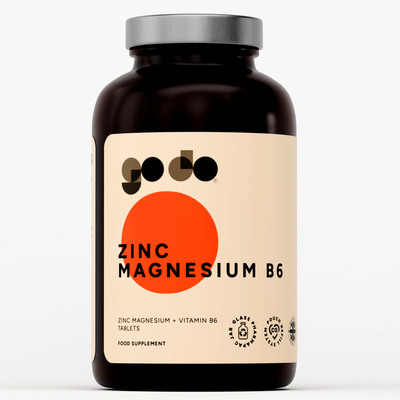
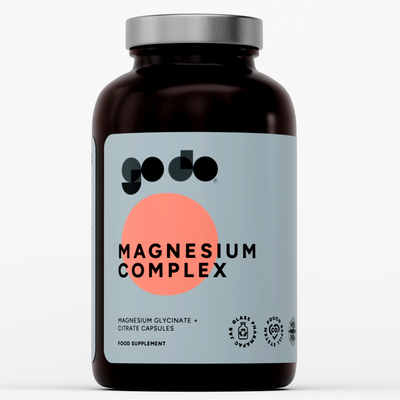
Part of this system is how you fuel and recover. You can have the most mobile joints in the world, but if your muscles are constantly cramped or your nervous system is fried, your performance will suffer. This is where understanding the timing of your supplements becomes vital. For example, taking magnesium post-workout can help muscle relaxation, while ensuring your zinc levels are optimized supports overall hormonal health and recovery. You can read more about how magnesium and zinc impact performance to further your longevity goals.
The 10-Minute Daily Checklist
If you want to make this routine stick, don't overcomplicate it. Follow this sequence before your next lift:
- Combat Stretch: 1 min / side (Ankles)
- 90/90 Switches: 2 mins total (Hips)
- World’s Greatest Stretch: 1 min / side (Full Body)
- Thread the Needle: 1 min / side (T-Spine)
- Wrist Circles / Stretches: 1 min total (Wrists)
- Goblet Squat Hold: 1 min (Deep Squat Prying)

Summary Takeaways
- Active Over Passive: Focus on moving through ranges of motion rather than just holding static stretches.
- The Chain Reaction: Stiff ankles lead to bad knees; stiff hips lead to a bad back. Address the root cause.
- Consistency Wins: 10 minutes every day is infinitely better than an hour-long session once a week.
- Listen to Your Body: If a position feels "pinchy" or sharp, back off. Mobility should feel like a "productive" tension, never pain.
- Support Your Efforts: Combine your physical mobility work with smart recovery strategies and proper nutrition to ensure your joints and muscles have the raw materials they need to adapt.
By integrating this 10-minute routine, you aren't just warming up: you're bulletproofing your body. You'll move better, feel better, and ultimately, you'll lift a lot more weight. Stop leaving strength on the table and start prioritizing the way you move.
For more tips on training and health, you can browse our full range of educational blog posts or reach out to us at Fitness Health for guidance on the best tools for your fitness journey.