

Magnesium can improve sleep for some people, particularly those with low dietary intake, mild insomnia, restless legs, nighttime muscle cramps, or the kind of racing-brain anxiety that hits right when the lights go out. A 2025 randomized trial found 250 mg of magnesium bisglycinate daily for 28 days modestly reduced insomnia severity scores compared to placebo, though the effect size was small. It’s a supportive tool, not a sedative.
Who tends to notice the biggest difference:
- People with confirmed or suspected low magnesium intake
- Those dealing with nighttime anxiety or a “busy brain” at bedtime
- Anyone with restless legs or muscle cramps disrupting sleep
Quick safety check: before taking magnesium nightly, confirm normal kidney function and review current medications, since certain antibiotics and thyroid drugs interact with magnesium absorption.
Key Takeaways
Magnesium glycinate at 200 to 400 mg nightly offers a modest, evidence-supported way to support sleep, especially for people with low baseline intake or nighttime anxiety.
| Point | Details |
|---|---|
| Effect size is modest | A 28-day RCT showed a small but real improvement in insomnia scores (Cohen’s d ≈ 0.2), not a dramatic fix. |
| Glycinate is the safer first choice | It’s better tolerated than citrate or oxide and less likely to cause digestive upset. |
| Give it four weeks | Trial data and clinical guidance both point to a minimum four-week window before judging results. |
| Kidney function is the key safety check | Impaired kidneys can’t clear excess magnesium, raising overdose risk even at typical doses. |
| FitnessHealth stocks properly dosed glycinate | Look for clearly labeled elemental magnesium content and start at the low end of the range. |
Table of Contents
- How Magnesium Affects Sleep Biology and Relaxation
- What the Research Says About Magnesium and Sleep
- Which Magnesium Forms Work Best for Sleep
- How Much Magnesium Should You Take for Sleep?
- How to Test Magnesium for Your Own Sleep
- Magnesium vs. Other Sleep Supplements and Medications
- Do Magnesium Needs for Sleep Vary by Age or Health Condition?
- Can Too Much Magnesium Hurt Your Sleep?
- When Should You Talk to a Doctor Before Trying Magnesium?
- What Actually Matters When You Try Magnesium for Sleep
- Frequently Asked Questions
- Sources
How Magnesium Affects Sleep Biology and Relaxation
Magnesium doesn’t knock you out. It works more like a dimmer switch on your nervous system than an off switch. The mineral helps regulate neurotransmitters, particularly GABA and glycine signaling, which are the brain’s primary calming chemicals. When GABA activity runs low, your mind stays on alert even when your body is exhausted.
Magnesium also plays a role in melatonin production and may help lower cortisol levels in the evening, both of which support your natural sleep-wake rhythm. On the physical side, it relaxes skeletal muscles and nerve endings, which explains why it shows up so often in conversations about restless legs and nighttime leg cramps.
Here’s what magnesium’s mechanism actually covers:
- Supports GABA and glycine pathways linked to calm, non-anxious states
- Contributes to melatonin synthesis and may blunt evening cortisol spikes
- Relaxes muscle tissue, easing cramps and restless-leg symptoms
- Works gradually rather than producing an immediate sedative effect
Pro Tip: If your main issue is a racing mind rather than physical restlessness, pair magnesium with a wind-down routine. The mineral supports calm, but it won’t override a brain still processing tomorrow’s to-do list.
What the Research Says About Magnesium and Sleep
The strongest recent data comes from a double-blind, placebo-controlled trial of 155 adults who reported poor sleep. Participants took 250 mg of elemental magnesium as bisglycinate daily for 28 days. Insomnia Severity Index scores dropped by 3.9 points in the magnesium group versus 2.3 points in the placebo group, a statistically real but modest difference, with an effect size around 0.2 on Cohen’s d scale. That’s a small nudge, not a dramatic fix.
Observational data tells a complementary story. A study tracking nearly 4,000 young adults found that those with higher dietary magnesium intake had 23% greater odds of reporting good sleep quality and were less likely to sleep under seven hours a night.
A few caveats matter here:
- Trials tend to be small, short, and inconsistent in dosing and formulation
- Results vary by baseline magnesium status. People already well-nourished see less benefit
- Most studies run four weeks or less, so long-term effects remain unclear
The practical takeaway: magnesium is more likely to help if your diet is already falling short, not a universal upgrade for anyone’s sleep.
Which Magnesium Forms Work Best for Sleep
Not all magnesium supplements behave the same way in your body, and picking the wrong one can mean stomach trouble instead of better rest.
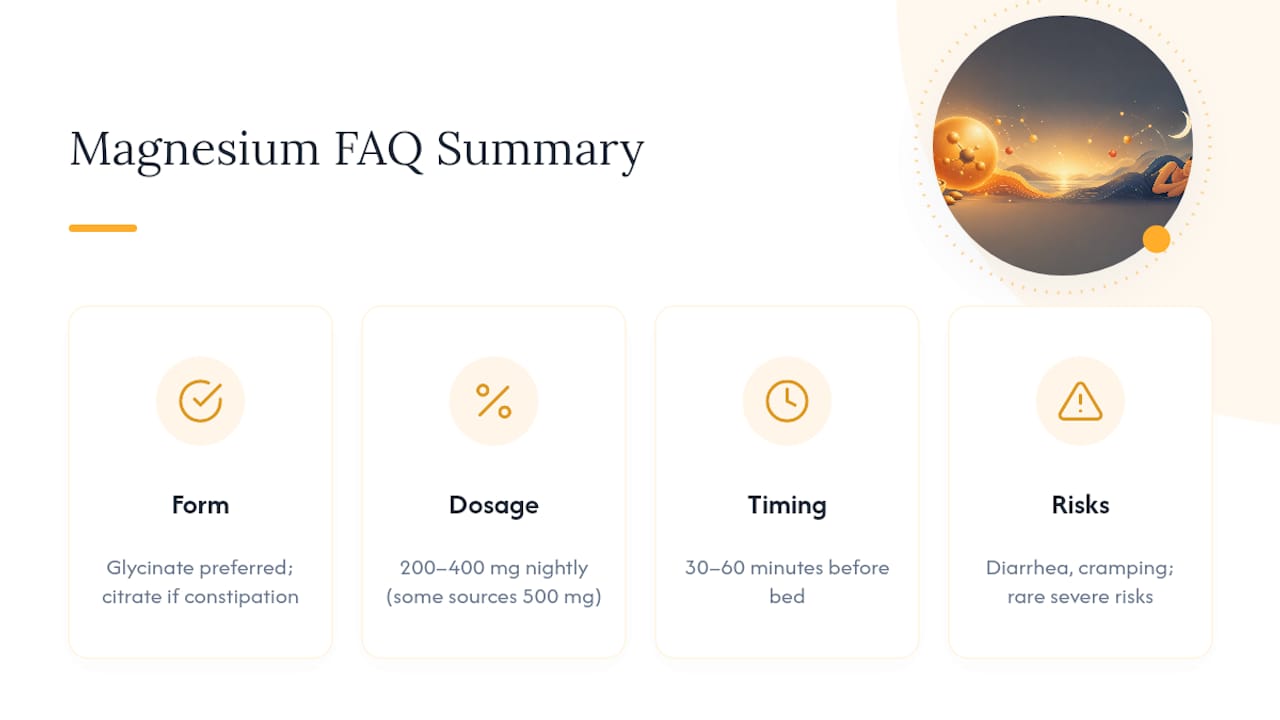
Magnesium glycinate (bisglycinate) is the form most clinical sources point to first. It’s bound to glycine, an amino acid with its own calming properties, and it tends to sit well in the stomach without the laxative effect other forms produce. Cleveland Clinic lists it as a reasonable first-line option for tolerability.

Magnesium citrate absorbs well but pulls water into the intestines, which can mean loose stools at higher doses. If you also struggle with constipation, that side effect becomes a feature rather than a nuisance.
Magnesium threonate gets marketed heavily for cognitive and brain-related benefits. Sleep-specific evidence for this form is thin compared to glycinate.
Magnesium oxide absorbs poorly and functions mostly as a laxative. It shows up in cheap multivitamins, but it’s a weak pick if sleep is your actual goal.
Topical magnesium sprays and lotions remain popular, but transdermal absorption through skin is not well established. Oral forms have the evidence; skip the spray if sleep is the priority.
Pro Tip: Start with glycinate. If you notice digestive upset with any magnesium form, cut the dose in half before switching products entirely, sometimes the issue is quantity, not the compound itself.
How Much Magnesium Should You Take for Sleep?
Dosing depends on the form and your individual tolerance, but clinical sources give reasonably consistent ranges to work from.
- Typical nightly dose: Most guidance points to 200 to 400 mg of elemental magnesium, with Mayo Clinic citing 250 to 500 mg at bedtime for adults likely to benefit.
- Timing: Take it 30 to 60 minutes before bed, giving it time to work as your body winds down.
- Trial length: Give it a minimum of four weeks before deciding whether it’s helping, since the 28-day RCT used that window to detect measurable change.
- Watch for side effects: Diarrhea, nausea, and abdominal cramping are the most common complaints, usually dose-related.
- Rare but serious signs: Muscle weakness or an irregular heartbeat can signal excess magnesium and warrant immediate medical attention.
Magnesium can interfere with certain antibiotics, bisphosphonates, and levothyroxine. The NIH Office of Dietary Supplements recommends spacing doses at least two hours apart from these medications to avoid absorption problems. Anyone with kidney disease should talk to a doctor before starting nightly magnesium. Impaired kidneys can’t clear excess magnesium efficiently, raising the risk of dangerous buildup.
How to Test Magnesium for Your Own Sleep
Treat this like a small personal experiment, not a leap of faith.
- Establish a baseline. Keep a sleep diary for one week, note your typical diet, list current medications, and confirm you don’t have kidney disease.
- Start low. Try magnesium glycinate at 200 to 250 mg elemental, taken 30 to 60 minutes before bed.
- Track results. Log how long it takes you to fall asleep, how often you wake up, subjective sleep quality, and next-day alertness for four weeks.
- Adjust if needed. No change after four weeks with good tolerability? Consider a modest dose increase or a different form before giving up.
- Know when to stop. Digestive side effects that don’t settle mean it’s time to lower the dose or switch products.
Pro Tip: Seek medical review if insomnia persists despite the trial, if you snore with breathing pauses, or if daytime sleepiness is severe. Those symptoms point toward issues magnesium won’t fix.
FitnessHealth’s Commitment to Evidence-Based Sleep Content
FitnessHealth’s guides on muscle repair and sleep and recovery nutrition timing reflect the same standard applied here.
- Every dosage and safety claim in this guide traces back to RCT data or NIH/ODS guidance
- Editorial content favors clinician consultation over blanket recommendations, especially for kidney health and medication interactions
Magnesium vs. Other Sleep Supplements and Medications
Magnesium occupies a different lane than most sleep aids, and understanding that distinction helps set realistic expectations.
Melatonin works directly on your circadian clock, signaling to your brain that it’s nighttime. It’s better suited for circadian misalignment (jet lag, shift work) than for anxiety-driven wakefulness. Magnesium, by contrast, works through calming neurotransmitter pathways rather than clock-signaling.
L-theanine, an amino acid found in tea, promotes relaxation without sedation, similar in spirit to magnesium but through a different mechanism (alpha brain wave activity rather than GABA support). Some people combine the two.
Over-the-counter antihistamines like diphenhydramine cause genuine sedation but come with next-day grogginess and aren’t recommended for regular use.
Prescription sleep medications (benzodiazepines, Z-drugs) work faster and more forcefully than magnesium, but they carry dependency risk and are meant for short-term, medically supervised use, not an everyday habit.
Magnesium’s advantage is its safety margin for otherwise healthy adults and its dual benefit for people whose sleep trouble stems from muscle cramps or nighttime anxiety. Its downside is modest effect size. If you need fast, forceful sedation, magnesium won’t deliver it. If you want a gentler, sustainable addition to your nightly routine, it fits a different, lower-risk category entirely. Readers dealing primarily with anxious thoughts at bedtime may also benefit from behavioral strategies; structured approaches to nighttime anxiety can work alongside supplementation rather than instead of it.
Do Magnesium Needs for Sleep Vary by Age or Health Condition?
Magnesium requirements shift across the lifespan, and sleep-related benefit tends to track with who is most commonly deficient.
Older adults absorb magnesium less efficiently and are more likely to take medications, like diuretics or proton pump inhibitors, that deplete magnesium stores. This group often shows the clearest connection between low magnesium and disrupted sleep, including more frequent nighttime awakenings and leg cramps.
Women, particularly during perimenopause and menopause, report higher rates of sleep disruption and may have increased magnesium needs tied to hormonal shifts affecting stress reactivity and muscle tension.
People with type 2 diabetes often run lower magnesium levels due to increased urinary loss, compounding sleep issues already common with the condition.
Pregnant individuals have elevated magnesium needs generally, but should only supplement under a clinician’s guidance given the specific dosing considerations of pregnancy.
Athletes and highly active individuals lose magnesium through sweat and may benefit from closer attention to intake, particularly if nighttime muscle cramps interrupt sleep. FitnessHealth’s guide on minerals that support athletic performance covers this overlap in more depth.
The common thread: if you fall into a group with elevated depletion risk, low-level chronic deficiency is a more plausible explanation for poor sleep, and correcting it is more likely to produce a noticeable change.
Can Too Much Magnesium Hurt Your Sleep?
Yes, though it takes meaningful overdosing to get there for most healthy adults with functioning kidneys. Excess magnesium from food alone is essentially never a problem, since the kidneys filter out surplus efficiently. Supplements are a different story, particularly at high doses or with impaired kidney function.
The most immediate consequence of overdoing it is gastrointestinal: diarrhea and cramping that disrupts sleep rather than improving it, somewhat defeating the purpose. Beyond digestive symptoms, significant magnesium excess (hypermagnesemia) can cause muscle weakness, dangerously low blood pressure, and irregular heart rhythms, symptoms serious enough to require emergency care rather than a supplement adjustment.
People with kidney disease face the highest risk, since impaired kidneys can’t clear excess magnesium effectively, allowing it to accumulate to harmful levels even at doses considered safe for the general population. This is precisely why the NIH’s clinical guidance singles out kidney function as a prerequisite check before nightly supplementation, not an optional footnote.
The practical lesson: more is not better here. Sticking within the commonly cited 200 to 400 mg elemental range, rather than stacking multiple magnesium-containing products (a supplement plus a magnesium-heavy antacid, for example), keeps you well clear of the doses associated with genuine harm.
When Should You Talk to a Doctor Before Trying Magnesium?
A quick conversation with a healthcare provider before starting nightly magnesium makes sense in several specific situations, even though the mineral is broadly safe for healthy adults.
Talk to a clinician first if you have any degree of kidney disease, since impaired clearance raises overdose risk substantially. The same applies if you take medications that interact with magnesium, including certain antibiotics, bisphosphonates, diuretics, or levothyroxine, where timing adjustments or dose modifications may be necessary.
Pregnant or breastfeeding individuals should get personalized dosing guidance rather than following general adult ranges. Anyone with a heart condition or arrhythmia history should also check in first, given magnesium’s role in cardiac muscle function.
If your sleep trouble comes with red-flag symptoms, loud snoring with breathing pauses, excessive daytime sleepiness despite adequate time in bed, or insomnia lasting more than a few months, that points toward a condition like sleep apnea or a clinical sleep disorder that magnesium won’t address. Those symptoms deserve a medical workup before, not after, a supplement trial.
What Actually Matters When You Try Magnesium for Sleep
The evidence here is honest about its own limits, and that honesty is exactly what most articles on this topic skip. A 0.2 effect size from a well-designed trial is real, but it’s not the kind of result that changes someone’s life overnight. The people who overstate magnesium’s power usually haven’t looked closely at the actual trial data, just the marketing built on top of it.
Where conventional advice falls short is treating magnesium as interchangeable with melatonin or prescription sleep aids. It isn’t. It works through a different, slower mechanism, and expecting immediate sedation sets people up to quit after three nights when the honest trial window is four weeks.
What should come first: figuring out why your sleep is disrupted. Nighttime anxiety, restless legs, and low dietary intake all respond differently, and magnesium helps most when it’s matched to the right cause rather than tried as a blanket fix. Pairing it with sleep hygiene, not swapping one for the other, is where the real, if modest, benefit shows up.
Where FitnessHealth Fits Into Your Magnesium Routine
If you’ve decided glycinate or bisglycinate is the form worth trying, the next question is sourcing one that’s actually dosed the way the research suggests. FitnessHealth carries magnesium formulations built around elemental content that matches the ranges discussed in clinical guidance, rather than fillers padded with cheap oxide forms.

A few things worth checking before you buy any magnesium product: confirm the label states elemental magnesium content clearly (not just total compound weight), look for third-party testing or quality verification, and start with the lower end of the dosing range for the first week to confirm tolerability before increasing. If you’re also managing recovery from training, FitnessHealth’s muscle recovery supplement guide covers how magnesium fits alongside other recovery nutrients. Ready to see the options? Browse FitnessHealth’s supplement collection and start with a single, well-dosed glycinate product before layering on anything else.
Frequently Asked Questions
Does magnesium actually help you sleep, or is it mostly placebo? Trial data shows a real, statistically significant benefit beyond placebo, but the effect is small. It’s most noticeable in people with low baseline magnesium intake, nighttime anxiety, or muscle-related sleep disruption rather than a universal fix for insomnia.
What is the best magnesium for sleep, glycinate or citrate? Magnesium glycinate (bisglycinate) is generally the better starting point for sleep because it’s well tolerated and less likely to cause loose stools. Citrate absorbs well too, but its laxative effect makes it more useful if you also deal with constipation.
What is the right magnesium glycinate dosage for sleep? Most clinical guidance points to 200 to 400 mg of elemental magnesium nightly, with some sources citing up to 500 mg for adults likely to benefit. Start low and adjust based on tolerability.
What is the best time to take magnesium glycinate for sleep? Take it 30 to 60 minutes before bed to give it time to take effect as your body starts winding down.
Does magnesium threonate work for sleep the same way glycinate does? Threonate is marketed mainly for cognitive support, and sleep-specific evidence for it is much thinner than for glycinate. If sleep is your primary goal, glycinate has stronger backing.
Can you take too much magnesium and make sleep worse? Yes. Excess magnesium can cause diarrhea and cramping that disrupts sleep, and in rare cases leads to muscle weakness or irregular heartbeat, particularly in people with kidney disease. Stick to recommended ranges and check with a doctor if you have any kidney concerns.
This article is general information, not a substitute for advice from a qualified doctor. Consult a qualified healthcare professional about your own circumstances before acting on anything here.
Sources
Magnesium-rich foods deserve first consideration before any supplement: leafy greens, almonds and pumpkin seeds, black beans and lentils, whole grains, and dairy in moderation. People already eating this way often see less benefit from supplementing, since dietary intake correlates with better sleep quality on its own.
Pair whatever you try with basic sleep-hygiene habits: a consistent bedtime, a cool and dark room, and less screen time and caffeine in the evening. If sleep problems persist despite both diet and supplementation, a medical evaluation or a different approach like melatonin may be worth discussing with a clinician.
- Magnesium Bisglycinate Supplementation in Healthy Adults Reporting Poor Sleep: A Randomized, Placebo-Controlled Trial
- Dietary magnesium intake and sleep quality: observational study (2021)
- Magnesium — Health Professional Fact Sheet (NIH ODS)
- Magnesium for sleep: What you need to know about its benefits — Mayo Clinic Press
- Does magnesium help you sleep better? — Cleveland Clinic










