Maintaining optimal health requires more than just meeting daily vitamin quotas; it involves managing the intricate biochemical balance between essential fatty acids. Research from the National Institutes of Health (NIH) suggests that while both Omega-3 and Omega-6 polyunsaturated fatty acids are vital for survival, the ratio at which we consume them may be the deciding factor in our long-term cardiovascular and neurological health.
Table of Contents
- The Biological Tug-of-War: Omega-3 vs. Omega-6
- Mechanisms of Action: Inflammation and Cell Membranes
- Heart Health Benefits: Beyond Triglycerides
- Brain Health: Cognitive Function and Structural Integrity
- The Modern Diet Dilemma: Hype vs. Scientific Reality
- Step-by-Step Framework for Balancing Your Ratio
- Safety, Dosage, and Contraindications
- Frequently Asked Questions
Key Takeaways
| Feature | Omega-3 (n-3) | Omega-6 (n-6) |
|---|---|---|
| Primary Sources | Fatty fish, algae, flaxseeds, walnuts | Vegetable oils (corn, sunflower), poultry, eggs |
| Main Function | Anti-inflammatory, membrane fluidity | Pro-inflammatory (protective), cell signaling |
| Key Components | EPA, DHA, ALA | Linoleic Acid (LA), Arachidonic Acid (AA) |
| Ideal Ratio | 1:1 to 1:4 (estimated) | Avoid ratios higher than 1:15 |
| Top Health Benefit | Cardiovascular protection & cognitive support | Skin integrity & metabolic health |
The Biological Tug-of-War: Omega-3 vs. Omega-6
Omega-3 and Omega-6 are "essential" fatty acids, meaning the human body cannot synthesise them and must obtain them through diet. They compete for the same metabolic pathways and enzymes (specifically delta-6 desaturase) to convert into their active forms.
Omega-3 fatty acids, particularly eicosapentaenoic acid (EPA) and docosahexaenoic acid (DHA), are renowned for their anti-inflammatory properties. In contrast, Omega-6 fatty acids, such as linoleic acid, are often precursors to pro-inflammatory molecules. While inflammation is a necessary immune response, a chronic skew toward Omega-6 can lead to a state of systemic low-grade inflammation.
"The increase in the dietary 6:3 ratio is a significant factor in the rising prevalence of chronic inflammatory diseases in Western societies." , Journal of Nutrition and Metabolism.
Pro Tip: Don't try to eliminate Omega-6 entirely. It is essential for skin health and immune function. Focus on increasing Omega-3 to bring the scale back to equilibrium.
Mechanisms of Action: Inflammation and Cell Membranes
The "secret" to why these fats matter lies in your cell membranes. Every cell in your body is encased in a lipid bilayer. The type of fat you eat determines how fluid or rigid these membranes become.
Lipid Conversion Pathway
| Fatty Acid Type | Precursor | Active Derivative | Primary Biological Role |
|---|---|---|---|
| Omega-3 | ALA | EPA / DHA | Resolution of inflammation |
| Omega-6 | Linoleic Acid | Arachidonic Acid | Promotion of acute inflammation |
When Omega-3 levels are high, cell membranes are more "fluid," allowing for better nutrient transport and neurotransmitter signalling. Conversely, high Omega-6 levels can lead to the production of pro-inflammatory eicosanoids, which, if left unchecked, may damage tissues over time.
Heart Health Benefits: Beyond Triglycerides

Omega-3 is a powerhouse for cardiovascular wellness. According to the American Heart Association, consuming fatty fish or high-quality supplements can significantly lower the risk of sudden cardiac death.
Clinical Evidence for Cardiovascular Support
- Triglyceride Reduction: High doses of EPA and DHA can lower serum triglycerides by 25-30%.
- Arterial Elasticity: Omega-3 helps maintain the flexibility of blood vessels, reducing blood pressure.
- Anti-Thrombotic Effects: It reduces platelet aggregation, preventing the formation of dangerous blood clots.
Pro Tip: If you have high blood pressure, prioritise EPA-heavy supplements, as they have a more pronounced effect on vascular inflammation.
Brain Health: Cognitive Function and Structural Integrity

The human brain is approximately 60% fat, and DHA is the primary structural fatty acid in the cerebral cortex. A balanced ratio is essential for maintaining "synaptic plasticity", the brain's ability to form new connections.
Cognitive Benefits of Omega-3
- Neuroprotection: DHA reduces oxidative stress in brain cells, potentially slowing age-related cognitive decline.
- Mood Regulation: EPA has been shown in clinical trials to support the management of depressive symptoms by reducing neuroinflammation.
- Memory Support: Adequate levels are linked to improved executive function and memory retention in both children and adults.
The Modern Diet Dilemma: Real-world View
In the scientific community, there is a clear distinction between industry hype and clinical reality.
- The Hype: "Omega-6 is toxic and must be avoided at all costs."
- The Reality: High-quality Omega-6 from whole foods like nuts and seeds is heart-healthy. The real problem is the refined Omega-6 found in ultra-processed vegetable oils used for deep-frying and packaged snacks.
- The Balance: In the Palaeolithic era, humans consumed a ratio of roughly 1:1. Today, the average Western diet sits at 15:1 or higher. The goal is not to reach zero Omega-6, but to lower the ratio to roughly 4:1 by significantly increasing Omega-3 intake.
Step-by-Step Framework for Balancing Your Ratio
Follow this practical guide to optimise your fatty acid profile within 30 days.
- Audit Your Fats (Days 1-7): Switch from corn or sunflower oil to olive oil (Omega-9) for cooking. This reduces "background" Omega-6.
- Introduce "Smash" Fish (Days 8-14): Aim for two servings per week of Salmon, Mackerel, Anchovies, Sardines, or Herring.
- Supplement Strategically (Days 15-21): If you don't eat fish, introduce a high-quality Omega-3 Fish Oil supplement. Look for a minimum of 250mg combined EPA/DHA.
- Plant-Based Synergy (Days 22-30): Add one tablespoon of ground flaxseeds or chia seeds to your morning porridge to provide ALA, the precursor to EPA.

Safety, Dosage, and Contraindications
While Omega-3 is generally safe, high-dose supplementation requires caution.
- Blood Thinning: At doses exceeding 3g per day, Omega-3 may have an anticoagulant effect. Consult a doctor if you are on warfarin or other blood thinners.
- Surgery: Discontinue use two weeks prior to scheduled surgery to minimise bleeding risk.
- Allergens: Those with fish or shellfish allergies should opt for Algal-based Omega-3 supplements.
- Sustainability: Always choose supplements that are sustainably sourced to protect marine ecosystems.
Boost Your Health with Fitness Health Omega-3
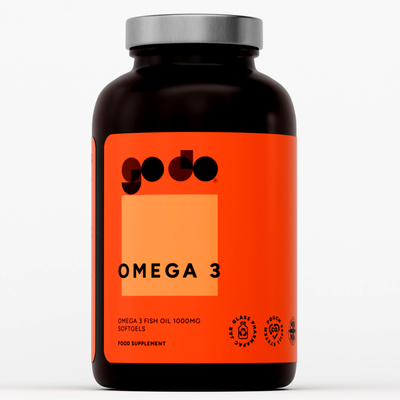
At Fitness Health, we provide premium, UK-made Omega-3 Fish Oil designed for maximum absorption and zero "fishy" aftertaste. Our eco-conscious packaging and high-potency formulations ensure you get the nutrients you need without the plastic waste.
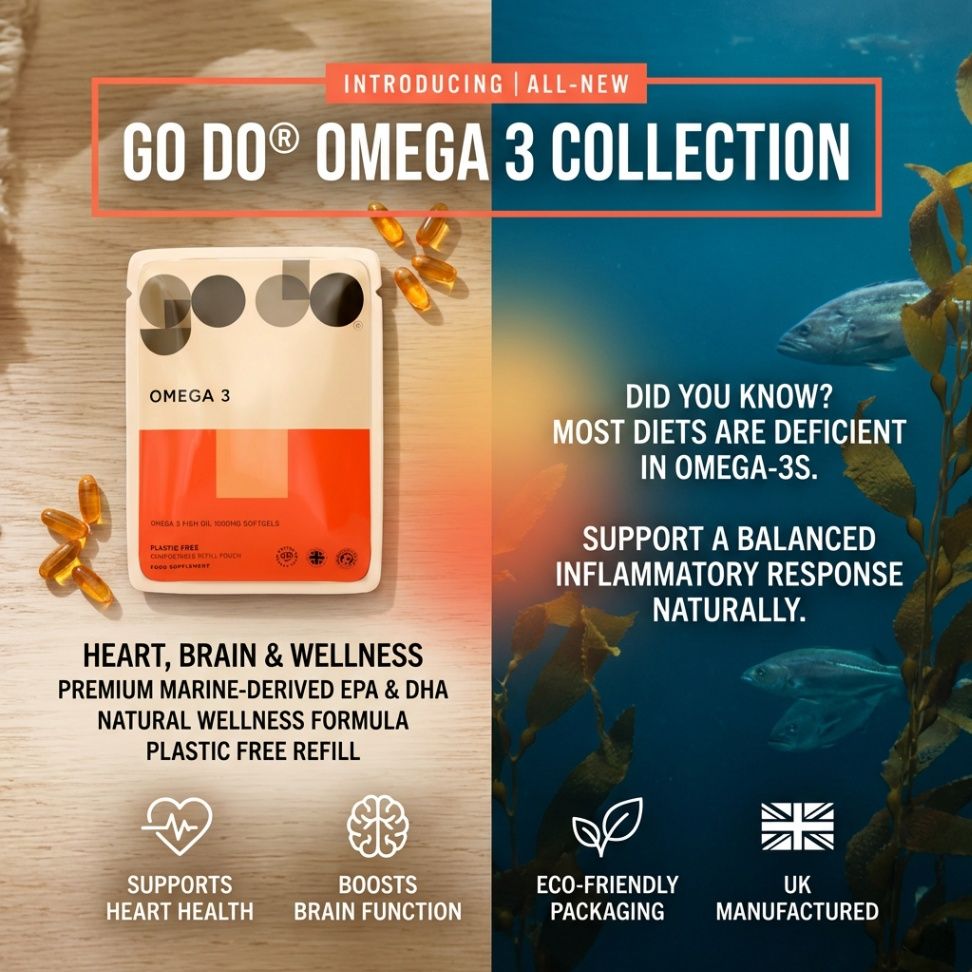
Shop our Omega-3 Fish Oil 1000mg Softgels here.
Frequently Asked Questions
Q: Can I get enough Omega-3 from walnuts and flaxseeds?
A: These contain ALA, which the body must convert to EPA and DHA. The conversion rate is very low (often <5%). While healthy, they are usually not sufficient on their own for optimal EPA/DHA levels.
Q: How long does it take to see results?
A: It takes approximately 3 to 4 months for the fatty acid composition of your cell membranes to fully change after starting a new dietary or supplement regime.
Q: Should I take Omega-3-6-9 combined supplements?
A: Generally, no. Most people already get plenty of Omega-6 and Omega-9 (which the body can make itself). It is usually more effective to supplement pure Omega-3.
Recommended Reading
Article generated by Penny