Let’s be honest: your internal clock is probably screaming for help. We live in an era where the sun never truly sets, at least not for our retinas. Between the glow of your smartphone, the harsh LEDs in your kitchen, and that "one last" episode on the TV, your brain thinks it’s high noon when it’s actually 11:30 PM.
This confusion wreaks havoc on your circadian rhythm, the 24-hour internal clock that dictates when you’re alert, when you’re hungry, and most importantly, when you sleep. While blue light blocking glasses have become the "it" accessory for the modern office worker, they are just one piece of a much larger puzzle.
To truly hack your biology, you need a two-pronged approach: external light management and internal chemical support using herbal supplements for sleep and herbal supplements for stress.
The Science of the "Master Clock"
Your circadian rhythm is controlled by the suprachiasmatic nucleus (SCN) in the brain. This "master clock" is hyper-sensitive to light, specifically the blue wavelengths (460-495 nm). When blue light hits your eyes, it signals your brain to suppress melatonin, the hormone that tells your body it’s time to shut down, and instead pump out cortisol to keep you alert.
The problem? Modern life is saturated with blue light. Research shows that less than 0.5% of lighting sold today is actually "circadian-friendly." To fix this, we have to look at alternatives that go beyond just putting on a pair of orange-tinted glasses.
Phase 1: The External Light Strategy
If you want to master your sleep, you have to master your light exposure. It’s not just about avoiding "bad" light; it’s about seeking the "right" light at the right time.
1. Morning Sun: The Anchor Point
The most effective way to regulate your rhythm isn't a supplement; it’s the sun. Getting natural sunlight within 30 minutes of waking up serves as a primary anchor point for your internal clock.
- Action: Step outside for 10–15 minutes without sunglasses.
- Why: This triggers a timed release of melatonin roughly 14–16 hours later.
2. Daytime Lighting (The 5500K Rule)
During the day, you actually want blue-rich light. It keeps you focused and prevents that mid-afternoon slump.
- The Goal: Use bulbs with a color temperature around 5500K (mimicking midday sun).
- Benefit: Supports metabolic flexibility and sustained energy levels.
3. Evening Depletion (The 3-Hour Countdown)
Three hours before bed, you need to switch to blue-depleted lighting. This is where most people fail.
- The Wavelength: Look for lighting with wavelengths above 560 nm (pure amber, orange, or red).
- The Tech: Use smart bulbs that automatically shift from 5500K (midday) to 2000K (sunset) as the day progresses.

Phase 2: Internal Hacking with Supplements
Even with the best lighting setup, life happens. Stressful emails, late-night workouts, or general anxiety can keep your nervous system in "fight or flight" mode, regardless of how red your lightbulbs are. This is where internal support via herbal supplements for stress and targeted minerals becomes essential.
Magnesium: The Relaxation Mineral
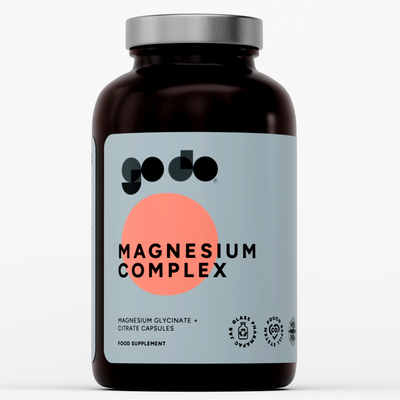
If blue light is the "on" switch, Magnesium is the "off" switch. It regulates neurotransmitters that quiet the nervous system.
- Instruction: Take 200–400mg of Magnesium Glycinate roughly 60 minutes before bed.
- Why Glycinate? It is highly absorbable and less likely to cause digestive upset than other forms.
- Shop: Check out our Vitamins and Minerals collection for high-quality options.
Ashwagandha: Cortisol Management
Ashwagandha is a powerhouse among herbal supplements for stress. It is an adaptogen, meaning it helps your body "adapt" to stressors rather than just masking them.
- The Hack: While many use it for daily anxiety, taking it in the evening can help lower cortisol levels that have been artificially spiked by late-night blue light exposure.
- Shop: Explore our Stress Support range.
The Melatonin Alternative: L-Theanine and Lemon Balm
Many people reach for synthetic melatonin, but this can sometimes lead to morning grogginess or "dependency" where the body stops producing its own. Instead, look for herbal supplements for sleep that support your body’s natural production.
- L-Theanine: Found in green tea (but better as a supplement at night), it promotes relaxation without sedation.
- Lemon Balm: A traditional herb that reduces excitability in the brain.
- Shop: Browse our Sleep Collection.

Blue Light Blockers: Hype vs. Reality
You’ve seen them everywhere. But do blue light blockers actually work?
The short answer: Yes, but quality varies wildly. Most "clear" blue light glasses sold for office use only block about 10–20% of blue light. This is fine for reducing eye strain during the day but useless for circadian rhythm management at night.
For true circadian hacking, you need amber or red lenses that block 90-100% of blue and green light. If you can still see the color blue while wearing them, they aren't doing enough to protect your melatonin.
A Practical 24-Hour Circadian Schedule
To make this actionable, here is your daily blueprint for a optimized rhythm:
| Time | Action | Goal |
|---|---|---|
| 07:00 | Direct sunlight exposure (10 mins) | Set the "anchor point" |
| 09:00 | High-intensity "cool" light (5500K) | Boost focus and alertness |
| 14:00 | Brief afternoon sun | Reinforce the rhythm and prevent "phase delay" |
| 19:00 | Switch to amber/red lighting | Allow melatonin levels to begin rising |
| 20:30 | Take herbal supplements for sleep | Prepare the nervous system for rest |
| 21:30 | Screens off (or use 100% blue blockers) | Protect the "sleep window" |
| 22:30 | Total darkness | Deep, restorative sleep |

Addressing the "Stress" Component
We often blame blue light for poor sleep, but stress is the silent partner in crime. High stress levels keep your heart rate up and your core temperature high: the exact opposite of what you need for sleep.
Using herbal supplements for stress throughout the day can prevent the "tired but wired" feeling at night. If you manage your stress levels during your 9-to-5, your body will have a much easier time transitioning into sleep mode when the sun goes down.
For those looking to optimize both their physical and mental health, checking out mens health or womens health specific stacks can provide a more tailored approach to hormonal balance and stress management.
Key Takeaways for Circadian Success
- Stop obsessing only over glasses: They are a bandage. Fix your environment first by using the right light temperatures at the right times.
- Use the 3-hour rule: No blue light (screens or overhead LEDs) three hours before your desired sleep time.
- Support from within: Use Magnesium and herbal supplements for sleep to chemically signal to your brain that the day is over.
- Consistency is King: Your master clock hates surprises. Try to wake up and see the sun at the same time every day, even on weekends.
- Audit your lighting: Replace the bulbs in your bedroom and bathroom with "warm" or "amber" versions. Bright bathroom lights are the #1 killer of evening melatonin.
Hacking your circadian rhythm isn't about living in a cave; it's about being intentional with the technology we use. By combining external light hygiene with the right nutritional support, you can reclaim your sleep and your energy.
Safety Note: Always consult with a healthcare professional before starting new supplements, especially if you are on medication for blood pressure or sleep disorders. Check out our best sellers for community-vetted options.