

Supplements can support a gut reset, but only as an adjunct to diet and lifestyle change, not a shortcut around it. The categories worth your attention are probiotics, prebiotics like inulin and psyllium, barrier-support nutrients such as L-glutamine and zinc carnosine, digestive enzymes, and a handful of botanicals including peppermint oil and ginger. None of them do much on their own if you’re still eating the way that got your gut into trouble in the first place.
TL;DR:
- A gut reset requires several weeks to months of consistent diet and lifestyle changes, as rapid shifts are often temporary and not long-lasting.
- Probiotics and prebiotics need to be strain-specific and trialed for multiple weeks to show meaningful benefits, with longer durations recommended for optimal results.
- Supplement categories with the strongest evidence include strain-specific probiotics, prebiotic fibers, barrier-support nutrients like glutamine and zinc, digestive enzymes, and certain botanicals such as peppermint oil.
- Sequencing supplements properly involves starting with diet changes, then adding symptom-relieving botanicals and enzymes, before testing probiotics and prebiotics over several weeks.
- Always verify supplement sourcing, strain identification, third-party testing, and contraindications, especially for immunocompromised individuals or people on prescription medications.
Table of Contents
- What Does a Gut Reset Actually Mean, and How Long Does It Take?
- What Are the Core Supplement Categories for a Gut Reset?
- How Do You Actually Use These Supplements During a Reset?
- Are There Safety Risks or Interactions to Watch For?
- What Lifestyle Changes Have to Happen Alongside Supplements?
- How Do You Choose a High-Quality Gut Reset Supplement?
- How Fitnesshealth Evaluates Gut Health Supplements
- A Realistic Take on Gut Reset Supplements
- Where to Find Vetted Gut Health Supplements
- Sources
- FAQ
What Does a Gut Reset Actually Mean, and How Long Does It Take?
A “gut reset” isn’t a short cleanse that flushes out toxins. That framing sells many products, but it doesn’t match what’s happening in your intestines. The more accurate definition, echoed by clinicians at institutions like UT Physicians, is that resetting your gut means stopping harmful exposures (ultra-processed foods, excess sugar, unnecessary antibiotics) while increasing the exposures that build microbial diversity: fiber, fermented foods, and varied plants.
Some things shift fast. Your microbiome composition can start responding to a dietary change within a day or two, which is part of why people feel less bloated within the first week of cutting processed food. But fast shifts aren’t the same as durable ones. Meaningful improvements in diversity, the kind linked to better digestion and steadier energy, generally take longer to stabilize, and clinical guidance points to a window of several weeks to a few months of consistent habits before you can call the change real rather than temporary.
A structured study found measurable improvements in digestion, cognition, and emotional well-being when participants followed a defined dietary intervention for multiple weeks, which lines up with the need for sustained commitment. The PMC-published trial is a useful anchor point: four weeks is roughly the minimum runway before you can honestly evaluate whether something is working, whether that something is a supplement, a diet change, or both together.
Why does consistency matter more than intensity? Your gut microbes are a population, not a light switch. Wiping out bad actors with an aggressive short-term protocol (a strict cleanse, a week of high-dose antimicrobial herbs) can knock things off balance temporarily, but repopulating with a diverse, resilient community takes repeated feeding of the right substrates over time. Evidence syntheses on probiotic and dietary research consistently find that probiotics work best paired with dietary improvement, not as a standalone fix layered on top of an unchanged diet.
That’s the honest baseline for what follows: supplements can accelerate or support this process, but the timeline is measured in weeks, and the diet has to change too.
What Are the Core Supplement Categories for a Gut Reset?
Five categories dominate the evidence and the market. Some have strong strain-specific data behind them; others are more about symptom relief while the underlying diet and microbiome do the real work.
Probiotics. These live microorganisms are the most researched category, but the research is strain-specific, not species-general. Saccharomyces boulardii has solid clinical support for reducing antibiotic-associated diarrhea. Specific Lactobacillus and Bifidobacterium strains show benefit for IBS-type symptoms like bloating and irregular bowel habits. That specificity is why a bottle labeled simply “probiotic blend” without strain identifiers tells you very little. Multi-strain formulas are popular because different strains tend to target different symptoms, but more strains isn’t automatically better if none of them are backed by trial data for your particular issue. Research on probiotic strain evidence generally recommends trial durations of several weeks to months before drawing conclusions about a given strain’s benefit for you personally.
Prebiotics and fiber. Prebiotics are the food supply for your resident microbes, and this is arguably the most underrated category in the entire gut health conversation. Inulin and fructooligosaccharides (FOS) feed beneficial bacteria directly and are found in supplement form or naturally in foods like chicory root and garlic. Resistant starch, found in cooled cooked potatoes and green bananas, does something similar. Psyllium husk works a bit differently. It’s a soluble fiber that bulks stool, feeds certain bacterial populations, and tends to be gentler on sensitive digestive systems than inulin, which can cause gas in people who ramp up too fast.
Targeted barrier-support nutrients. L-glutamine is an amino acid that serves as a primary fuel source for the cells lining your intestine, and it’s commonly used by people rebuilding gut lining integrity after illness, intense training, or chronic digestive stress. Zinc carnosine is a compound combining zinc with the amino acid carnosine, studied specifically for supporting the mucosal lining of the stomach and upper gut. Collagen, usually from bovine, porcine, or marine sources, supplies amino acids like glycine and proline that are structural components of connective tissue, including the gut lining, though the direct evidence for oral collagen improving human gut barrier function is less robust than for glutamine or zinc carnosine.
Digestive enzymes. These aren’t about reshaping your microbiome. They’re about easing the symptomatic experience of digestion right now, particularly for people who struggle with specific macronutrients: lactase for dairy, alpha-galactosidase for beans and cruciferous vegetables, or broader enzyme blends (protease, lipase, amylase) for general post-meal bloating and discomfort. They can be genuinely useful as a short-term aid while you’re adjusting your diet, but they don’t build diversity on their own.
Botanicals. Peppermint oil, usually in enteric-coated capsule form, has decent evidence for easing IBS-related cramping and bloating by relaxing intestinal smooth muscle. Ginger root supports nausea relief and modest improvements in gastric motility. Artichoke leaf extract is used for bloating and mild digestive sluggishness, often tied to bile flow support. These sit at a lower evidence tier than strain-specific probiotics. They’re reasonable symptom-management tools, not gut-rebuilding agents.
A consumer-facing rundown from Forbes Health covers this same set of categories and is worth a look if you want a plain-language summary before diving into strain-level research on any one of them. If you’re specifically weighing L-glutamine for barrier repair, Fitnesshealth’s deep dive on glutamine and gut health walks through the mechanism in more depth than a general overview can.
How Do You Actually Use These Supplements During a Reset?
Sequencing matters more than most people assume. Here’s a workable order of operations:
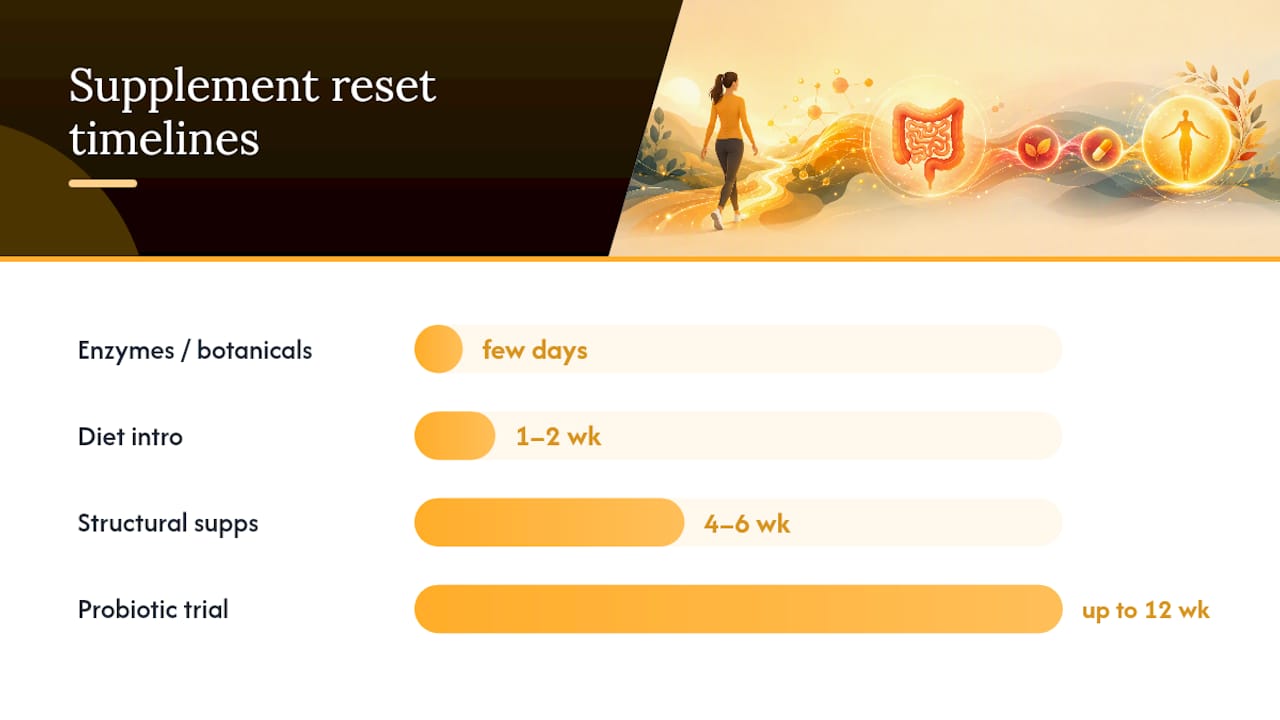
- Start with the diet, not the supplement cabinet. Add plant diversity and fermented foods for one to two weeks before or alongside starting anything. Supplements layered onto an unchanged, low-fiber diet tend to underperform because there’s nothing for prebiotics to feed and no real behavioral disruptor being removed.
- If you’re actively symptomatic, start enzymes or botanicals immediately. Peppermint oil, ginger, or a targeted enzyme can ease bloating and cramping in the first few days while the slower changes take hold. There’s no reason to wait on symptom relief.
- Give probiotics and prebiotics a genuine multi-week trial. This is longer than most people expect, and it’s the single biggest reason people quit right before something would have worked. Judge effect at the end of that window, not after five days.
- Give L-glutamine, zinc carnosine, or collagen a shorter runway of roughly 4 to 6 weeks before reassessing, since these are more about structural support than ecological rebalancing.
- Log your response weekly. Bowel regularity, bloating severity, energy, and skin clarity are all reasonable markers. A simple notes app entry beats trying to remember how you felt three weeks ago.
Timing with meals matters for a few of these. Digestive enzymes work best taken right before or with the first bite of a meal, not after. Probiotics are commonly taken with food to buffer stomach acid, though some strains are formulated for on-empty-stomach dosing, so check the label. Avoid stacking a high-dose inulin supplement with a new probiotic strain in the same week if you’re prone to gas. Introducing both at once makes it hard to tell which one, if either, caused the bloating.
Pro Tip: Introduce one new supplement category at a time, spaced about a week apart. If you start probiotics, prebiotics, and a botanical all on day one and something goes sideways, you’ll have no idea which one to blame.
Knowing when to stop matters as much as knowing when to start. If a botanical or enzyme hasn’t helped after four weeks, drop it. If probiotics show no change after 12 weeks at an adequate dose, it’s reasonable to try a different strain or reconsider whether diet is the bigger lever. Reassess your baseline diet at every stopping point. Fitnesshealth’s practical guide to daily probiotic and prebiotic use has more detail on building this into a sustainable routine rather than a one-off experiment.
Are There Safety Risks or Interactions to Watch For?
Most people tolerate gut reset supplements well, but a few groups and a few interactions deserve real attention before you start.
- Immunocompromised individuals should talk to a clinician before starting live probiotics. Rare but serious infections have occurred in people with compromised immune systems taking probiotic strains, and the NIH Office of Dietary Supplements flags this explicitly as a population requiring clinical review, not self-directed dosing.
- Certain supplements can interact with prescription medications, including anticoagulants and immunosuppressants; anyone on these medications should check with the prescribing clinician before adding probiotics, high-dose fiber, or botanical extracts.
- Collagen sourcing matters for allergen risk. Bovine, porcine, and marine (fish) collagen are all common, and anyone with shellfish or fish allergies, religious dietary restrictions, or bovine-related sensitivities needs to read the source line on the label, not just the front-of-bottle branding.
- Capsule materials can be an overlooked allergen source. Gelatin capsules are animal-derived; look for a vegetarian or vegetable-cellulose capsule if that’s a concern.
- Stop and seek urgent care for fever, severe abdominal pain, blood in stool, or signs of infection rather than assuming it’s a normal adjustment reaction. Persistent bloating or no improvement after a full trial window warrants a routine follow-up with a clinician, not an urgent one, but it’s still worth raising.
If you’re on any chronic medication or managing an existing GI condition like inflammatory bowel disease, loop in your clinician before starting any of these categories, not after you’ve already run into a problem.
What Lifestyle Changes Have to Happen Alongside Supplements?
Supplements without dietary change are a bit like watering a plant with a sealed bag over the pot. The context has to be right for anything to grow.
Plant diversity is the single biggest lever most people underuse. Aim for a wide variety of different plant foods across a week, not just repeating the same three vegetables. Fruits, vegetables, legumes, whole grains, nuts, seeds, and herbs all count, and each brings a different fiber structure that feeds different bacterial populations.
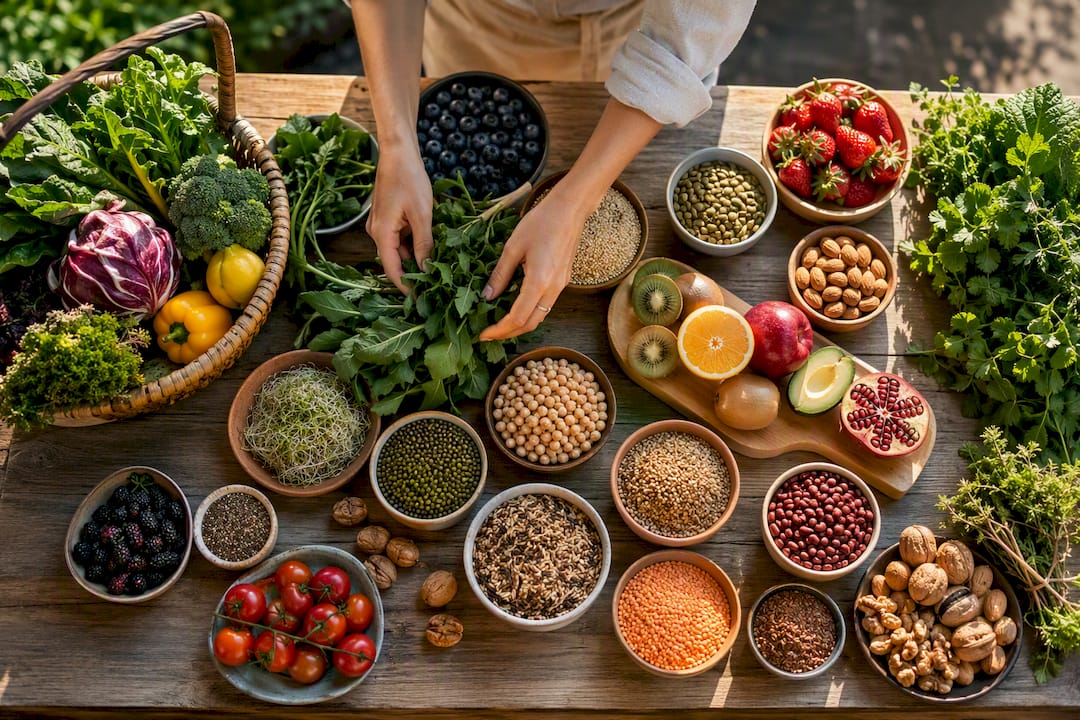
Fermented foods deserve a specific callout because the evidence here is stronger than most people realize. A randomized trial found that a diet high in fermented foods increased microbiome diversity and reduced inflammatory markers faster than a high-fiber diet alone. That’s a meaningful finding: fiber matters, but fermented foods like live-culture yogurt, kefir, sauerkraut, and kimchi may move the needle quicker. The key word is “live culture.” Shelf-stable, pasteurized versions of these foods (most jarred, unrefrigerated sauerkraut, for instance) have been heat-treated and no longer carry active cultures, so check the label for “contains live cultures” or refrigeration requirements.
Sleep and stress aren’t side notes here. Both influence gut motility and the composition of your microbiome through the gut-brain axis, and chronic poor sleep or unmanaged stress can undercut supplement and dietary efforts simultaneously.
- Remove disruptors deliberately: ultra-processed foods, excess added sugar, and antibiotics taken without medical necessity all work against the same diversity you’re trying to build, a point emphasized in whole-health guidance from the VA Whole Health Library.
- Movement matters too. Regular physical activity is associated with greater microbial diversity independent of diet.
Pro Tip: If you travel often, pack a few shelf-stable prebiotic fiber packets and prioritize fermented foods at restaurants when you can. Fitnesshealth’s gut microbiome improvement guide and this travel eating guide from Wild Foodz both cover practical ways to keep gut habits intact away from home.
How Do You Choose a High-Quality Gut Reset Supplement?
Supplement labels are where good intentions go to die if you don’t know what to look for. Use this checklist before you buy anything.
- Check for strain identification, not just species. “Lactobacillus rhamnosus GG” tells you something specific and searchable. “Lactobacillus blend” tells you almost nothing.
- Look for a CFU count guaranteed through expiration, not just at time of manufacture. Probiotic potency degrades over shelf life; a reputable brand states the guaranteed count at the end date, not the day it left the factory.
- Confirm third-party testing. Independent verification (checking for contamination, accurate label claims, and potency) is one of the clearest signals that a formulation is what it says it is.
- Read the ingredient sourcing line, especially for collagen and gelatin capsules. Bovine, porcine, marine, and vegetarian sources all carry different allergen and dietary profiles.
- Match the formulation to your goal. A synbiotic (a probiotic and prebiotic combined in one formula) can simplify dosing, but a separate prebiotic fiber, dosed independently and titrated slowly, gives you more control if you’re sensitive to gas or bloating during the adjustment period. Single-strain products make it easier to isolate what’s working; multi-strain products offer broader symptom coverage at the cost of that clarity.
- Be skeptical of “detox,” “cleanse,” and “flush” language on the label. These terms sell a false promise of speed. The categories that actually work, probiotics, prebiotics, glutamine, zinc carnosine, and evidence-backed botanicals, rarely need that kind of language because the mechanism is real and doesn’t need embellishing.
How Fitnesshealth Evaluates Gut Health Supplements
The supplement content and product information are built around strain-specific and ingredient-specific evidence rather than category-wide marketing claims. That means treating “probiotics” as a category with dozens of distinct, differently-studied strains inside it, not a single interchangeable product.
For readers who want to go deeper on a specific category before choosing a product, Fitnesshealth’s guide to probiotics and athletic performance and its overview of probiotics and immune health both break down strain-level research in more detail than a general buying guide can cover. When you’re browsing product pages, filtering by third-party testing status and checking whether a formulation lists specific strains (rather than a generic blend) will tell you more about quality than price or packaging ever will.
A Realistic Take on Gut Reset Supplements
The gut health supplement market sells urgency it can’t back up. Fourteen-day cleanses and dramatic “reset” claims imply your microbiome operates on a sprint timeline, and the evidence says otherwise. Meaningful diversity gains take weeks, sometimes months, and that’s not a flaw in the process. It’s how biological populations actually rebuild.
My honest recommendation: pick one or two supplement categories that match your actual symptoms, not the ones with the flashiest packaging, and commit to a real trial window before judging results. Pair it with fermented foods and a wider variety of plants, because the supplement is doing maybe a third of the work at best. If you’re immunocompromised, on medication that interacts with probiotics or fiber, or dealing with a diagnosed GI condition, talk to a clinician before you start rather than after something goes wrong.
Consistency beats intensity every time in this particular arena. Log what you take and how you feel weekly, and give it the full 8 to 12 weeks before deciding whether it’s working.
— Rene
Where to Find Vetted Gut Health Supplements
Sorting strain-specific probiotics from generic blends, or figuring out which zinc carnosine formulation actually discloses its sourcing, takes real digging if you’re starting from a blank search bar. Fitnesshealth curates its supplement catalog around exactly that kind of transparency: strain identification on probiotic listings, sourcing details on collagen and enzyme products, and educational guides built around the same clinical evidence covered here.
Browse the full range of gut health supplements at Fitnesshealth to compare probiotic, prebiotic, and barrier-support options side by side, and use the product filters to check for third-party testing before you add anything to your cart. This article, and the product pages behind it, are meant to inform your choice, not replace a conversation with your doctor. If you have a diagnosed digestive condition or take prescription medication, check with your clinician before starting a new supplement routine.
This article is general information, not a substitute for advice from a qualified doctor. Consult a qualified healthcare professional about your own circumstances before acting on anything here.
Sources
- Reset your gut for optimal health — UT Physicians
- Dietary interventions and gut health — PMC (2017)
- Probiotics: In Depth — NIH ODS
FAQ
What Is the Best Supplement to Heal Your Gut?
There’s no single best supplement because gut issues vary by cause and symptom, but strain-specific probiotics (like Saccharomyces boulardii for antibiotic-related diarrhea) and L-glutamine for barrier support have some of the strongest targeted evidence.
What Is the Fastest Way to Reset Your Gut?
There isn’t a genuinely fast way. Some symptom relief can happen within days of removing processed foods and adding fermented foods, but real microbiome diversity gains typically need 4 to 12 or more weeks of consistent habits.
What Are the Best Gut Reset Products?
The strongest categories are strain-specific probiotics, prebiotic fibers like psyllium and inulin, barrier-support nutrients such as L-glutamine and zinc carnosine, digestive enzymes for symptom relief, and evidence-backed botanicals like peppermint oil. Fitnesshealth’s catalog groups options by these categories with strain and sourcing details listed on each product page.
How Do You Do a 7-Day Gut Reset?
A short window can jump-start habits, adding fermented foods, increasing plant diversity, cutting processed food and added sugar, but treat it as the start of a longer process rather than a complete fix. Meaningful microbiome change generally needs several more weeks beyond that initial period.
Are Gut Reset Supplements Safe for Everyone?
No. Immunocompromised individuals and people on medications like anticoagulants or immunosuppressants should consult a clinician before starting live probiotics or certain botanicals, since interactions and rare infection risks are documented in these groups.










