If you eat plant-based, your priority list is short: vitamin B12, vitamin D, and an algae-based EPA/DHA supplement. Everyone else on a fully vegan or largely plant-based diet needs those three, full stop. A second tier, iron, calcium, iodine, zinc, and selenium, depends on your labs, your food choices, and your life stage.
Before buying anything, take three steps. Get baseline bloodwork if you haven’t already. Lean on fortified foods (plant milks, cereals, nutritional yeast) to cover part of the gap. Then choose supplements carrying third-party testing seals like NSF or USP rather than whatever has the flashiest label.
None of this replaces eating well. Registered dietitians consistently frame supplements as targeted fixes for measurable gaps, not a substitute for a varied, whole-food diet.
- Priority (nearly everyone needs): B12, vitamin D, algae-based EPA/DHA
- Situational (test or assess first): iron, calcium, iodine, zinc, selenium
- Optional (goal-based): creatine, protein powder, probiotics, magnesium
Pro Tip: Don’t reach for a multivitamin as your default. Plant-based diets already run high in vitamin C, E, and folate, so a broad multi often just duplicates what your food is already providing.
Key Takeaways
Most plant-based eaters need only three supplements as a baseline: vitamin B12, vitamin D, and algae-based EPA/DHA, with everything else guided by lab results.
| Point | Details |
|---|---|
| Prioritize the big three | B12, vitamin D, and algae-based EPA/DHA cover the gaps food alone rarely closes on a plant-based diet. |
| Test before adding extras | Check ferritin, 25-OH vitamin D, and B12 or MMA before supplementing iron, calcium, or iodine. |
| Choose third-party tested products | Look for NSF, USP, or ConsumerLab seals to confirm label accuracy and screen for contaminants. |
| Avoid overlap and megadoses | Track fortified foods plus supplements together, and skip broad multis that duplicate nutrients your diet already supplies. |
| Start with Fitnesshealth’s tested essentials | Fitnesshealth stocks single-ingredient B12, vegan D3, and algae-based omega-3 options suited to this exact checklist. |
Table of Contents
- The Plant-Based Supplement Checklist, Nutrient by Nutrient
- When Should You Get Blood Tests for Nutrient Gaps?
- How Do You Choose a High-Quality Plant-Based Supplement?
- What Mistakes Should You Avoid With Plant-Based Supplements?
- Why Food-First Still Wins for Plant-Based Eaters
- Get Your Plant-Based Essentials in One Place
- Frequently Asked Questions
- Sources
The Plant-Based Supplement Checklist, Nutrient by Nutrient
Three supplements do most of the heavy lifting on a vegan or largely plant-based pattern. Dietitians consistently name vitamin B12, vitamin D, and algae-based omega-3s as the ones nearly everyone on this diet should prioritize, while everything else depends on individual labs and eating habits.
Vitamin B12: non-negotiable
B12 doesn’t occur reliably in unfortified plant foods. If you’re not eating fortified cereals or nutritional yeast daily, you need a supplement, no exceptions here the way there are with iron or calcium. Two dosing strategies work: a smaller daily dose (around 250 mcg) or a larger weekly dose (roughly 2,500 mcg once a week), which some people find easier to remember. Look for cyanocobalamin, the most studied and stable form in supplements; methylcobalamin is also fine but tends to cost more without added benefit for most healthy adults. Deficiency signs creep in slowly: fatigue, tingling in hands or feet, brain fog, and in later stages, mood changes. Because symptoms overlap with a dozen other conditions, don’t self-diagnose. Test instead.

Vitamin D: test before you guess
Vitamin D synthesis depends on sun exposure, skin tone, latitude, and season, which is why blanket dosing advice rarely fits everyone. Get a 25-OH vitamin D blood test before committing to a dose. For the supplement itself, choose D3 over D2 when possible. Standard D3 comes from lamb’s wool lanolin, but lichen-derived D3 gives you the same active form in a fully vegan capsule. Typical maintenance doses run 1,000 to 2,000 IU daily, with higher therapeutic doses reserved for confirmed deficiency and guided by a clinician.
Algae-based EPA/DHA: skip the ALA workaround
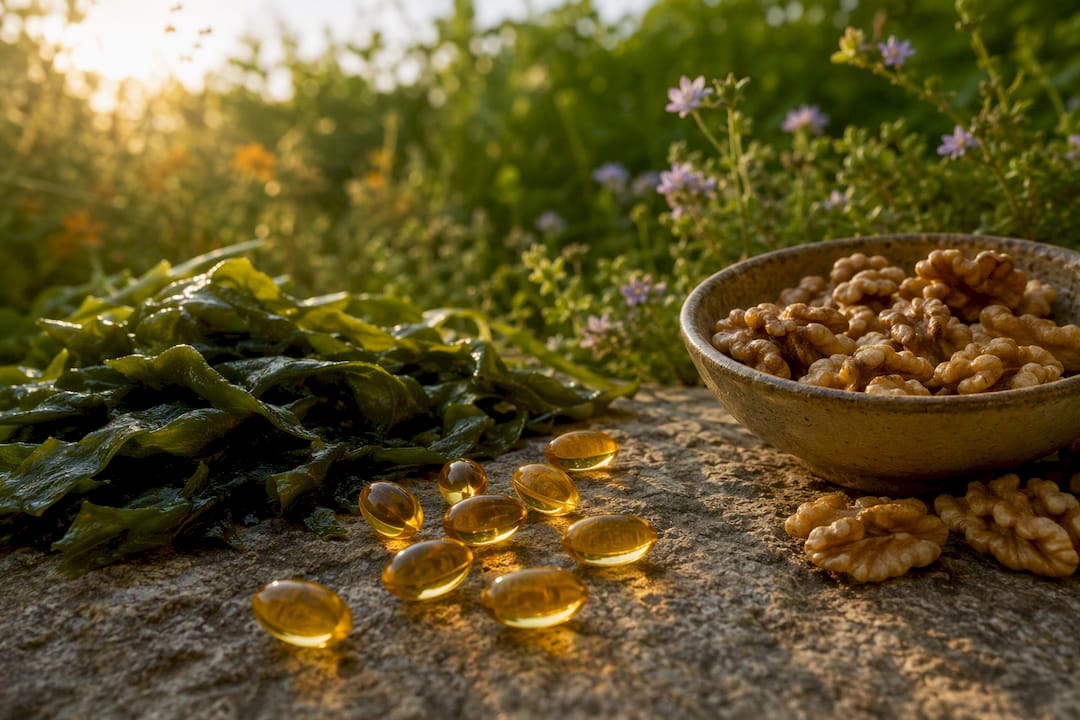
Flaxseed, walnuts, and chia give you ALA, a plant omega-3, but your body converts it to the long-chain forms your brain and heart actually use at a low rate. Conversion to EPA runs around 5%, and DHA conversion sits under 0.5% for many people, which means loading up on flax alone won’t get you where you need to be. Algae oil supplements solve this directly, delivering preformed EPA and DHA without the conversion bottleneck. Aim for a moderate daily dose of combined EPA and DHA, taken with a meal that contains some fat to improve absorption.
Situational nutrients: test, don’t assume
Iron, calcium, iodine, zinc, and selenium fall into a different category. You might need all of them, some of them, or none, depending on your diet and your labs.
Iron from plants is non-heme iron, absorbed less efficiently than the iron in meat. Pairing iron-rich foods like lentils and spinach with vitamin C, think bell peppers or citrus, meaningfully boosts absorption, while coffee and tea at meals blunt it. Supplement only if bloodwork confirms low ferritin; iron overload is a real risk for people who don’t need it.
Calcium shows up in fortified plant milks, tofu set with calcium sulfate, and leafy greens like bok choy. Most people covering these bases don’t need a separate calcium pill. If your intake runs consistently low, a supplement in the 500 to 600 mg range fills the gap without crowding out iron absorption (take them at different times of day).
Iodine gets overlooked constantly. Iodized salt covers most people’s needs, and seaweed is an alternative, but kelp specifically can swing from too little iodine to dangerously excessive amounts depending on the batch. If you’re not using iodized salt regularly, a low-dose supplement around 150 mcg per day is safer than relying on kelp.
Zinc and selenium matter mainly for people eating a lot of unrefined grains and legumes without much variety, since phytates in those foods can block absorption. Brazil nuts (selenium) and pumpkin seeds or legumes (zinc) usually close the gap; supplements are worth considering only if intake is genuinely low or symptoms like slow wound healing or frequent infections show up.
| Nutrient | Best Plant Food Sources | Absorption Tip |
|---|---|---|
| B12 | Fortified cereal, nutritional yeast, fortified plant milk | Take with food; split large doses if you get stomach upset |
| Vitamin D | Fortified plant milk, mushrooms exposed to UV light | Pair with a fat-containing meal |
| Omega-3 (EPA/DHA) | Algae oil supplements (food sources are limited) | Take with a meal containing fat |
| Iron | Lentils, spinach, fortified cereal | Pair with vitamin C; skip coffee/tea at meals |
| Calcium | Fortified plant milk, tofu (calcium-set), bok choy | Space apart from iron and zinc supplements |
| Iodine | Iodized salt, seaweed (in moderation) | Avoid daily kelp use; check labels for iodine content |
Pro Tip: Resist the urge to buy a “complete” plant-based multivitamin and then add singles on top. Overlap adds up fast, and some fat-soluble vitamins (A, D, E, K) can build up to uncomfortable levels if you’re doubling doses without realizing it.
Optional additions like creatine (3 to 5 grams daily for strength and power output), a protein powder if whole-food protein sources fall short of your target, or magnesium for sleep and muscle cramps are worth considering based on your specific goals, not because a checklist told you to buy them.
When Should You Get Blood Tests for Nutrient Gaps?
A handful of labs tell you almost everything you need to know. Order a B12 test (or methylmalonic acid if your B12 result is borderline), a 25-OH vitamin D test, and a CBC with ferritin to check iron stores. Add a thyroid panel if you have any iodine concerns or symptoms like unexplained fatigue or weight changes.
- Get baseline labs when you first go plant-based, or annually if you’re already established and considered at risk.
- Recheck 8 to 12 weeks after starting a supplement aimed at a confirmed deficiency, not before.
- See a clinician or dietitian if you’re planning a pregnancy, dealing with heavy menstrual periods, or experiencing persistent fatigue or neurological symptoms like tingling or numbness.
Low ferritin without anemia still matters. It signals depleted iron stores before your red blood cells show damage, and it’s worth correcting before it progresses.
Pro Tip: Don’t start high-dose iron or vitamin D “just to be safe” without a test result in hand. Both can accumulate to harmful levels, and guessing wrong costs you more than the blood draw would have.
How Do You Choose a High-Quality Plant-Based Supplement?
Quality control varies wildly across brands, and label claims alone won’t tell you much. Third-party testing seals from organizations like NSF, USP, or ConsumerLab confirm that what’s on the label matches what’s in the capsule, and that heavy metals and contaminants stay below safety thresholds.
Before buying, check these details:
- Confirm the active form (lichen-derived D3, cyanocobalamin B12, algae-derived DHA/EPA) rather than assuming “vegan” on the front means the ingredients inside are optimal.
- Do the serving-size math if you’re combining a multivitamin with single-nutrient supplements, so you’re not stacking two sources of the same vitamin without realizing it.
Then run through this purchase checklist:
- Vegan certification or explicit vegan formulation statement
- Allergen disclosure (soy, tree nuts if using algae oil in certain carriers)
- Public batch-testing results for heavy metals
- A reasonable return policy in case the product doesn’t agree with you
Start with the essentials, B12, D, and algae omega-3s, before adding anything else. Single-ingredient supplements correct a specific deficiency more precisely than a bundled formula, and they make it far easier to track exactly what you’re taking and adjust doses based on lab results.
Pro Tip: If you’re targeting a diagnosed iron or calcium deficiency, buy that nutrient by itself. Bundled formulas often bury the dose you actually need inside a mix of other ingredients you don’t.
What Mistakes Should You Avoid With Plant-Based Supplements?
The most common misstep is treating supplements as a substitute for actual food variety rather than a patch for specific gaps. Close behind it: megadosing “just in case” and stacking multiple products without adding up their combined totals.
Watch for interactions. Iron can interfere with certain antibiotics and needs to be separated from levothyroxine by several hours. If you take blood thinners, check with a doctor before adding vitamin K-containing supplements. Keep iron away from calcium, coffee, and tea at the same meal.
Life stages change the math: pregnancy raises folate and iron needs, breastfeeding calls for close attention to B12 status, older adults typically need more vitamin D and calcium due to slower absorption, and athletes should monitor iron more frequently given higher turnover. Store all supplements somewhere cool and dry. Heat and humidity degrade potency faster than most labels admit.
Pro Tip: Keep a running list of everything you’re taking, including fortified foods, and add up the totals for B12, D, and iron before assuming you’re covered.
Why Food-First Still Wins for Plant-Based Eaters
The plan that actually works is boring: eat well, test before you supplement, and fix only what your labs say needs fixing. Most people following a plant-based diet end up needing just three targeted additions, not a cabinet full of pills.
That restraint is the point. Skipping the guesswork protects you from both deficiency and the quieter risks of taking more than you need.
Get Your Plant-Based Essentials in One Place
Building this checklist item by item across different retailers gets tedious fast, and you end up guessing which brand’s B12 or algae oil actually matches what your labs say you need. Fitnesshealth carries the exact essentials this checklist covers: vegan D3 from lichen, algae-based EPA/DHA, and B12 in both daily and weekly-dose formats, all in one catalog instead of five browser tabs.
For readers who train regularly, pairing these basics with performance-focused plant-based nutrition or a recovery-oriented supplement routine rounds out what a food-first plan can’t always cover on its own. Start with the three priority nutrients from this checklist, check your labs, and browse Fitnesshealth’s supplement catalog to build a plan that actually matches what your body needs.
Frequently Asked Questions
Do I really need all five supplements on this checklist? No. B12, vitamin D, and algae-based EPA/DHA are the ones nearly everyone on a plant-based diet should take. Iron, calcium, iodine, zinc, and selenium depend on your food choices and lab results, not a blanket rule.
Can I get enough B12 from nutritional yeast alone? Only if you’re eating fortified nutritional yeast daily in consistent amounts. Most people find a direct B12 supplement, daily or weekly dosed, more reliable than tracking fortified food intake precisely enough to hit the target.
Is algae oil as effective as fish oil for omega-3s? Yes. Algae oil provides the same preformed EPA and DHA that fish get from algae in the first place, without the conversion problem that limits flaxseed and other ALA sources.
How often should I retest my vitamin D and B12 levels? Get a baseline test, then recheck 8 to 12 weeks after starting a supplement aimed at a confirmed deficiency. After that, annual testing is reasonable for most healthy adults.
Are third-party testing seals worth paying more for? Generally yes. NSF, USP, and ConsumerLab testing confirms the label matches the contents and screens for contaminants, which matters more for supplements than for most other purchases since dosing accuracy directly affects your health outcomes.
Sources
- Vegan Supplements: What You Actually Need, According to a Dietitian | The Well by Northwell
- The vegan diet - NHS
These are educational references, not product endorsements.