Apple cider vinegar has graduated from folk remedy to mainstream wellness staple, but understanding how apple cider vinegar works in your body separates smart supplementation from wishful thinking. The claims range from dramatic weight loss to full-body detoxes, and the truth sits somewhere more nuanced than either camp admits. This article breaks down the actual biochemistry, what clinical research confirms, what it doesn’t, and how you can use ACV practically without falling for the hype or dismissing genuine benefits.
Table of Contents
- Key takeaways
- How apple cider vinegar works in the body
- Digestion and blood sugar regulation
- Weight management and metabolism
- Health risks and safe consumption guidelines
- Using apple cider vinegar daily
- My honest take on ACV and real-world wellness
- Take your wellness further with Fitnesshealth
- FAQ
Key takeaways
| Point | Details |
|---|---|
| Acetic acid is the active ingredient | It slows gastric emptying, reduces blood sugar spikes, and activates fat-burning enzymes in the liver. |
| Weight loss effects are modest but real | Clinical studies show roughly 2 to 3 pounds of loss over 12 weeks with daily use alongside a healthy diet. |
| Raw ACV has probiotic potential | The “mother” culture contains live enzymes and proteins that may support gut bacteria balance. |
| Dilution is non-negotiable | Undiluted ACV damages tooth enamel and can injure the esophagus; always mix with water before drinking. |
| ACV is a complement, not a cure | Benefits are real but subtle. ACV works best alongside diet, exercise, and where applicable, medical care. |
How apple cider vinegar works in the body
ACV is made through a two-stage fermentation process. First, crushed apples ferment with yeast to produce alcohol. Then bacteria convert that alcohol into acetic acid, which gives vinegar its sharp smell and is responsible for most of its physiological effects.
What’s inside a bottle of raw ACV:
- Acetic acid: The primary active compound, typically 5 to 6 percent by volume in standard ACV. It drives effects on blood sugar, digestion, and lipid metabolism.
- Polyphenols and antioxidants: These plant compounds help neutralize free radicals that contribute to oxidative stress in the body.
- The “mother” culture: Raw, unpasteurized ACV contains enzymes and proteins that may support beneficial gut bacteria, similar to other fermented foods.
- Trace minerals: Small amounts of potassium, magnesium, and phosphorus are present but not at levels high enough to meet daily needs on their own.
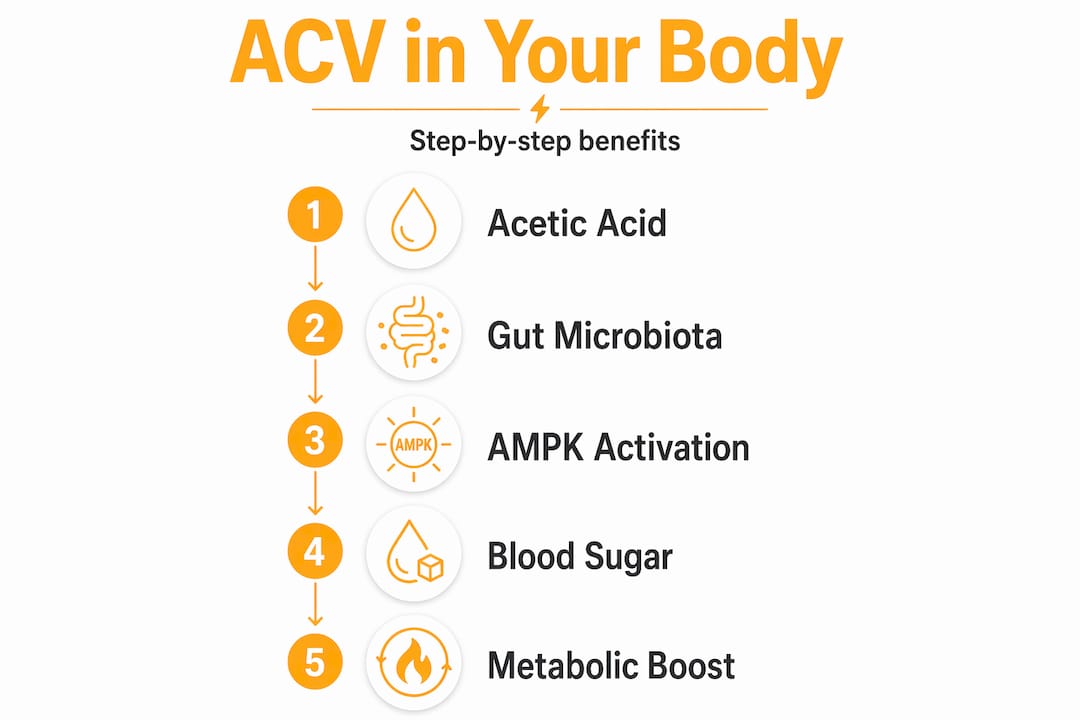
One of the most significant mechanisms happens at the cellular level. Acetic acid activates AMP-activated protein kinase (AMPK) in the liver, an enzyme that essentially acts as an energy switch. When AMPK turns on, it promotes fat breakdown, suppresses fat storage, and improves glucose uptake in cells. This isn’t folk wisdom. It’s measurable biochemistry.
Fermented foods like ACV also support gut microbiota remodeling and the production of short-chain fatty acids, compounds that strengthen the gut lining, regulate inflammation, and play a role in immunity. The probiotic effect from ACV is more modest than dedicated probiotic supplements, but for anyone interested in gut health best practices, it’s a meaningful addition to a broader strategy.
Digestion and blood sugar regulation
This is where ACV’s effects are most well-documented and most directly relevant to daily health. Acetic acid slows gastric emptying, meaning food moves more slowly from your stomach into your small intestine. That slower transit rate has two practical effects: you absorb carbohydrates more gradually, which reduces the sharpness of blood glucose spikes after meals, and you feel fuller for longer.
Here is how the sequence unfolds after you drink ACV before a meal:
- Acetic acid enters the stomach and begins buffering the digestive environment.
- Gastric emptying slows, buying your pancreas more time to release insulin in a controlled manner.
- Blood glucose rises more gradually rather than spiking sharply post-meal.
- Insulin sensitivity improves, meaning your cells respond more efficiently to the insulin that is released.
- Appetite signals stay suppressed longer due to slower stomach emptying, which can reduce total calorie intake throughout the day.
Clinical findings support this sequence, though current evidence is mostly from small studies. A frequently cited trial showed that consuming two tablespoons of ACV before a high-carb meal reduced post-meal blood glucose by up to 34 percent in insulin-resistant subjects. That is a meaningful reduction, not a placebo effect. But the key word is “modest” and the sample sizes are small.
ACV can also help with heartburn in specific situations. ACV may relieve heartburn by balancing stomach acid, but only if the cause is low stomach acid. If your lower esophageal sphincter is weak, adding more acid to the mix can make reflux worse. Knowing which situation applies to you matters.

Pro Tip: Take ACV 20 to 30 minutes before your largest meal of the day rather than first thing in the morning. This timing lines up with the gastric emptying mechanism and gives the acetic acid the best opportunity to moderate glucose absorption when it counts most.
Weight management and metabolism
The apple cider vinegar weight loss conversation is where claims get wildly exaggerated and where skeptics write off real effects entirely. The truth is more useful than either extreme.
Daily ACV intake produces modest but measurable weight and fat loss, with clinical research showing roughly a 2 to 3 pound loss over 12 weeks. That number is real, but it will not transform your physique without dietary changes and regular movement supporting it. What ACV does offer is a biochemical assist in three specific areas.
How ACV supports metabolic health:
- Appetite suppression: Slower gastric emptying means you feel full longer and naturally eat fewer calories throughout the day without white-knuckling portion control.
- AMPK activation: By switching on this metabolic enzyme, ACV promotes fat oxidation at the cellular level, particularly in liver tissue.
- Cholesterol improvement: ACV may lower total and LDL cholesterol by reducing the liver’s fat production, an effect directly linked to acetic acid content.
| Study focus | Outcome | Duration |
|---|---|---|
| Body weight reduction | 2 to 3 pounds lost | 12 weeks |
| Fasting blood glucose | Modest reduction observed | 8 to 12 weeks |
| Total cholesterol (LDL) | Moderate reduction | 8 weeks |
| Visceral fat mass | Small but measurable reduction | 12 weeks |
For people tracking their body composition closely, this is where looking at fat-burning ingredients that work alongside ACV can give a clearer picture of what is genuinely moving the needle versus what is noise.
Pro Tip: Do not treat ACV as a weight loss shortcut. Instead, think of it as a metabolic support tool. Combined with a calorie-conscious diet and consistent exercise, its effects compound in ways they never will if it’s the only change you make.
Health risks and safe consumption guidelines
ACV is acidic by nature, which means consuming it carelessly creates real risks. This section is not a reason to avoid it. It’s a reason to use it correctly.
Risks to know before you start:
- Tooth enamel erosion: Acetic acid dissolves the mineral surface of teeth over time. Drinking ACV undiluted, or sipping it slowly over an extended period, accelerates this damage significantly.
- Esophageal injury: Excessive ACV consumption can cause serious esophageal damage, especially with high-concentration tablet forms that dissolve slowly against tissue. Liquid ACV diluted in water is the safer format.
- Low potassium (hypokalemia): Chronic overconsumption can disrupt electrolyte balance, leading to muscle cramps, weakness, and in severe cases, cardiac irregularities.
- Medication interactions: ACV interacts negatively with diabetes, blood pressure, and diuretic medications. If you take any of these, speak with your doctor before adding ACV to your daily routine.
The recommended safe limit is no more than 2 teaspoons (30ml) daily, always diluted in water. Going beyond that threshold does not produce proportionally greater benefits. It just increases the risk of the side effects listed above. More is not better with ACV.
Pro Tip: Drink ACV through a straw to minimize contact with tooth enamel, then rinse your mouth with plain water afterward. Wait at least 30 minutes before brushing your teeth, since brushing immediately after acid exposure can accelerate enamel wear.
Using apple cider vinegar daily
Consistent, correctly timed use is what separates people who notice genuine benefits from those who try ACV for two weeks, feel nothing, and conclude it’s overrated.
- Get the dilution right. Mix 1 to 2 tablespoons of ACV in 8 ounces of water. This concentration is enough to trigger the biochemical effects without damaging your digestive tract.
- Time it strategically. Drinking ACV 2 to 3 hours before bed has shown benefits for overnight blood sugar regulation. Pre-meal timing works well for glucose management during the day. Pick the timing that aligns with your specific goal.
- Choose raw, unfiltered ACV. Pasteurized ACV lacks the mother culture. If gut health is part of your goal, the unfiltered version is the one that delivers probiotic benefits.
- Use it in food. Salad dressings, marinades, and pickled vegetables are straightforward ways to get ACV into your diet without the unpleasant task of drinking it straight. The acetic acid effects are present regardless of how you consume it.
- Track your response over weeks, not days. Digestive changes and blood sugar improvements emerge over 8 to 12 weeks of consistent use. Expecting dramatic shifts in a week sets you up for disappointment.
Pro Tip: Combine ACV use with resistance training for a compounding effect on insulin sensitivity. Exercise improves cellular glucose uptake independently, and ACV’s AMPK activation supports the same pathway. The two reinforce each other in ways that neither does alone.
My honest take on ACV and real-world wellness
I’ve spent a long time watching people pin enormous expectations on natural remedies, and ACV might be the clearest example of how that plays out. The science is real. The AMPK activation, the glucose moderation, the modest weight effects. These are not invented. But neither are they powerful enough to compensate for a poor diet, chronic stress, and inconsistent sleep.
What I’ve found is that ACV works best when people stop treating it as a shortcut and start treating it as one well-chosen tool in a larger system. I’ve seen people add two tablespoons of diluted ACV to their pre-meal routine, keep everything else the same, and notice their post-lunch energy crashes become less severe within a few weeks. That is a real, meaningful improvement. It’s not a 30-pound weight loss. It’s a stabilized afternoon.
The overclaiming frustrates me more than the skepticism does. When someone reads that ACV “detoxes the liver” or “melts fat overnight,” tries it, and sees nothing dramatic, they dismiss everything. That throws away genuine, if modest, benefits.
My advice is this: be precise about what you want from ACV. If it is blood sugar smoothing, take it pre-meal and give it 8 weeks. If it is gut support, use raw ACV consistently. If it’s weight management, recognize it as one variable among many. Respect the evidence. Respect your own physiology. And if you’re on any medication, run it past a healthcare provider before you make it a daily habit.
— Rene
Take your wellness further with Fitnesshealth

ACV is a smart starting point, but it works best as part of a system rather than a solo act. At Fitnesshealth, you will find wellness programs and supplements designed to support the same goals ACV targets, including metabolic health, digestive function, and body composition. Whether you’re pairing ACV with a structured nutrition plan, a gut health protocol, or a fat loss stack, the right combination of evidence-backed products makes the difference between subtle results and real progress. Explore the full range at Fitnesshealth and find what fits your goals. For athletes specifically, muscle recovery supplements can round out a routine that already includes digestive and metabolic support.
FAQ
What does apple cider vinegar do in your body?
ACV’s acetic acid slows gastric emptying, activates fat-burning enzymes (AMPK) in the liver, and moderates post-meal blood glucose spikes. These effects support digestion, appetite control, and modest improvements in metabolic markers.
How much apple cider vinegar should you take daily?
The recommended safe amount is 1 to 2 tablespoons (15 to 30ml) diluted in at least 8 ounces of water. Exceeding this limit increases the risk of tooth erosion, esophageal irritation, and electrolyte imbalance without adding meaningful benefits.
Does apple cider vinegar help with weight loss?
Studies show daily ACV use can produce 2 to 3 pounds of weight loss over 12 weeks, primarily through appetite suppression and improved fat metabolism. These effects are real but modest, and ACV works best alongside a balanced diet and regular exercise.
Can apple cider vinegar affect blood sugar levels?
Yes. Acetic acid slows carbohydrate absorption and improves insulin sensitivity, which reduces post-meal blood glucose spikes. People on diabetes medications should consult a doctor before using ACV regularly, since it can amplify the effects of those drugs.
Is raw apple cider vinegar better than filtered?
Raw, unfiltered ACV contains the “mother” culture, which provides enzymes and proteins that support gut bacteria. Filtered ACV lacks this and is primarily just acetic acid. For digestive and probiotic benefits, raw and unfiltered is the better choice.