

Elderberry has built a serious reputation on supplement shelves, but the marketing around it often outpaces the science. If you’ve been told this dark berry will keep you from getting sick, that claim deserves a closer look. The role of elderberry immune support is more nuanced than most labels admit. The evidence suggests elderberry works best not as a shield against infection, but as a tool that helps shorten how long you feel terrible and how hard symptoms hit. This article breaks down the chemistry, the clinical data, the safety details, and how to use elderberry as part of a smarter approach to immune health.
Table of Contents
- Key takeaways
- How elderberry supports your immune system
- What the clinical evidence actually shows
- Safety and who should be cautious
- Fitting elderberry into a real immune health strategy
- My honest take on elderberry
- Support your immune health with Fitnesshealth
- FAQ
Key takeaways
| Point | Details |
|---|---|
| Elderberry reduces symptoms, not infection risk | Research shows elderberry shortens illness duration but does not prevent you from catching a cold or flu. |
| Timing matters significantly | Starting elderberry within 24 to 48 hours of symptom onset is when the evidence shows the strongest benefit. |
| Raw elderberry is toxic | Only properly processed elderberry products are safe; raw berries contain compounds that cause nausea and vomiting. |
| Not safe for everyone | Immunocompromised individuals should avoid elderberry due to the risk of immune overstimulation. |
| Best used as part of a broader strategy | Elderberry works most effectively when paired with sleep, nutrition, exercise, and complementary supplements. |
How elderberry supports your immune system
Elderberries, harvested from the Sambucus nigra plant, contain a dense concentration of bioactive compounds that interact directly with your immune system. The three main players are anthocyanins, flavonoids, and polyphenols. Each brings a different mechanism to the table, and together they give elderberry its well-known reputation as a natural immune ally.
Anthocyanins are the pigments that give elderberries their deep purple-black color. They act as potent antioxidants, neutralizing free radicals that accumulate during infection and inflammation. When your immune system is fighting a virus, oxidative stress spikes. Anthocyanins help limit the cellular damage that comes with it.
Flavonoids, particularly quercetin and rutin found in elderberry, add another layer by supporting anti-inflammatory pathways. Studies confirm multiple health bioactivities in elderberry extracts, including antioxidant, anti-inflammatory, antimicrobial, and immunostimulatory properties. These aren’t minor effects. They reflect real interactions with your immune cells.
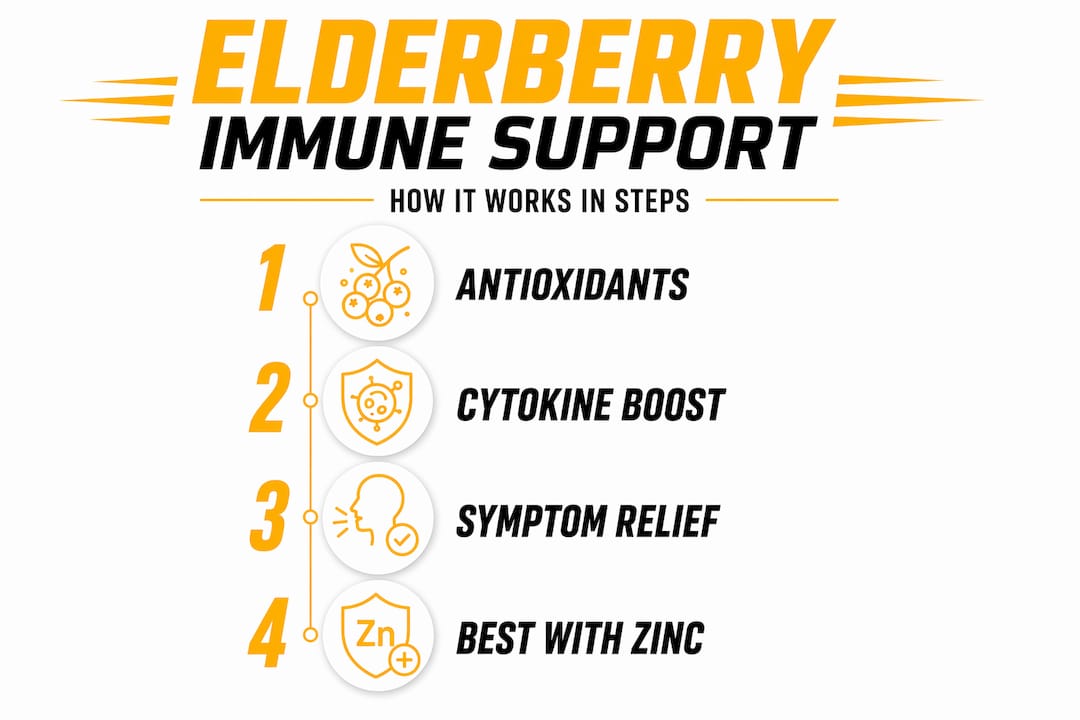
Where it gets interesting is at the cytokine level. Elderberry compounds appear to stimulate cytokine production, specifically inflammatory messengers like IL-6 and TNF-alpha. Cytokines are how your immune system coordinates its response, essentially sending signals that say “attack here” or “ramp up defense.” Elderberry’s ability to enhance this signaling early in an infection is likely why it shortens symptom duration.
The caution here is real, though. Cytokine enhancement that helps you recover from a mild cold can theoretically overstimulate the immune system in certain situations. For someone with a healthy immune system fighting a standard viral infection, that’s a benefit. For someone with an autoimmune condition or a severe inflammatory illness, it could be a problem.
Pro Tip: Look for elderberry products that specify they use Sambucus nigra extract with a standardized anthocyanin content. Generic “elderberry” labels without this detail often have inconsistent potency from batch to batch.
The benefits of elderberry extract also extend beyond direct immune cell stimulation. The antioxidant load in elderberries contributes to reducing systemic inflammation, which plays a background role in how resilient your immune system is day to day. You can read more about how these antioxidants support immunity and why they matter for overall wellness.
What the clinical evidence actually shows
This is where you need to separate what elderberry does well from what it has never been proven to do. The science is promising, but it comes with real limitations you should understand.
Multiple clinical trials have measured elderberry’s effect on cold and flu symptoms. The headline result: illness duration reduced by about 2 days compared to placebo, along with meaningfully lower symptom severity scores. That’s not nothing. Two fewer days of fever, congestion, and fatigue is a significant quality-of-life improvement.
One of the most-cited trials involved air travelers, a group with elevated exposure to respiratory viruses. The elderberry group recorded symptom severity scores of 247 versus 583 in the placebo group. Cold incidence was not different between groups. That single data point captures the core truth about elderberry: it does not stop infection from happening. It makes infection less miserable.
“No evidence supports elderberry prevents getting sick, but it helps reduce severity once infected.” — NIH and meta-analysis summaries, via hlbenefits.com
Here’s a summary of what trials have generally found:
| Outcome | Elderberry group | Placebo group |
|---|---|---|
| Cold duration | Approx. 2 days shorter | Standard duration |
| Symptom severity score | Significantly lower | Higher scores |
| Infection incidence | No significant difference | No significant difference |
| Optimal use window | Within 24 to 48 hours of onset | N/A |
One major limitation across the research: small sample sizes and heterogeneous preparations make it difficult to draw universal conclusions. Different elderberry products vary widely in extract concentration, processing method, and dosage. A study using a standardized syrup tells you little about what a low-dose gummy will do. This is why claims about elderberry need to stay calibrated to what specific trials actually tested.
Timing is a factor that deserves more attention than it usually gets. Starting elderberry within 24 to 48 hours of first noticing symptoms is when the evidence shows the strongest effect. Waiting three days in before you reach for the bottle means you’ve missed the window where it does the most good.
Safety and who should be cautious
Elderberry’s safety profile is generally solid when you’re using properly manufactured products. But there are specific situations where caution is not optional.
Raw or improperly processed elderberries contain cyanogenic glycosides, natural toxins that can cause nausea and gastrointestinal upset within hours of consumption. Reputable manufacturers remove these compounds during processing. Safe elderberry products are carefully processed to eliminate this toxicity risk, which is why you should always buy from brands with transparent quality controls.
Key safety considerations include:
- Autoimmune conditions: Elderberry’s cytokine-stimulating effects can worsen conditions like lupus, rheumatoid arthritis, or multiple sclerosis where the immune system is already overactive.
- Immunosuppressive medications: Elderberry can interfere with medications used after organ transplants or in cancer treatment by counteracting their immune-suppressing effects.
- Severe illness: During a serious infection with high inflammatory activity, adding a cytokine stimulator may amplify harm rather than help recovery.
- Pregnancy and breastfeeding: Research on safety in these populations is insufficient. Avoidance is the safer default.
- Children: While child-friendly formats exist, consult a pediatrician before regular use in young children.
Pro Tip: If you’re taking any prescription medication that affects immune function, check with your doctor before starting elderberry. This conversation takes five minutes and can prevent a real problem.
The dosage question is often overlooked. Clinical trials that showed a two-day reduction in illness duration used specific standardized doses, typically 175 to 900 mg of elderberry extract daily. More is not better, and exceeding tested doses increases the risk of overstimulation without delivering additional benefit.
Fitting elderberry into a real immune health strategy
One of the most persistent mistakes people make with elderberry is treating it as their entire immune support plan. It isn’t. Elderberry works best when it functions as one component in a broader approach to keeping your immune system ready.
Compare elderberry to other commonly used immune supplements:
| Supplement | Primary mechanism | Evidence strength | Best use case |
|---|---|---|---|
| Elderberry | Cytokine stimulation, antioxidant | Moderate (symptom relief) | At symptom onset, flu season support |
| Zinc | Inhibits viral replication | Strong | Cold duration reduction |
| Vitamin C | Antioxidant, immune cell function | Moderate | Daily maintenance, high-stress periods |
| Probiotics | Gut-immune axis support | Growing | Year-round immune baseline |
Zinc and vitamin C have independent evidence bases. Using elderberry alongside them during flu season, rather than instead of them, gives you more tools working through different pathways. Understanding how nutrition powers your immune system at the foundational level makes it much easier to see where supplements fit in.
Consumer trends reflect growing awareness that elderberry is a year-round tool, not just a reactive one. About 55 to 60% of elderberry users now take it year-round for immune maintenance rather than only at the first sign of a sniffle. Syrups remain the top-selling format, but child-friendly gummies are growing fast as parents look for natural, allergen-free options.
When choosing a product format, here’s what to consider:
- Syrups: Highest bioavailability in most formulations. Look for standardized extract concentration on the label.
- Capsules: Convenient for daily maintenance dosing. Easier to travel with during flu season.
- Gummies: Kid-friendly, but check the sugar content and actual elderberry extract dose per serving.
- Lozenges: Useful for throat symptom relief specifically, with localized delivery.
Beyond supplements, whole foods and a balanced diet still provide more reliable immune benefits than any single supplement, including elderberry. Quality sleep, regular moderate exercise, and stress management are not optional additions. They are the foundation. Elderberry and other supplements add meaningful support on top of that foundation, not underneath it. You can also explore how probiotics support immune health as another research-backed layer worth adding to your routine.
My honest take on elderberry
I’ve tracked the supplement industry long enough to know that elderberry sits in a strange category. The science is real but modest. The marketing is often neither. What bothers me most is how elderberry gets positioned as a preventive shield when the clinical data is clear that it doesn’t stop you from getting sick.
In my experience, the people who get the most out of elderberry are the ones who already have solid foundations in place. Good sleep, adequate protein, regular movement, and a diet with actual vegetables. For those people, adding elderberry at the first sign of a cold or during high-exposure periods like international travel or flu season delivers a noticeable reduction in how long they feel rough.
The group that gets the least out of it? People who take elderberry as compensation for chronic sleep deprivation and a diet of processed food. A berry extract cannot override the basics.
I’m also cautious about the cytokine-stimulation angle. When elderberry health benefits are discussed online, the cytokine-enhancing mechanism gets presented as purely positive. What gets missed is that timing and immune context matter. Early in a mild respiratory infection, cytokine enhancement is helpful. In a severe infection with a cytokine storm already building, it’s the last thing you want. That nuance rarely makes it onto the label.
My practical recommendation: keep elderberry in your medicine cabinet for flu season and at-onset use. Don’t mistake having elderberry on hand for actually being immune-resilient.
— Rene
Support your immune health with Fitnesshealth

If elderberry is on your radar, you’re already thinking about immunity the right way. The next step is building the stack around it that gives your immune system real, year-round support. Fitnesshealth carries a curated selection of immune-focused supplements including elderberry extracts, zinc, vitamin C, and probiotic formulas, all chosen based on evidence and quality standards that actually matter.
Whether you’re heading into flu season, recovering from heavy training, or just looking to stop getting knocked out by every cold that circulates through your office, the right supplement program can make a measurable difference. At Fitnesshealth, you’ll find products designed for health-conscious people who want science behind what they’re putting in their body, not just a label that sounds good.
FAQ
Does elderberry prevent colds and flu?
No. Elderberry does not prevent infection but has been shown to reduce symptom severity and shorten illness duration when taken early after symptoms begin.
When is the best time to take elderberry?
Start elderberry within 24 to 48 hours of noticing first symptoms for the strongest effect. Research consistently shows that late supplementation reduces the benefit significantly.
Is elderberry safe for daily use?
Properly processed elderberry products are generally safe for daily use in healthy adults. However, immunocompromised individuals and those on immunosuppressive medications should avoid elderberry due to overstimulation risk.
What is the recommended elderberry dosage for immune support?
Clinical trials supporting immune benefits typically used 175 to 900 mg of standardized elderberry extract daily. Follow product label dosing and do not exceed tested amounts.
Can children take elderberry supplements?
Child-friendly elderberry formats like gummies are widely available, but you should consult a pediatrician before giving elderberry to young children, especially during illness or if they are on any medications.










