

After two decades of training everyone from weekend warriors to competitive athletes, I've learned that one of the most common questions I get is: "Can I build muscle and improve my cardio at the same time?" The short answer is yes, but there's a catch: and understanding this catch could be the difference between mediocre results and the physique and performance you're after.
Let me tell you about a marketing executive who came to me last year. She wanted to build lean muscle for her first physique competition but also needed to maintain her cardiovascular fitness for the London Marathon. Like many of my clients, she was caught between two seemingly opposing goals. What happened next might surprise you.
What Is Concurrent Training?
Concurrent training simply means combining resistance training with cardiovascular exercise within the same program. It's not about doing a quick 10-minute walk after your weights session: we're talking about structured programming that targets both strength/muscle building and cardiovascular adaptations simultaneously.
The beauty of concurrent training is that it mirrors real life. Most of us aren't powerlifters who only need to move heavy things, nor are we marathon runners who never need functional strength. We want to look good, feel strong, and have the cardiovascular health to chase our kids around the park without getting winded.

The Science Behind the Interference Effect
Here's where things get interesting, and frankly, where most trainers get it wrong. There's a real physiological conflict happening at the cellular level when you combine strength and endurance training. I call it the "molecular tug-of-war."
AMPK vs mTOR: The Cellular Battle
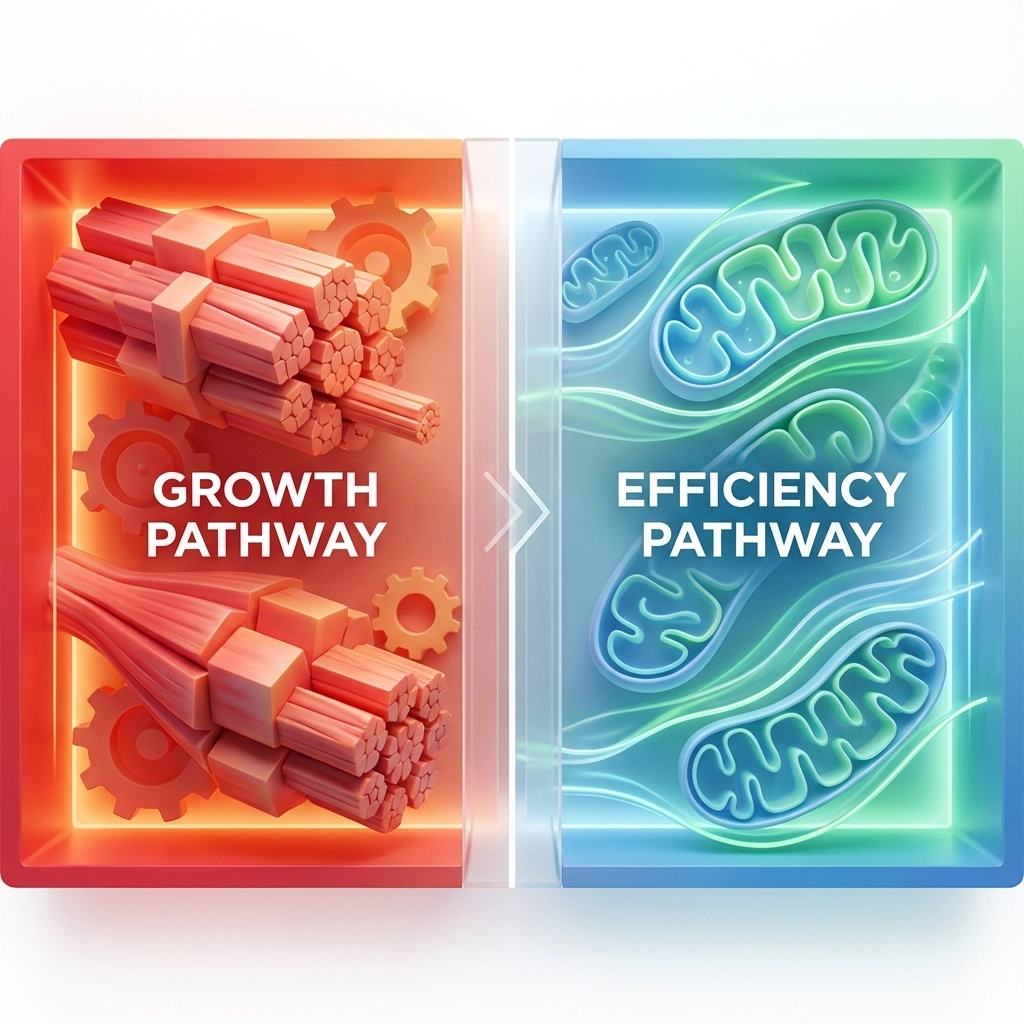
Think of your muscle cells as having two different managers with completely opposite philosophies:
mTOR (the muscle-building manager) gets activated by resistance training. It tells your cells to build more protein, increase muscle size, and get stronger. It's like having a construction foreman who wants to build bigger, more robust structures.
AMPK (the endurance manager) gets switched on during cardiovascular exercise. It focuses on improving energy efficiency, increasing mitochondria (your cellular powerhouses), and optimizing fat burning. This manager is more like an efficiency expert who wants everything lean and streamlined.
The problem? When both are activated simultaneously, they can interfere with each other's work. AMPK can actually suppress mTOR signaling, which means your muscle-building efforts get sabotaged by your cardio work.
I saw this firsthand with James, a 42-year-old client who was doing high-volume running (60+ miles per week) while trying to build muscle for his rugby comeback. Despite eating well and following a solid strength program, he was getting smaller and weaker. The interference effect was winning.
Evidence-Based Strategies to Minimize Interference
Don't worry: you don't have to choose between looking good and feeling fit. After working with hundreds of clients and staying current with exercise science research, I've developed strategies that work.
1. Control Your Endurance Training Volume
The research is clear: interference effects are primarily driven by the frequency and intensity of your cardiovascular work, not its mere presence. Studies show that when endurance training stays moderate in volume and intensity, the interference effect virtually disappears.
My rule of thumb: Keep your steady-state cardio to 2-3 sessions per week, 20-40 minutes per session, at a conversational pace. If you can't hold a conversation, you're working too hard for concurrent training goals.
2. Prioritize High-Intensity Interval Training (HIIT)
Here's something that surprised me when I first read the research: HIIT appears to cause less interference with strength gains than traditional steady-state cardio. Plus, it's incredibly time-efficient.
With Sarah (remember her marathon-physique goal?), we replaced two of her long runs with HIIT sessions. Not only did she maintain her cardiovascular fitness, but she actually started building more muscle than when she was doing traditional cardio.
Practical HIIT protocol: 8-12 intervals of 30 seconds all-out effort followed by 90 seconds of active recovery. Total time: 15-20 minutes, 2-3 times per week.
Optimal Timing and Sequencing
This is where the magic happens, and where most people get it completely wrong.
The Golden Rule: Strength Before Cardio
Every single study I've read confirms this: performing resistance training before cardiovascular work leads to superior strength and muscle gains compared to the reverse order. When you do cardio first, you arrive at your strength training pre-fatigued, which reduces power output and muscle fiber recruitment.
My programming approach:
- Same session: Resistance training first, followed by 15-20 minutes of moderate cardio
- Separate sessions: At least 6 hours between sessions when possible
- Separate days: Ideal when your schedule allows
The 6-Hour Rule
When possible, I separate strength and cardio sessions by at least 6 hours. This allows the acute molecular signaling from resistance training to begin before introducing the competing signals from cardiovascular exercise.
With my client Marcus, a busy solicitor, we structured his week with strength training at 6 AM before work and cardio sessions during his lunch break. The results spoke for themselves: he gained 8 pounds of muscle while improving his 5K time by 2 minutes over 16 weeks.

Periodization for Hybrid Athletes
Smart periodization is crucial for long-term success with concurrent training. You can't expect to peak in both strength and endurance simultaneously: your body needs focused phases.
The Block Approach
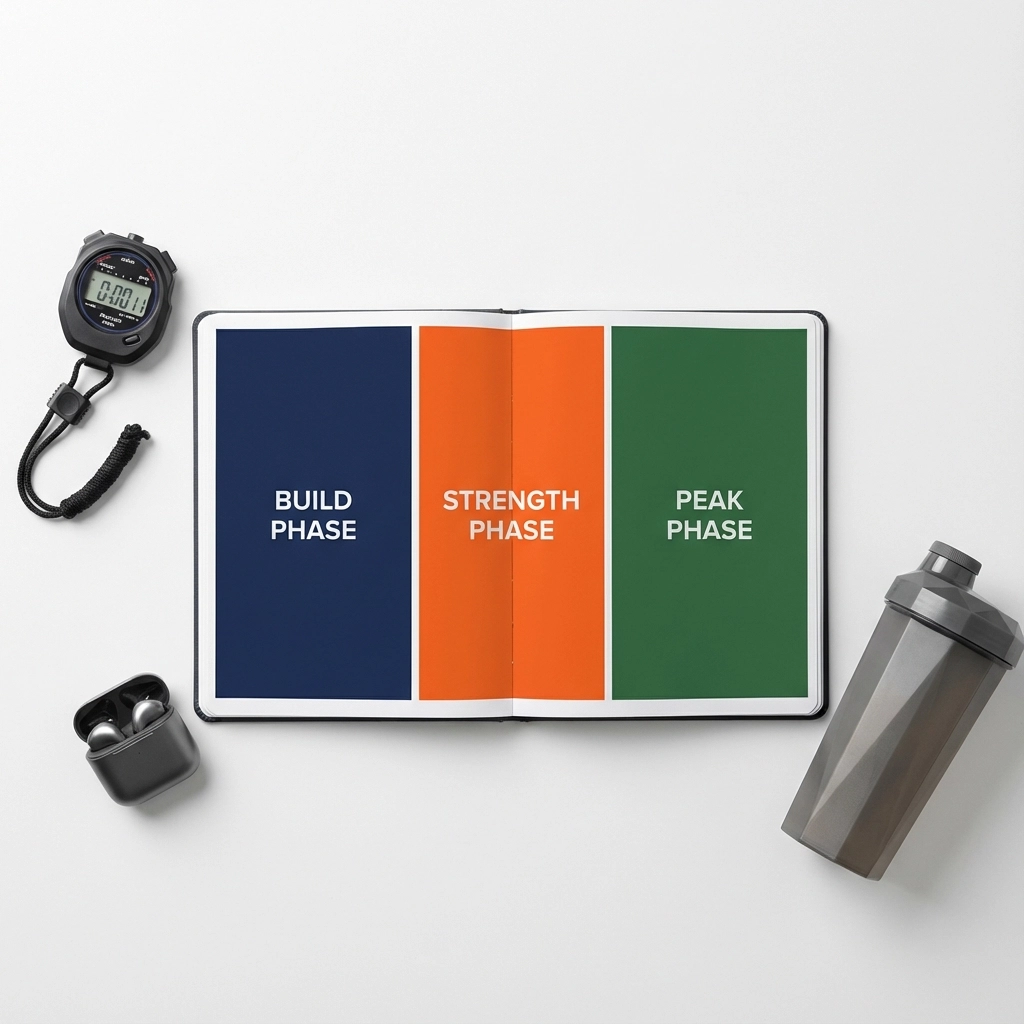
I use a block periodization model with my hybrid athletes:
Block 1 (4-6 weeks): Strength Emphasis
- 4-5 resistance sessions per week
- 2-3 moderate cardio sessions
- Focus: Building muscle and strength foundation
Block 2 (4-6 weeks): Concurrent Development
- 3-4 resistance sessions per week
- 3-4 cardio sessions (mix of HIIT and steady-state)
- Focus: Maintaining strength while improving conditioning
Block 3 (4-6 weeks): Endurance Emphasis
- 2-3 resistance sessions per week (maintenance)
- 4-5 cardio sessions
- Focus: Peak cardiovascular performance
The Undulating Model
For recreational athletes, I often use weekly undulating periodization:
- Monday/Thursday: Strength focus (heavy resistance + light cardio)
- Tuesday/Friday: Concurrent training (moderate resistance + moderate cardio)
- Wednesday/Saturday: Endurance focus (light resistance + challenging cardio)
- Sunday: Complete rest or active recovery
Busting Common Concurrent Training Myths
Let me set the record straight on some persistent myths I hear in the gym:
Myth 1: "Cardio kills gains" Reality: Excessive cardio interferes with muscle building, but moderate amounts can actually enhance recovery and work capacity.
Myth 2: "You need to do cardio every day for cardiovascular health" Reality: 3-4 sessions per week is optimal for most people balancing multiple training goals.
Myth 3: "Lifting weights doesn't improve cardiovascular fitness" Reality: Properly structured resistance training can significantly improve cardiovascular health, especially when using circuit formats or shorter rest periods.
Practical Programming Examples
Here's how I structure a typical week for clients pursuing concurrent training goals:
Beginner Concurrent Training Program
Monday: Upper body strength + 20 minutes steady-state cardio Tuesday: 20 minutes HIIT Wednesday: Lower body strength + 15 minutes easy cardio Thursday: Rest or light walking Friday: Full body strength + 20 minutes steady-state cardio Saturday: 30 minutes moderate cardio activity (hiking, cycling, swimming) Sunday: Complete rest
Advanced Hybrid Athlete Program
Monday: Heavy squat/deadlift focus + 15 minutes bike Tuesday: 25 minutes HIIT running Wednesday: Upper body strength + 20 minutes rowing Thursday: Plyometric/power work + 15 minutes easy jog Friday: Full body strength circuit Saturday: 45-60 minutes endurance activity Sunday: Active recovery (yoga, walking)
Nutrition and Recovery Considerations
Concurrent training demands more from your body, so your nutrition and recovery need to step up accordingly. I always tell my clients that you can't out-train poor recovery.
Key principles:
- Consume adequate protein (0.8-1.2g per pound of bodyweight)
- Time carbohydrates around your training sessions
- Prioritize 7-9 hours of quality sleep
- Stay hydrated throughout the day
- Consider strategic supplementation for enhanced recovery
Your Next Steps
Sarah's story had a happy ending, by the way. She placed second in her physique category and ran a personal best marathon time six months later. The secret wasn't choosing between her goals: it was learning how to pursue both intelligently.
Concurrent training isn't about doing more; it's about doing things smarter. The interference effect is real, but it's not insurmountable. With proper programming, sequencing, and periodization, you can build the strong, capable, and resilient body you want.
Start by assessing your current training split. Are you prioritizing strength work when it matters most? Are you overdoing the cardio volume? Are you giving your body adequate recovery between competing training stimuli?
Pick one strategy from this article and implement it this week. Whether it's rearranging your training order, switching to HIIT twice per week, or planning your first periodization block, small changes compound into significant results.
Your body is capable of remarkable adaptations when you work with its biology rather than against it. The question isn't whether you can have both strength and endurance: it's whether you're ready to train smart enough to achieve both.
Ready to take your training to the next level? Visit our goal-setting page to create a structured plan that works for your lifestyle and objectives.











