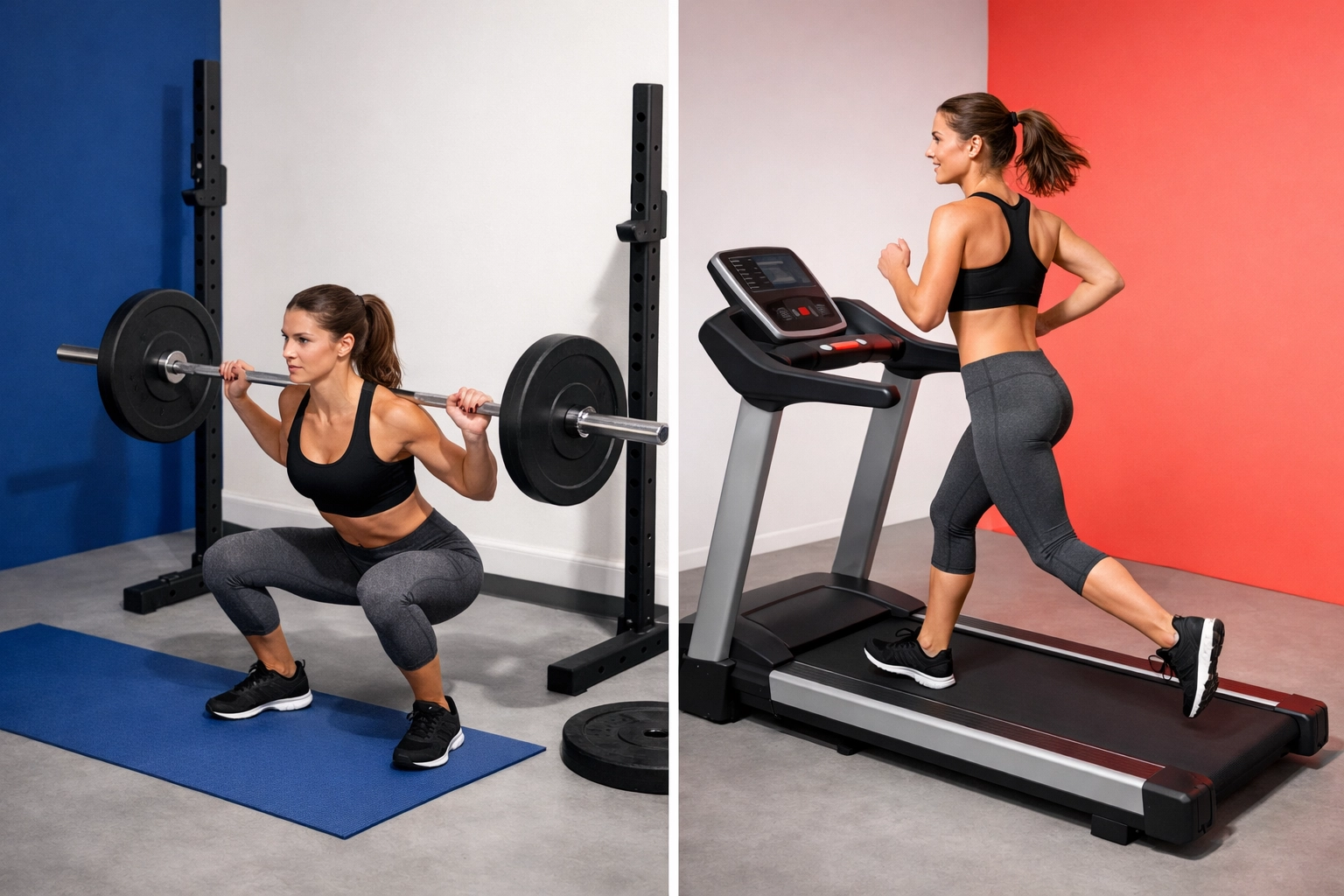
The fitness industry loves a good debate, and few topics spark more arguments than cardio versus weights for fat loss. Scroll through social media and you'll find trainers passionately defending their preferred method, each armed with studies, anecdotes, and strong opinions.
Here's the truth: the research doesn't give us a simple winner. Instead, it reveals something more nuanced: and more useful: than the binary choice most people are looking for.
The Calorie Burn Reality Check
Let's start with the numbers everyone focuses on: immediate calorie expenditure.
Cardio wins this round decisively. A 30-minute moderate-to-vigorous cycling session burns approximately 145–295 calories, depending on your weight and intensity. Compare that to weight training, which burns around 110 calories in the same timeframe.
This doesn't mean cardio is automatically better for fat loss. It simply means cardio is more efficient at burning calories during the activity itself. What happens after you leave the gym tells a different story.
What Strength Training Actually Does for Fat Loss
A nine-month study produced surprising results: participants doing strength training alone lost more body fat than those doing cardio alone. They also gained lean muscle mass and improved insulin sensitivity: both critical factors for long-term metabolic health.
The mechanism matters here. When you build muscle through resistance training, you increase your resting metabolic rate. Your body burns more calories at rest, throughout the day, even while you sleep. This metabolic advantage compounds over time.
Key benefits of strength training for fat loss:
- Builds lean muscle tissue that burns calories 24/7
- Improves insulin sensitivity and glucose metabolism
- Creates favorable hormonal changes that support fat loss
- Preserves muscle mass during caloric restriction
- Produces approximately 1.4% body fat reduction when done consistently
The catch? This process takes longer than simply burning calories through cardio. You're playing the long game with strength training, rebuilding your body's engine rather than just burning fuel.
The Case for Cardio-Based Fat Loss
The STRRIDE AT/RT study: one of the largest comparative studies on this topic: reached the opposite conclusion. Researchers found that aerobic training significantly reduced both fat mass and total body weight in previously sedentary, overweight adults. Strength training alone didn't produce significant reductions in either measure.
This isn't a contradiction. It's context.
For people who are currently sedentary and carrying excess body fat, cardio provides a more direct path to initial fat loss. The calorie deficit created through regular cardio sessions adds up quickly, especially when combined with dietary changes.
Cardio excels when:
- You need rapid initial fat loss results
- You're currently sedentary or returning to exercise
- You have significant weight to lose
- You're prioritizing absolute fat mass reduction
- You want measurable progress within weeks, not months

Why High-Intensity Interval Training Changes the Equation
HIIT deserves its own mention because it straddles both worlds. Research shows that when energy expenditure is matched, HIIT produces similar fat loss results to steady-state cardio: but in less time.
A HIIT workout also triggers similar metabolic responses to weight training, including elevated post-exercise oxygen consumption (EPOC) and favorable hormonal changes. You get cardiovascular benefits plus some muscle-preserving stimulus.
The limitation? HIIT is demanding. Most people can't sustain high-quality HIIT sessions more than 2–3 times per week without overreaching. Recovery becomes crucial.
Why the Research Conflicts (And What That Teaches Us)
The studies we're citing reached different conclusions for specific reasons:
Study population matters. Research on people with type II diabetes showed better results from strength training. Studies on sedentary overweight adults favored cardio. Your starting point influences which approach works best initially.
Measurement methods differ. Some studies measured absolute fat loss. Others focused on body composition changes (the muscle-to-fat ratio). Strength training looks less impressive if you only measure weight on a scale, because muscle gain offsets some fat loss.
Training intensity and duration vary. A half-hearted weight training session three times per week won't match results from dedicated progressive overload programs. Similarly, leisurely walks won't produce the same outcomes as structured cardio training.
Time horizons matter. Cardio often produces faster initial results. Strength training's metabolic advantages accumulate over months and years.

What This Means for Your Training
Stop looking for a single "best" method. The research points toward a clear practical conclusion: combining cardio and strength training produces superior results for fat loss, body composition, and overall health.
Here's how to structure that combination:
For maximum fat loss with muscle preservation:
- 3–4 strength training sessions per week focusing on compound movements
- 2–3 cardio sessions (mix of steady-state and HIIT)
- At least one full rest day for recovery
For rapid initial fat loss (sedentary starting point):
- 4–5 cardio sessions per week (moderate intensity, 30–45 minutes)
- 2 full-body strength training sessions
- Progressive increase in strength training volume over 8–12 weeks
For body recomposition (losing fat while building muscle):
- 4 strength training sessions per week with progressive overload
- 2 cardio sessions (low-to-moderate intensity for recovery and additional calorie burn)
- Calorie deficit of 300–500 calories daily
Choosing Your Primary Focus
Your personal situation determines where to place emphasis:
Prioritize strength training if:
- You're already relatively lean (under 25% body fat for women, 18% for men)
- You want to improve body shape and muscle definition
- You're concerned about maintaining muscle during fat loss
- You have metabolic concerns (insulin resistance, diabetes risk)
- You prefer shorter, more intense training sessions
Prioritize cardio if:
- You're currently sedentary and significantly overweight
- You need to see quick initial progress for motivation
- You have considerable fat to lose (more than 30 pounds)
- You enjoy longer, lower-intensity activity
- You're training for cardiovascular health or endurance events

The Verdict: Context Trumps Dogma
The research refuses to crown a single winner because fat loss isn't a single-variable problem. Your body doesn't care about winning internet debates. It responds to consistent energy deficits, progressive training stimulus, and adequate recovery.
Most effective approach for most people:
- Build your program around strength training 3–4 days per week
- Add cardio for additional calorie expenditure and cardiovascular health
- Adjust the ratio based on your starting point and progress
- Track body composition, not just scale weight
- Focus on sustainability over intensity
If you're currently doing only cardio, add strength training gradually. If you're only lifting weights, incorporate some form of cardiovascular exercise. The research consistently shows that combined training produces better outcomes than either approach alone.
Stop waiting for science to declare a winner. Start combining the strengths of both methods and let your results settle the debate.
The question isn't cardio or weights. It's how to intelligently use both to reach your specific goals in the most efficient, sustainable way possible. That's what the research actually tells us: once we stop looking for simple answers to complex questions.