![[HERO] Herbal Supplements for Stress: 7 Natural Adaptogens That Actually Work (UK Expert Guide)](https://cdn.marblism.com/0UzEmYZjp-m.webp)
Chronic stress impacts millions of people across the UK, triggering elevated cortisol levels, disrupted sleep patterns, and declining mental performance. Herbal supplements for stress: specifically adaptogens: offer a natural, evidence-backed approach to managing these symptoms without the side effects associated with pharmaceutical interventions.
Adaptogens are plant-based compounds that help your body adapt to physical, chemical, and biological stressors by restoring homeostasis. Unlike stimulants that provide temporary energy spikes followed by crashes, adaptogens work gradually to build resilience and balance stress hormones over time.
This guide examines seven clinically studied adaptogens available in the UK, their specific benefits, recommended dosages, and how to select the right option for your individual stress profile.
What Makes an Adaptogen Effective?
An adaptogen must meet three specific criteria established by research:
- Non-specific action: It must help the body resist multiple types of stressors, not just one
- Normalizing effect: It must restore balance regardless of whether stress has caused hyper or hypo function
- Non-toxic: It must be safe for long-term use at therapeutic doses
The seven adaptogens below meet these criteria and have substantial research supporting their stress-reducing properties.
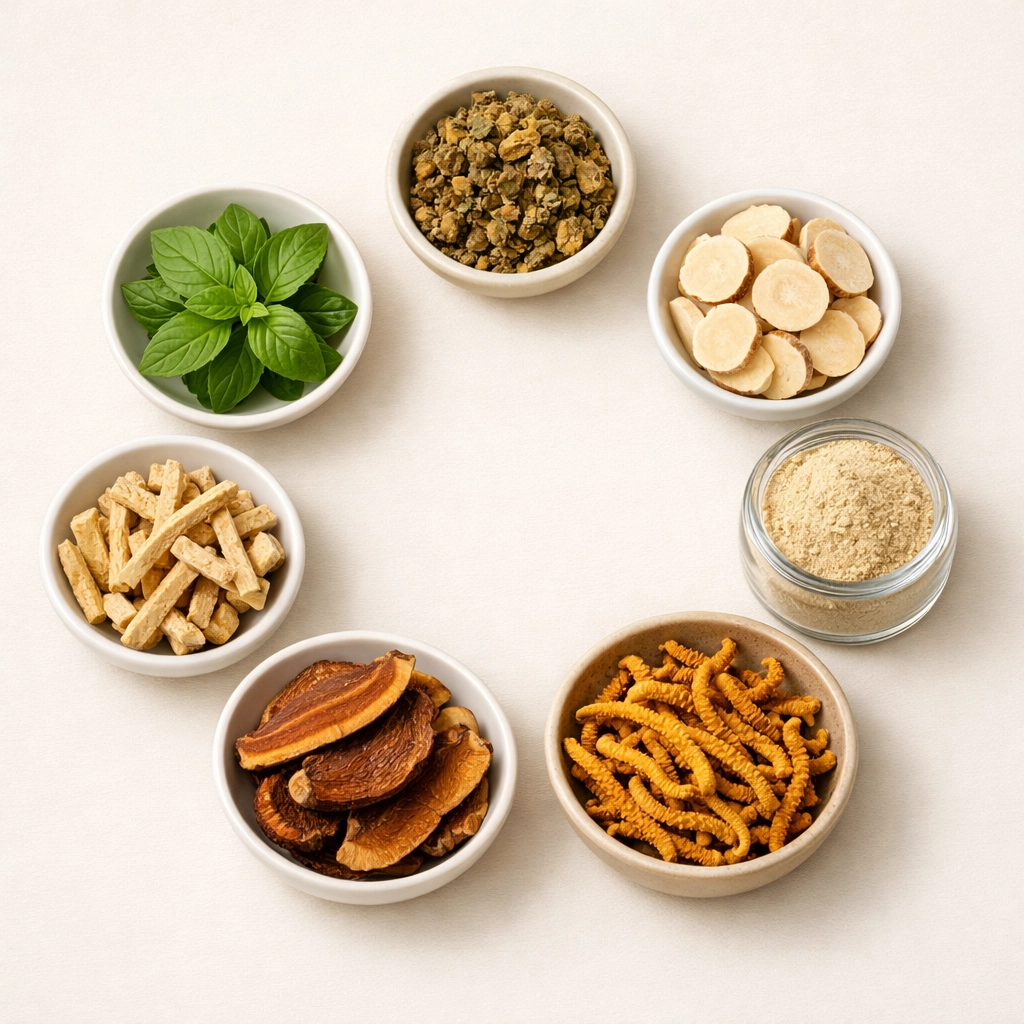
1. Ashwagandha (Withania somnifera)
Ashwagandha ranks as the most extensively researched adaptogen for stress management. This Ayurvedic herb directly lowers cortisol levels: the primary stress hormone: while simultaneously improving sleep quality and cognitive function.
Key benefits:
- Reduces cortisol by up to 30% in chronically stressed individuals
- Improves resistance to stress and anxiety
- Enhances memory and cognitive performance
- Supports thyroid function
- May increase testosterone levels in men
Recommended dosage: Standard ashwagandha capsules should contain 300-500mg of root extract (standardized to 5% withanolides) taken twice daily with meals. Most clinical studies use doses between 600-1,000mg per day.
Best for: Individuals experiencing chronic stress with elevated cortisol, poor sleep quality, or cognitive fog. Ashwagandha works particularly well for people who feel "wired but tired."
You can learn more about the comprehensive benefits and potential side effects in our detailed guide on ashwagandha side effects, benefits and uses.
2. Rhodiola Rosea
Rhodiola excels at building stress tolerance while maintaining mental clarity and physical energy. Unlike sedating adaptogens, rhodiola provides a balanced effect: reducing stress without causing drowsiness.
Key benefits:
- Combats mental and physical fatigue
- Improves focus and concentration during stressful periods
- Enhances athletic performance and recovery
- Reduces symptoms of burnout
- Supports mood regulation
Recommended dosage: Look for extracts standardized to 3% rosavins and 1% salidroside. Take 200-400mg once daily in the morning or early afternoon. Avoid evening doses as rhodiola can interfere with sleep in sensitive individuals.
Best for: People experiencing stress-related fatigue, students during exam periods, or athletes managing training stress. Rhodiola suits those who need to maintain high performance under pressure.
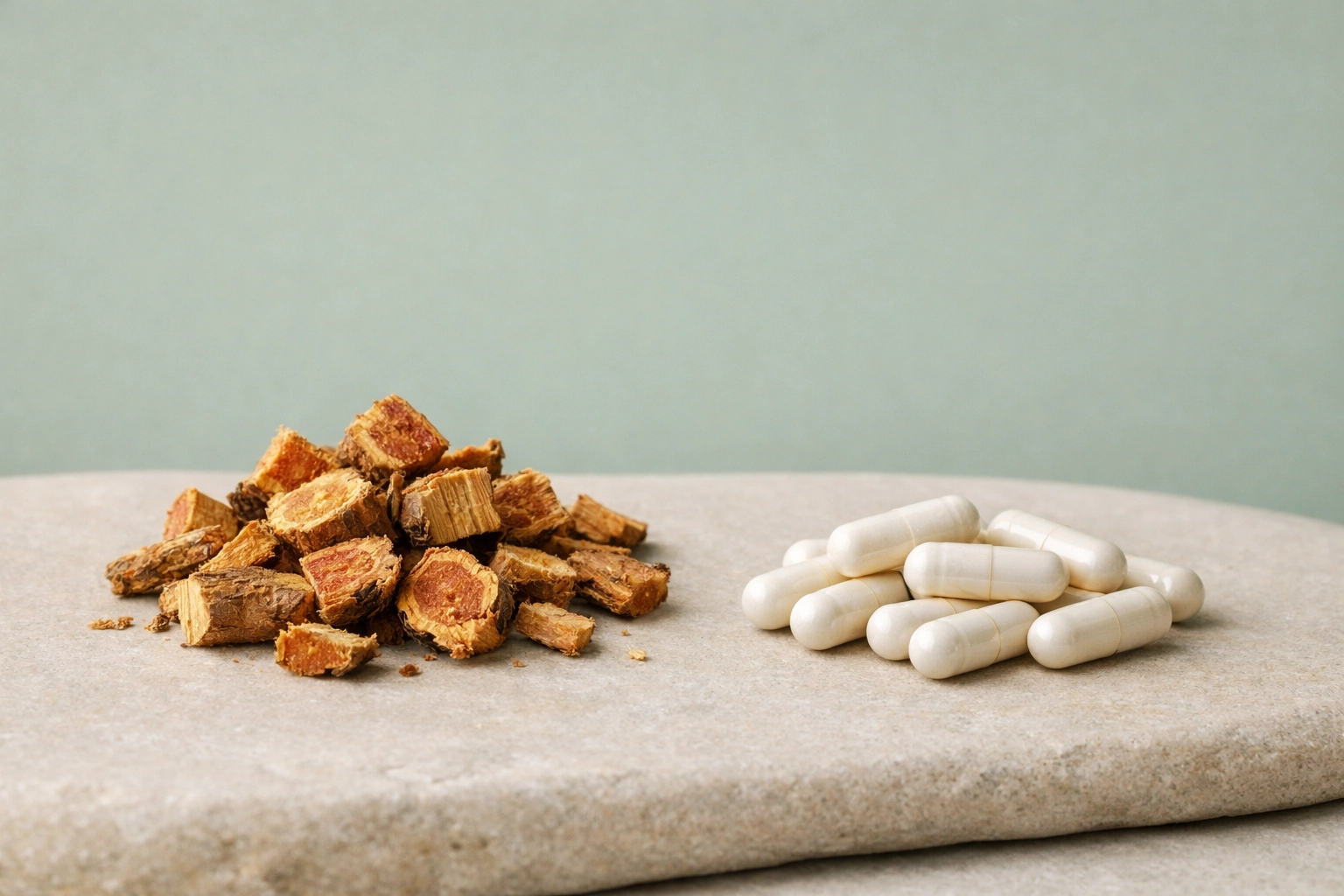
3. Holy Basil (Tulsi/Ocimum sanctum)
Holy basil, known as tulsi in Ayurvedic medicine, functions as both an adaptogen and a nervine: directly calming the nervous system while building long-term stress resilience.
Key benefits:
- Reduces anxiety and nervous tension
- Lowers blood glucose levels
- Provides antioxidant protection
- Supports respiratory health
- Helps regulate cortisol levels
Recommended dosage: 300-600mg of standardized extract twice daily, or 2-3 cups of holy basil tea throughout the day. Holy basil can be taken long-term without tolerance issues.
Best for: Individuals with stress-related digestive issues, blood sugar imbalances, or those seeking a gentler adaptogen with calming properties. Holy basil works well when combined with other adaptogens.
4. Panax Ginseng (Asian/Korean Ginseng)
Panax ginseng contains over 30 active ginsenosides that support both physical and mental stress responses. This warming adaptogen provides subtle stimulation without the jitters associated with caffeine.
Key benefits:
- Enhances mental performance and reaction time
- Supports immune system function
- Improves physical endurance
- May enhance mood and reduce fatigue
- Provides antioxidant protection
Recommended dosage: 200-400mg of standardized extract (4-7% ginsenosides) taken in the morning. Cycle ginseng use: take for 2-3 weeks, then break for 1-2 weeks to maintain effectiveness.
Best for: People dealing with physical exhaustion alongside mental stress, particularly during autumn and winter months. Avoid if you have high blood pressure or insomnia.
Note: Panax ginseng differs from Siberian ginseng (Eleutherococcus), which is a separate herb with distinct properties.
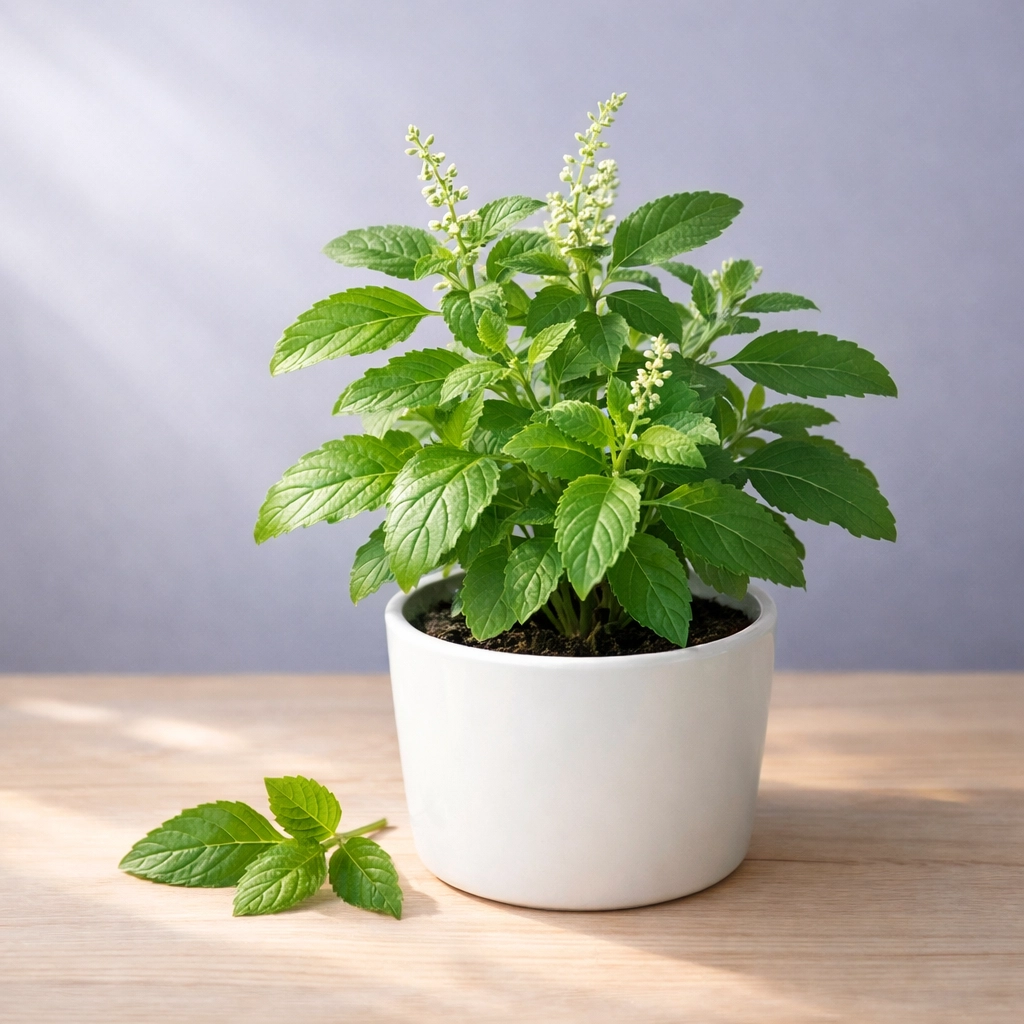
5. Reishi Mushroom (Ganoderma lucidum)
Reishi, known as the "mushroom of immortality" in traditional Chinese medicine, supports stress management through immune modulation and nervous system regulation.
Key benefits:
- Promotes relaxation without sedation
- Supports immune function during chronic stress
- Improves sleep quality
- Provides liver support and detoxification
- Contains anti-inflammatory compounds
Recommended dosage: 1,000-1,500mg of reishi extract (standardized to 10-20% polysaccharides) taken daily. Reishi can be consumed as powder, capsules, or tea. Take in the evening to support sleep.
Best for: Individuals whose stress has compromised immune function, those with difficulty unwinding at night, or people seeking a calming adaptogen with anti-inflammatory benefits.
6. Maca Root (Lepidium meyenii)
This Peruvian superfood functions as both an adaptogen and a nutritive tonic, providing sustained energy while supporting hormonal balance.
Key benefits:
- Balances hormones and supports endocrine function
- Increases energy and stamina
- Improves mood and reduces anxiety
- Enhances cognitive function
- Supports libido and fertility
Recommended dosage: 1,500-3,000mg of gelatinized maca powder daily, taken with breakfast or lunch. Different colours (red, black, yellow) offer slightly different benefits, with red maca being preferred for stress and mood support.
Best for: People experiencing stress-related hormonal imbalances, low energy, or mood swings. Maca works particularly well for women during perimenopause or individuals with adrenal fatigue.
7. Cordyceps (Cordyceps militaris/sinensis)
This functional mushroom adaptogen supports stress resilience through enhanced cellular energy production and oxygen utilization.
Key benefits:
- Increases ATP production for sustained energy
- Improves exercise performance and recovery
- Supports respiratory function
- Enhances immune response
- Balances stress hormones
Recommended dosage: 1,000-3,000mg daily of Cordyceps militaris extract (standardized to 0.3% cordycepin). Take in the morning or before physical activity.
Best for: Active individuals managing both training stress and life stress, or those experiencing stress-related fatigue affecting physical performance.
How to Choose the Right Adaptogen
Match your adaptogen to your primary stress symptoms:
For anxiety and nervous tension: Holy basil, reishi, ashwagandha For fatigue and low energy: Rhodiola, cordyceps, maca For cognitive performance: Rhodiola, ashwagandha, Panax ginseng For hormonal balance: Maca, ashwagandha For immune support: Reishi, cordyceps
Start with a single adaptogen for 2-3 weeks before adding others. This approach helps you identify which herbs work best for your individual biochemistry.
Dosage and Safety Guidelines
General recommendations:
- Take adaptogens consistently for at least 6-8 weeks to assess full effects
- Consume with meals to improve absorption and reduce digestive upset
- Cycle stimulating adaptogens (rhodiola, ginseng) after 2-3 months of continuous use
- Calming adaptogens (holy basil, reishi, ashwagandha) can be taken long-term
Contraindications: Consult a healthcare provider before using herbal supplements for stress if you:
- Take medication for thyroid conditions
- Use blood pressure medications
- Are pregnant or breastfeeding
- Have autoimmune conditions
- Take immunosuppressant medications
- Have scheduled surgery within two weeks
Quality Matters: What to Look For
The UK supplement market varies significantly in quality. Choose products that:
- Provide standardized extracts with specific active compound percentages listed
- Include third-party testing verification (look for batch testing certificates)
- Source organically when possible to minimize pesticide exposure
- Use appropriate extraction methods (water or alcohol extraction for herbs, dual extraction for mushrooms)
- Provide clear dosage information matching clinical research doses
Avoid products with unnecessary fillers, artificial colours, or proprietary blends that don't disclose individual ingredient amounts.
Key Takeaways
Herbal supplements for stress offer evidence-based support for managing chronic stress when used correctly. Ashwagandha capsules remain the most researched option for lowering cortisol, while rhodiola excels for maintaining energy during stressful periods.
Match your adaptogen selection to your specific stress symptoms, start with therapeutic doses supported by research, and maintain consistent use for 6-8 weeks before assessing effectiveness. Quality matters significantly: invest in standardized extracts from reputable suppliers.
For comprehensive wellness support, consider combining adaptogenic herbs with proper stress management techniques, adequate sleep, and balanced nutrition. Adaptogens work best as part of a holistic approach to health rather than as isolated interventions.
Remember that individual responses vary. What works effectively for one person may not suit another, making professional guidance valuable for optimizing your herbal supplement regimen.