

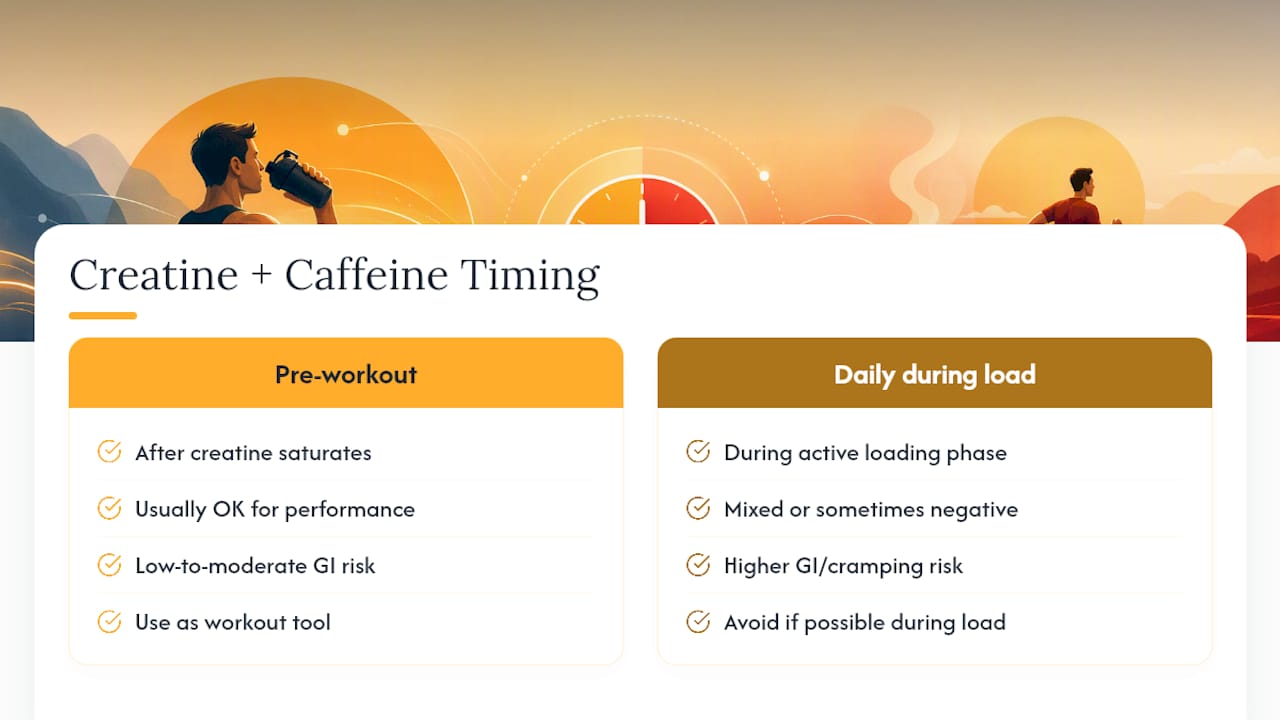
Yes, combining creatine and caffeine is safe for most healthy adults, though the timing matters more than most supplement labels admit. Take caffeine acutely before training rather than daily during a creatine loading phase, and you sidestep most of the friction researchers have found between the two.
- Time it right: Use caffeine as a pre-workout tool (30 to 60 minutes before training) rather than a constant background habit while loading creatine.
- Drink more water: Creatine pulls fluid into muscle cells, and caffeine is a mild diuretic, so bump your daily water intake and watch urine color as a rough hydration gauge.
A 2022 systematic review of 10 studies found that acute caffeine taken after a creatine loading phase usually caused no interference, while daily caffeine use during the loading window sometimes blunted creatine’s benefits.
Key Takeaways
Combining creatine and caffeine is safe for most healthy adults when caffeine is timed acutely around workouts rather than consumed daily throughout a creatine loading phase.
| Point | Details |
|---|---|
| Timing beats total dose | Acute pre-workout caffeine after creatine loading shows fewer issues than chronic daily coingestion. |
| Follow standard dosing | Use 3 to 5 g creatine daily and 3 to 6 mg/kg caffeine pre-workout, capped near 400 mg per day. |
| Watch hydration closely | Track body weight and urine color weekly since creatine draws water into muscle cells. |
| Flag special populations | Kidney disease, Parkinson’s disease, bipolar disorder, pregnancy, and adolescents need clinician input first. |
| Test your own response | Run a two-week self-test comparing separated versus combined timing before committing long-term. |
| Source verified products | Fitnesshealth offers creatine and caffeine formulas dosed to match the ranges covered in this guide. |
This article is general information, not a substitute for advice from a qualified doctor. Consult a qualified healthcare professional about your own circumstances before acting on anything here.
Table of Contents
- How Creatine and Caffeine Actually Work in the Body
- What Does the Research Actually Say?
- How Should You Dose and Time Creatine With Caffeine?
- Who Should Avoid Mixing Creatine and Caffeine?
- What Actually Matters When You Stack These Two
- Where to Get Creatine and Caffeine You Can Actually Trust
- Sources
How Creatine and Caffeine Actually Work in the Body
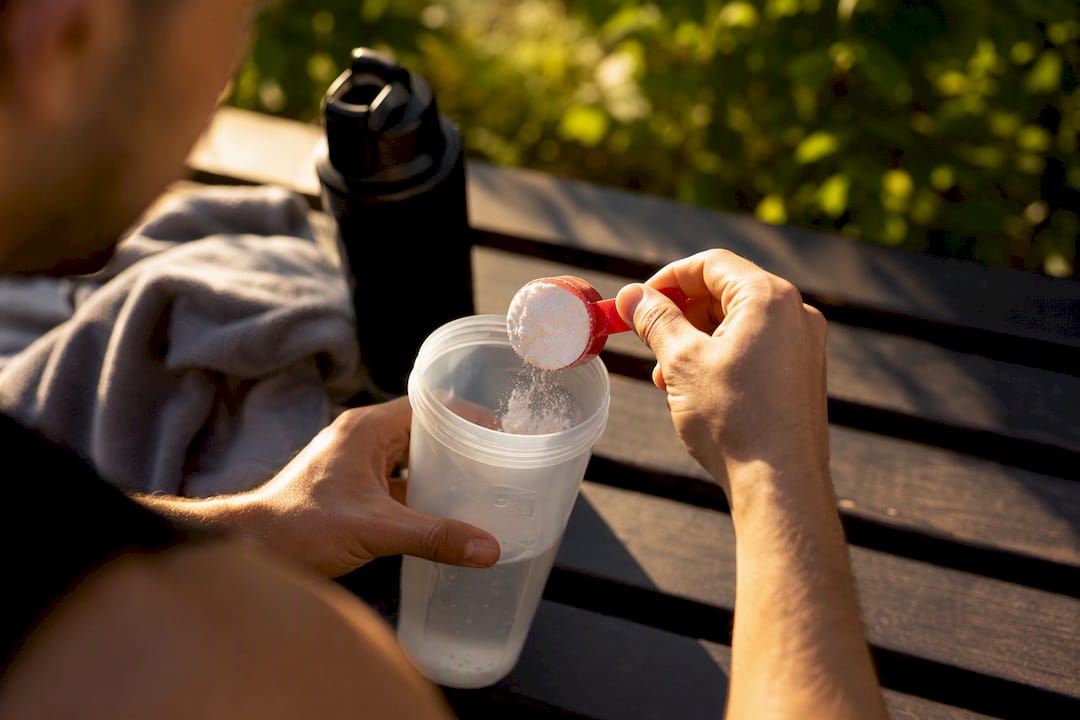
Creatine works by topping off phosphocreatine stores in muscle, which your body taps for rapid ATP regeneration during short, explosive efforts like heavy squats or 100-meter sprints. It also draws water into muscle cells, which is why most people gain a pound or two of water weight in the first week of use. Standard maintenance dosing sits at 3 to 5 grams a day, according to guidance summarized by the Mayo Clinic, and the role of creatine in athletic performance has decades of research behind it.
Caffeine works differently. It’s a central nervous system stimulant that blocks adenosine receptors, which lowers perceived effort and can genuinely improve strength, power, and endurance output at the right dose.
Here’s where the two might clash on a physiological level:
- Caffeine can shorten the muscle relaxation phase between contractions, a mechanism some older pharmacology research points to as a possible reason creatine’s benefits get diluted in certain protocols.
- Caffeine stimulates gut motility, which can compound the mild GI discomfort some people already feel with concentrated creatine doses.
Pro Tip: If you notice stomach cramping when stacking the two, try creatine monohydrate mixed into food and switch your caffeine source from a pill to black coffee. The slower absorption often settles things down.
What Does the Research Actually Say?
The honest answer is: it depends on whether you’re looking at a single workout or a multi-week loading phase. That distinction is the single most important thing to understand before you decide how to structure your intake.
- The 2022 systematic review pooled 10 studies on combined creatine and caffeine use and found genuinely mixed outcomes. Some trials showed no interaction at all. Others showed chronic caffeine use during a creatine loading phase attenuated the expected performance gains.
- Acute versus chronic matters. Taking caffeine once, before a workout, after your creatine stores are already saturated, tends to show no negative interference in the data. Daily caffeine intake layered on top of the loading phase itself is where the mixed and sometimes negative signals show up.
- A safety flag worth taking seriously: one study found that Parkinson’s disease patients taking creatine who also consumed more than 300 mg of caffeine daily showed faster disease progression than those with lower caffeine intake. This is a narrow, population-specific finding, not a warning for the general lifters reading this, but it’s a clear signal that neurological conditions change the risk calculus.
The Mayo Clinic puts it plainly: caffeine may reduce how well creatine works, though the agency is careful to note more research is needed before drawing firm conclusions. That’s a fair summary of where the science actually sits, somewhere between “totally fine” and “definitely avoid.”
How Should You Dose and Time Creatine With Caffeine?
Start with the numbers. Creatine maintenance dosing runs 3 to 5 grams a day, taken consistently. If you want faster saturation, a loading protocol of about 20 grams a day (split into four 5 gram doses) for five to six days gets you there quicker, though skipping the load and just taking 3 to 5 grams daily works just as well over three to four weeks. Caffeine’s ergogenic sweet spot is 3 to 6 mg per kilogram of body weight, taken 30 to 60 minutes pre-workout, with a daily upper limit around 400 mg for most healthy adults, per guidance from Health.
Here’s a practical way to sequence it:
- Strength or power days: Take your creatine any time of day (it doesn’t need to be pre-workout to work), then take caffeine 45 minutes before you lift.
- Endurance sessions: Same creatine timing, but keep caffeine closer to 3 mg/kg if you’re sensitive to jitters during longer efforts.
- During a loading week: Consider keeping caffeine intake to workout days only, rather than sipping coffee all day, every day, based on the supplemental protocol data many trials have used.
Hydration deserves real attention here. Since creatine shifts water into muscle and caffeine has a mild diuretic effect, track your body weight weekly and check urine color daily. Pale yellow is the target.
Pro Tip: Run a two-week self-test: week one, take creatine with caffeine only on training days; week two, separate them by taking caffeine only pre-workout and creatine with a meal. Log your lifts, sprint times, and any GI symptoms, then compare which block felt and performed better.
If GI upset shows up, review our supplement timing guide for spacing strategies that reduce stomach stress without cutting either supplement.
Who Should Avoid Mixing Creatine and Caffeine?
Most healthy adults tolerate both supplements fine, but a few groups should talk to a doctor before combining them.
- Kidney disease: Creatine is processed by the kidneys, and adding a stimulant on top warrants medical oversight.
- Bipolar disorder: Stimulants can affect mood stability, so caffeine dosing needs clinical input.
- Pregnancy: Neither supplement has robust safety data for pregnant people, so skip both without a doctor’s clearance.
- Parkinson’s disease: The study linking high caffeine intake to faster progression in patients also taking creatine makes this a clear consult-first situation.
- Adolescents: Growing bodies and developing nervous systems mean stimulant dosing should go through a pediatrician.
If you take NSAIDs regularly or any other medication processed by the kidneys, ask your doctor before adding creatine, since both the drug and the supplement route through the same organ system.
Where This Guidance Comes From
Fitnesshealth builds its supplement content around published research rather than marketing claims, cross-referencing findings like the 2022 systematic review with clinical guidance from institutions such as the Mayo Clinic before publishing dosing recommendations.
- Draws on peer-reviewed systematic reviews, not single small studies
- Cross-checks consumer health guidance against clinical sources
- Connects readers to deeper reading on creatine’s role in performance and caffeine’s workout effects
The clearest lesson from the research isn’t “avoid” or “combine freely.” It’s that acute, workout-timed caffeine behaves very differently from caffeine you drink all day long during a creatine loading phase, and treating those as the same thing is where most people get the guidance wrong.
What Actually Matters When You Stack These Two
Most articles on this topic treat creatine and caffeine as a single yes-or-no question, and that framing is the problem. The research doesn’t support a blanket verdict. It supports a distinction: acute, pre-workout caffeine after creatine stores are saturated looks fine in most trials, while daily caffeine layered on top of an active loading phase is where the mixed and occasionally negative results cluster.
What’s underrated here is how much individual response varies. Two lifters running identical protocols can walk away with opposite experiences, one with zero GI issues and full strength gains, the other with cramping and flat numbers. That’s exactly why a short self-test, two weeks each on separated versus combined timing, beats blindly following a forum recommendation or a supplement label’s fine print.
If you prioritize one thing, prioritize sequencing: let creatine saturate first, then treat caffeine as a workout tool rather than an all-day habit. Everything else, hydration, dosing, GI management, is secondary to getting that timing decision right.
— Rene
Where to Get Creatine and Caffeine You Can Actually Trust
Sourcing matters as much as timing once you’ve decided to stack these two. Fitnesshealth carries creatine monohydrate and caffeine-based pre-workout formulas built around the exact dosing ranges covered above, so you’re not guessing at label math or wondering if a proprietary blend is hiding an underdosed scoop.

That transparency matters most during a loading phase, when getting your creatine dose consistent (3 to 5 grams, verified, not estimated) actually determines whether your self-test protocol produces useful data. For readers who want extra context on creatine’s benefits beyond the gym, our partner resource on creatine’s role in bone health is worth a look. Browse Fitnesshealth’s supplement lineup to build a stack that matches the dosing and timing strategy you just read, and start your two-week test with product you can actually verify.
Sources
- Effects of creatine and caffeine ingestion in combination on exercise performance: A systematic review
- Caffeine and progression of Parkinson’s disease: A deleterious interaction with creatine
- Creatine - Mayo Clinic










