HMB reliably helps preserve or modestly increase muscle mass and strength in older adults, people recovering from illness or inactivity, and untrained beginners, typically at doses around 3 grams per day. Effects in young, well-trained athletes are inconsistent at best. Meta-analyses and the ISSN position stand back this pattern, and trials show the compound is safe for daily use for at least a year.
TL;DR:
- HMB is most effective at doses around 3 grams per day for older adults, individuals recovering from illness, or inexperienced lifters, with limited benefits for well-trained athletes.
- The supplement works by simultaneously stimulating muscle protein synthesis and reducing muscle protein breakdown, requiring consistent daily intake over at least eight weeks.
- Safety data shows HMB is safe for long-term use, with no significant adverse effects or interactions observed in clinical trials, but consultation is advised for those with underlying health conditions.
- Effects are modest, with gains in muscle mass and strength averaging small to moderate, mainly benefiting populations at risk of muscle loss rather than seasoned athletes.
Table of Contents
- What Is HMB and How Does It Work?
- What Does the Evidence Show About HMB Benefits?
- How Much HMB Should You Take, and When?
- Is HMB Safe? Side Effects and Interactions
- How Do You Actually Use HMB With Training?
- Where HMB Fits in a Bigger Recovery Picture
- Why the HMB Conversation Gets Muddled
- Try HMB Without the Guesswork
What Is HMB and How Does It Work?
HMB stands for beta-hydroxy-beta-methylbutyrate, a compound your body makes naturally when it breaks down the amino acid leucine. Roughly 5% of dietary leucine converts to HMB during normal metabolism, which is part of why supplemental doses look so small compared to protein powder scoops. You’re topping up a pathway that’s already running, not introducing something foreign.
Two forms show up on labels: calcium HMB (HMB-Ca) and the free acid form (HMB-FA). They aren’t identical. HMB-FA appears to hit peak blood concentration faster than HMB-Ca, though the ISSN position stand notes that faster absorption hasn’t translated into a clear real-world advantage in outcomes. For most people, consistent daily dosing matters more than which salt form sits in the bottle.
The mechanism runs on two tracks at once. HMB nudges muscle protein synthesis forward by activating a cellular pathway called mTORC1, the same growth signal that resistance training and dietary protein both switch on. Simultaneously, it slows the ubiquitin-proteasome pathway, your body’s main system for breaking muscle proteins down. Most supplements only push one side of that equation. HMB is unusual because it works both angles simultaneously, at least according to the mechanistic literature.
There’s a third piece worth knowing about: membrane stabilization. HMB appears to help protect the muscle cell membrane from damage during intense exercise, which is one proposed reason it shows up in recovery research after muscle-damaging workouts. Some researchers also point to possible effects on mitochondrial function, though this piece of the puzzle is less settled than the synthesis and breakdown mechanisms.
A few practical implications fall out of this biology:
- Because HMB works on ongoing synthesis and breakdown rates, it needs sustained daily dosing rather than a single pre-workout hit.
- The membrane-protective angle suggests timing near training sessions could matter more than timing on rest days.
- Since the pathways it affects are the same ones affected by chronic disuse and aging, the populations most likely to have “broken” or slowed versions of these processes stand to gain the most.
What Does the Evidence Show About HMB Benefits?
The honest numbers are modest, not miraculous. A 2025 umbrella review of meta-analyses found small-to-moderate effect sizes for HMB’s impact on muscle mass and strength, in the range of 0.2 to 0.27 on standard effect-size scales. Translation: HMB nudges outcomes in the right direction, but it’s not going to turn a couch-to-5K program into a bodybuilding transformation.
Key data point: Pooled analyses across multiple trials show HMB supplementation increases fat-free mass and produces small-to-moderate gains in muscle mass and strength, but shows no consistent effect on fat mass or overall body weight, according to the umbrella review.
That last part surprises a lot of people who assume any muscle-focused supplement should also trim body fat. HMB isn’t a fat-loss compound. It’s a muscle-preservation and modest muscle-building compound, and the research is consistent on drawing that line.
Where the effect gets meaningfully stronger is in specific populations:
- Older adults and sarcopenia risk groups show the most consistent, reproducible benefits, according to a systematic review and meta-analysis focused on aging populations. HMB combined with exercise helped preserve or improve muscle mass and strength in ways that showed up reliably across studies.
- People recovering from bed rest, illness, or immobilization may see HMB blunt some of the muscle loss that comes with forced inactivity, likely tied to its anti-inflammatory and membrane-stabilizing effects.
- Untrained beginners starting a new resistance program tend to respond better than people who’ve already spent years lifting.
- Well-trained athletes show mixed, often null results. If your muscle protein synthesis machinery is already running efficiently from years of training, there’s less room for a leucine metabolite to move the needle.
Duration matters as much as population. Trials running longer than eight weeks consistently report larger improvements in lean mass and strength than shorter studies, an insight the umbrella review flags as one of the more important moderators of whether HMB “works” in a given study. A four-week trial in young athletes and a twelve-week trial in frail older adults are measuring almost different phenomena, and lumping them together is part of why HMB’s reputation swings between “proven” and “overhyped” depending on which study someone cites.
Worth noting: the studies backing these numbers vary in quality, sample size, and how tightly they controlled for diet and training load. That’s not a reason to dismiss the findings, but it is a reason to treat “small-to-moderate effect” as the accurate headline rather than anything bigger.
How Much HMB Should You Take, and When?
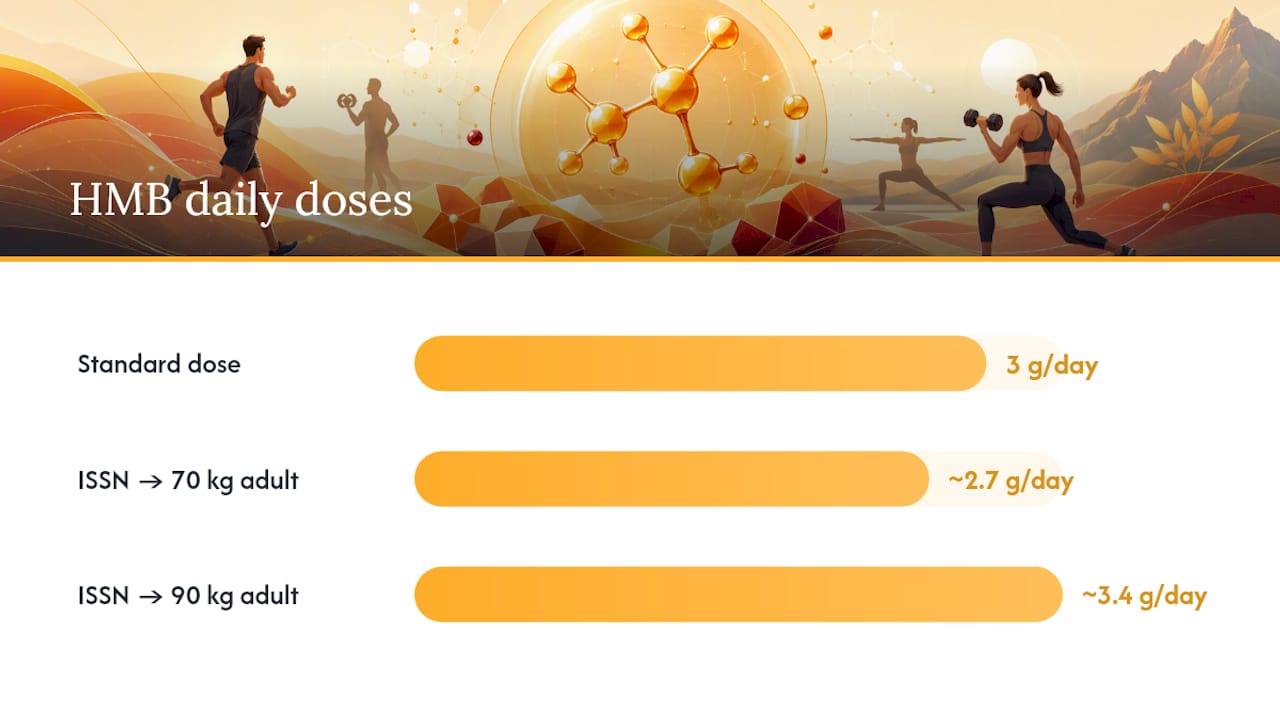
Three grams a day is the number that shows up across the clinical literature more than any other. That’s the dose used in most of the trials feeding into the meta-analyses discussed above, and it’s the practical starting point for most adults.
The ISSN position stand also frames dosing on a per-kilogram basis: 38 milligrams per kilogram of body weight per day. For a 70-kilogram (154-pound) adult, that works out to roughly 2.7 grams daily, which lands right in line with the standard 3-gram dose. For a heavier individual at 90 kilograms (about 198 pounds), the math pushes closer to 3.4 grams. In practice, the flat 3-gram dose covers most adult body weights reasonably well.
Timing splits into two camps in the research. Some protocols split the daily dose into smaller amounts spread across the day. Others consolidate it into one or two servings, often positioned close to a training session. The literature on this consolidated approach suggests dosing in temporal proximity to resistance training may better support the acute protein-synthesis and recovery effects HMB is meant to deliver, though the difference between splitting and consolidating hasn’t been rigorously separated in head-to-head trials.
A few label-reading basics:
- HMB-Ca is the more common, cheaper form and has the longest track record in trials.
- HMB-FA absorbs faster into the bloodstream, but that pharmacokinetic edge hasn’t reliably translated into better outcomes.
- Check the actual elemental HMB content per serving. Some products list total compound weight rather than active HMB weight, which can inflate the number on the front of the label.
Pro Tip: Pick one form, stick with the labeled 3-gram dose daily for at least eight to twelve weeks before judging whether it’s doing anything. Switching products or doses every few weeks makes it impossible to tell what’s actually working.
Is HMB Safe? Side Effects and Interactions
The safety data on HMB is about as reassuring as supplement research gets. The ISSN position stand concludes that chronic daily oral HMB use is safe for at least one year at typical trial doses, based on the clinical studies available. That’s a longer safety window than most supplements on the market can claim.
Across the trial data reviewed, researchers haven’t found consistent evidence that HMB harms glucose tolerance, insulin sensitivity, kidney function, or immune markers. For a compound aimed partly at older adults, several of whom are managing metabolic conditions, that clean profile across multiple body systems is a genuinely useful finding, not just a formality.
Side effects, where reported, tend toward the unremarkable:
- Occasional mild gastrointestinal complaints, similar to what you’d see with many oral supplements.
- No consistent pattern of liver or kidney stress markers in trial data at standard doses.
- No notable interaction concerns flagged in the reviewed literature, though “no flagged interactions” isn’t the same as “tested against every medication.”
A few sensible precautions still apply. Buy from brands that test for purity and accurately label elemental HMB content, since supplement quality control varies more by manufacturer than by ingredient. If you’re managing a significant illness, taking multiple prescription medications, or are pregnant or breastfeeding, talk to a healthcare provider before adding HMB, or any new supplement, to your routine. The favorable safety data comes from monitored trials, not from every possible combination of health conditions and medications a real person might have.
How Do You Actually Use HMB With Training?
HMB isn’t a supplement you take instead of training and eating well. It’s a supplement that adds a small, measurable edge on top of resistance exercise and adequate protein intake. The ISSN position stand is explicit that HMB’s clearest effects show up when paired with a structured exercise program, not taken passively.
Three groups get the most realistic return on trying it:
- Older adults managing sarcopenia risk. If muscle loss with age is your main concern, HMB paired with resistance training, even light resistance work, shows the most consistent benefit across the research reviewed here.
- People rehabbing from illness, surgery, or extended inactivity. The disuse-atrophy research suggests HMB may help blunt some of the muscle loss that comes with forced bed rest or immobilization.
- Novice trainees just starting resistance work. Beginners tend to see more measurable response than athletes who’ve already trained for years.
Give it time before judging results. Set a trial period of eight to twelve weeks, matching the duration where the research shows the clearest effects, and pair it with a resistance training routine two to four times a week plus enough dietary protein to support muscle repair. Reading up on how protein synthesis actually drives muscle recovery helps make sense of why the diet-and-training combination matters as much as the supplement itself.
For older adults specifically, pairing HMB with structured balance and resistance work, like the routines outlined in balance training programs designed for seniors, addresses both the strength and fall-risk sides of aging muscle loss at once.
Track something concrete during your trial window rather than relying on how you feel:
- A simple strength benchmark, like your five-rep max on a leg press or your grip strength, tested at the start and again at week eight to twelve.
- A basic body-composition check, whether that’s a tape measure, a home scale with bioelectrical impedance, or a proper DEXA scan if you have access to one.
- Recovery markers like soreness duration after workouts and how quickly you feel ready for the next session, especially relevant if you’re using HMB around recovery nutrition timing.
Pro Tip: If you see zero movement on strength or body composition after a full twelve-week trial with consistent training and dosing, HMB likely isn’t doing much for your specific situation, and that’s fine. Not every supplement responds the same way for every body.
If those numbers move in the right direction, continue. If they don’t after a genuine three-month trial with training and protein dialed in, the research doesn’t support pushing the dose higher or waiting longer. It’s probably just not your compound.
Where HMB Fits in a Bigger Recovery Picture
HMB works best as one piece of a broader recovery strategy rather than a standalone fix. It doesn’t replace protein intake, and it isn’t a substitute for the training stimulus that actually drives muscle adaptation. Anyone building a recovery stack alongside HMB should understand how it complements other tools, which is covered in more depth in a broader look at muscle recovery supplements for athletes.
Fitnesshealth focuses its educational content on separating what’s genuinely supported by clinical research from what’s marketing noise, and HMB is a good example of a supplement where the honest answer, modest but real benefits for specific populations, is more useful than an inflated one. That distinction shapes how product information and dosing guidance get presented across the site’s supplement content.
The author of this piece, Rene, covers supplement science and exercise physiology for Fitnesshealth, with a focus on translating clinical trial data into guidance adults can actually use without a research background.
Why the HMB Conversation Gets Muddled
The biggest problem with how HMB gets discussed online isn’t bad data. It’s bad matching: people read a headline about “muscle mass benefits” without checking whether the underlying study looked at frail 75 year olds or competitive powerlifters, and those are two completely different verdicts wearing the same supplement name.
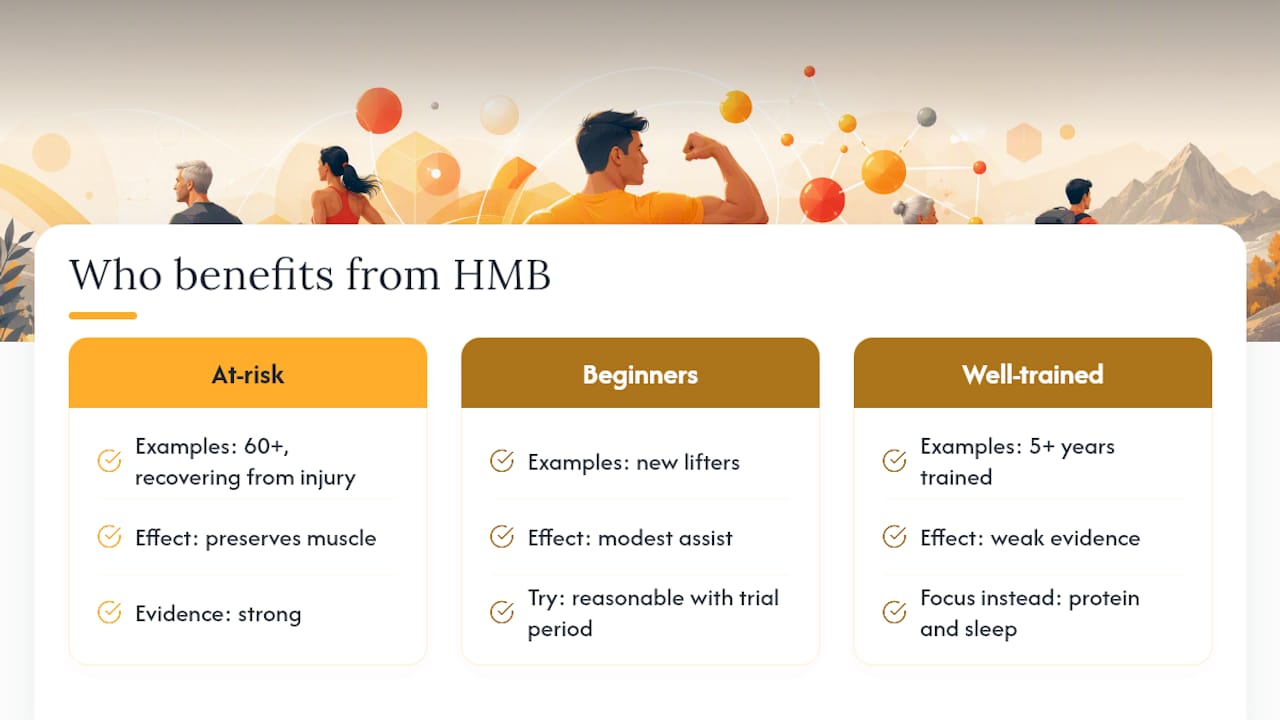
The conventional advice, take HMB if you lift weights, treats it like a universal performance enhancer. The research doesn’t support that framing. It supports a narrower, more useful claim: HMB is a legitimate tool for preserving muscle in populations at risk of losing it, and a modest assist for beginners, with much weaker evidence for people who are already well trained.
If you’re over 60, recovering from an injury, or just starting resistance training, this is worth trying with real expectations and a real trial period. If you’re a lifter with five years of consistent training under your belt, your time and money probably return more from dialing in protein intake and sleep than from adding HMB to the mix. That’s not a knock on the supplement. It’s just where the evidence actually points.
— Rene
Try HMB Without the Guesswork
The site offers HMB and HMB-containing recovery formulas with emphasis on clean labeling and accurate elemental dosing, important details based on the research above. Product pages indicate formulation type and per-serving dosing to help consumers compare products to the 3-gram benchmark used in most clinical trials.
If you’re managing a chronic condition, take prescription medication regularly, or are pregnant or breastfeeding, check with a healthcare provider before starting HMB or any new supplement. For everyone else ready to run a real eight-to-twelve-week trial, browse the HMB and recovery supplement selection to find a formulation that fits your training goals and start tracking your own results from week one.
This article is general information, not a substitute for advice from a qualified doctor. Consult a qualified healthcare professional about your own circumstances before acting on anything here.