

A third-party tested supplement is one an independent lab, not the manufacturer, has checked for label accuracy and contaminants. At the shelf, the single move that matters is finding a named certifier’s seal (NSF, USP, or BSCG) and confirming the lot number in that certifier’s online database. Look for language tied to a specific standard like NSF/ANSI 173 or ISO/IEC 17025 accredited lab work. If neither shows up, treat the “lab tested” claim on the box as marketing until proven otherwise.
Key Takeaways
Third-party testing works because an independent lab, not the seller, verifies what’s actually in the bottle and screens it against a defined contaminant or banned-substance menu.
| Point | Details |
|---|---|
| Certification isn’t FDA approval | The FDA oversees supplements post-market; third-party testing happens independently and voluntarily before purchase. |
| Five certifiers matter most | NSF, USP, BSCG, Informed Sport/Choice, and ConsumerLab each test differently, so match the certifier to your needs. |
| Lot verification is the real proof | A seal without a searchable, lot-matched database entry proves very little on its own. |
| Batch testing matters for athletes | Informed Sport tests every batch; Informed Choice samples periodically, a real difference for drug-tested professionals. |
| Fitnesshealth requires documentation | Products on Fitnesshealth are prioritized based on named certifier seals and available testing documentation. |
This article is general information, not a substitute for advice from a qualified doctor. Consult a qualified healthcare professional about your own circumstances before acting on anything here.
Table of Contents
- What Does Third-Party Testing Actually Mean?
- Which Third-Party Certifiers Should You Actually Trust?
- What Do Independent Labs Actually Test For?
- Do Athletes Need a Different Kind of Certification?
- How Do You Verify a Product Is Really Third-Party Tested?
- What Third-Party Testing Doesn’t Guarantee
- A Quick Scorecard for Choosing Supplements
- Why We Take Third-Party Testing Seriously
- How Fitnesshealth Vets What We Sell
- Sources
What Does Third-Party Testing Actually Mean?
An independent organization, one with no financial stake in the sale, tests a finished product or audits the factory that makes it. That’s the whole concept. It’s separate from what the government does.
The FDA doesn’t approve dietary supplements before they hit shelves. Its current good manufacturing practices oversight is largely a post-market system: inspections, warning letters, recalls after something goes wrong. Third-party certification fills that gap voluntarily, before the product ever reaches you, and manufacturing audits against 21 CFR Part 111 are often part of the deal.
A credible program usually checks:
- Identity — does the bottle contain the ingredient the label claims, and nothing swapped in?
- Potency — does each serving deliver the amount promised?
- Contaminants — heavy metals, pesticides, microbes below defined limits.
- Banned substances — relevant mainly to athletes, but increasingly common across the board.
- GMP facility audits — is the plant itself compliant, not just the finished bottle?
- Retesting — does certification hold up on a second look, or was it a one-time snapshot?
That last point trips up a lot of shoppers. A single clean test six years ago means nothing about the bottle on the shelf today.
Which Third-Party Certifiers Should You Actually Trust?
Five names cover almost every credible seal you’ll encounter in a U.S. store or online cart. Each does a slightly different job, and knowing which is which matters more than most people assume.

NSF runs the Certified for Sport program built around NSF/ANSI 173, the only American National Standard written specifically for dietary supplements. NSF screens for more than 280 substances banned by athletic organizations and does its own in-house accredited laboratory testing with periodic retesting, rather than trusting manufacturer paperwork.
USP, through its Dietary Supplement Verification Program, requires a facility audit for GMP compliance plus ongoing off-the-shelf testing for identity, potency, and contaminant limits. USP’s seal shows up mostly on vitamins, minerals, and probiotics rather than niche sports formulas.
BSCG (Banned Substances Control Group) leans into transparency, publishing detailed comparisons of testing menus, detection limits, and lot listings so buyers can see exactly what was screened and when.
Informed Sport / Informed Choice, run by LGC, focuses squarely on banned-substance risk for athletes, with a meaningful split between the two programs (more on that below).
ConsumerLab operates differently: it independently purchases and tests retail products, then publishes ratings, functioning more like an ongoing product review than a manufacturer-paid certification.
The frequency gap is the part most guides skip. Some programs test every single batch before it ships; others sample retail products periodically. For a casual buyer, that difference is minor. For anyone drug-tested, it isn’t.
What Do Independent Labs Actually Test For?
“Tested” is a vague word until you know what’s being measured. A credible lab report typically covers ingredient identity assays, potency assays, and screens for heavy metals, including lead, mercury, arsenic, and cadmium. Add pesticide residue checks, microbial contamination limits, residual solvent testing for extracts, and, where relevant, targeted panels for substances banned in sport.
Here’s the limit nobody puts on the front of the bottle: certification confirms what’s inside and screens for defined contaminants. It does not confirm the product works. OPSS is blunt about this: lab testing is the only reliable way to know actual ingredients, but that’s a different question from clinical effectiveness.
One more signal worth checking: does the certifier’s lab hold ISO/IEC 17025 accreditation and use validated analytical methods? That’s the difference between a rigorous test and a rubber stamp.
Do Athletes Need a Different Kind of Certification?
Yes, and the difference between programs isn’t cosmetic. Informed Sport tests every single batch before release. Informed Choice relies on periodic blind sampling of retail product instead of full-batch coverage. NSF Certified for Sport® sits closer to Informed Sport, built specifically around comprehensive banned-substance screening for competitive athletes.
For anyone drug-tested, whether a competitive athlete, a member of the military, or a professional in a regulated field, batch-level testing carries materially more weight than random retail sampling. A clean test on last year’s batch tells you nothing about the bottle in your gym bag today.
- Informed Sport: every batch tested before shipment.
- Informed Choice: periodic sampling, not full batch coverage.
- NSF Certified for Sport®: broad banned-substance panel, in-house lab testing.
Pro Tip: Never rely on the seal alone. Pull up the certifier’s database on your phone in the store, search the exact lot number printed on the bottle, and confirm it’s listed before you buy. It takes 30 seconds and it’s the only step that actually proves anything.
How Do You Verify a Product Is Really Third-Party Tested?
- Find the seal. Look for a named certifier logo on the label, not a generic “lab tested” badge.
- Identify the certifier. NSF, USP, BSCG, and Informed Sport/Choice are the names that matter; anything unfamiliar deserves a search before you trust it.
- Visit the certifier’s database. Every legitimate program above maintains a searchable lookup.
- Match the lot number. The number on your bottle should appear in the database entry, not just the product name generally.
- Check the testing scope. Does the program screen for banned substances, or just basic identity and potency?
- Confirm GMP audit status if the certifier’s program includes facility inspection.
Pro Tip: If the lookup comes back empty, don’t assume it’s a database glitch. Email the certifier or the manufacturer directly and ask for the certificate of analysis. If nobody responds within a reasonable window, that silence is itself useful information, and it’s usually reason enough to skip the product.
Watch for lookalike seals designed to resemble NSF or USP logos, and for vague phrases like “third-party lab tested” with no organization named anywhere on the label.
What Third-Party Testing Doesn’t Guarantee
Certification is not proof a supplement works, and it’s not a long-term safety guarantee either. It verifies content against a defined test menu at a point in time. OPSS makes the boundary explicit: confirming what’s in the bottle is a separate question from whether it does anything for you.
A seal with no certifier name attached is not a certification. Neither is a single-sample test result presented as ongoing verification, nor a product with no lot lookup at all.
Consumer Reports advises treating bold marketing claims with skepticism regardless of what’s printed near a testing badge. Other red flags worth flagging fast:
- No named certifier anywhere on the label or packaging.
- Health claims that sound more like a miracle cure than a supplement.
- Missing GMP audit documentation for products claiming manufacturing certification.
- Ingredients that appear on military or anti-doping prohibited lists, sold without a sport-specific seal.
A Quick Scorecard for Choosing Supplements
Score a product against five items before it goes in your cart:
- Recognizable certifier present (NSF, USP, BSCG, Informed Sport/Choice, or a ConsumerLab review).
- Lot number verifiable in a searchable database.
- Evidence of a GMP facility audit.
- A testing menu that names what’s screened, including banned substances if you’re an athlete.
- A stated retesting or ongoing verification policy, not a one-time claim.
Weight banned-substance and batch-level testing heavily if you’re drug-tested for work or competition; weight GMP audit evidence heavily if you’re managing a health condition and care most about contaminant control.
- Four or five items checked: buy with confidence.
- Two or three: investigate further, contact the manufacturer for documentation.
- Zero or one: avoid, regardless of how the label reads.
For athletes specifically, cross-reference against Fitnesshealth’s guide to sport-safe supplement protocols before committing to a new product ahead of testing season.
Why We Take Third-Party Testing Seriously
We won’t list a supplement on independent lab verification alone, but we treat it as a baseline, not a bonus. A named certifier and available documentation move a product up our list; their absence moves it down, every time.
That standard shapes what actually makes it onto Fitnesshealth’s shelves, and it’s why we’d rather have fewer options with real documentation than a longer list padded with vague “lab tested” claims.
How Fitnesshealth Vets What We Sell
Most retailers let you sort by price or star rating. That doesn’t tell you whether the bottle actually contains what the label says. Fitnesshealth prioritizes products carrying a recognized certifier seal, NSF, USP, or BSCG among them, and asks for documentation before a supplement earns a spot in our catalog.
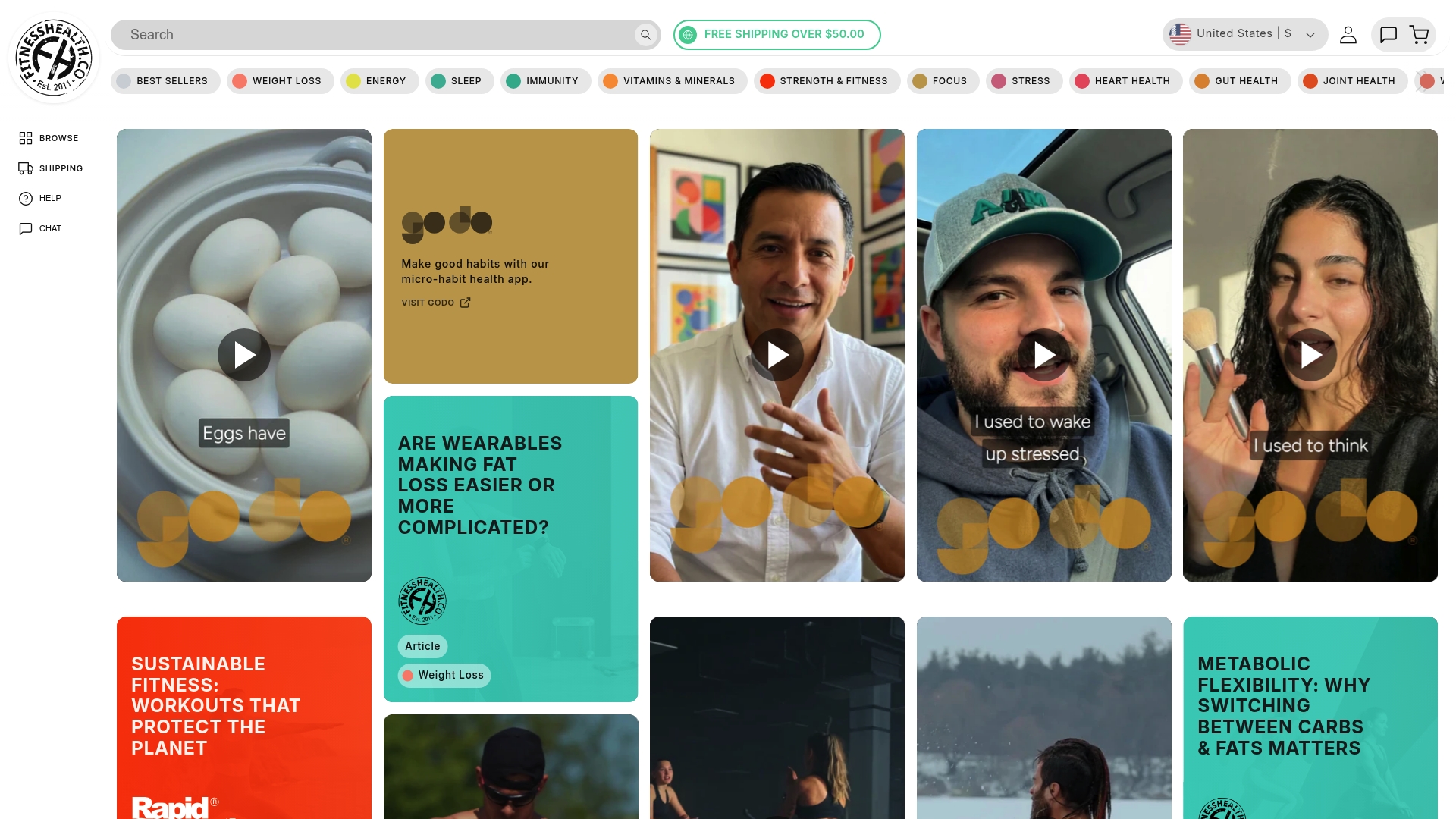
That filtering happens before you ever see a product page, so the browsing itself is simpler: fewer bottles to second-guess, less time spent cross-checking lot numbers on a certifier’s website mid-shop. If you’re stocking up for a training cycle, our guide to performance supplements for competition walks through options built around exactly this standard. Browse Fitnesshealth’s supplement catalog and start with products that already carry the documentation, instead of hunting for it yourself after checkout.
Sources
- Certified for Sport program | NSF
- Dietary Supplement Verification Program | USP
- Why is Third-Party Certification Important for Dietary Supplements? | OPSS
- Third-Party Dietary Supplement Certification Comparison | BSCG
- Current Good Manufacturing Practices (cGMPs) for Food and Dietary Supplements | FDA










