Vegan athletes can meet or exceed sport-specific protein needs without a single animal product, provided they hit the right total intake, spread it correctly across meals, and pay attention to leucine. That’s the short version. The longer version involves real numbers you can plan around today.
Endurance athletes should target a moderate amount of protein per kilogram of body weight per day, while strength and power athletes need a higher intake, with some guidelines supporting even greater amounts during heavy training blocks. Each meal should aim to deliver enough leucine (roughly 2.5 to 3 grams) to trigger muscle protein synthesis, which usually means a meal-level protein target of around 30 to 40 grams for most adults.
A 2023 peer-reviewed review found vegan athletes who eat sufficient protein are unlikely to see any drop-off in training adaptation compared to omnivores. Planning matters more than the food category on your plate.
The simplest path to those numbers:
- Build meals around a whole-food protein anchor (tofu, lentils, tempeh, seitan)
- Combine at least two plant protein sources per meal to round out amino acids
- Use a vegan protein powder to fill gaps on high-volume training days or when food access is limited
Key Takeaways
Vegan athletes meet performance protein needs by targeting 1.2 to 2.0 g/kg daily, splitting it across 3 to 5 leucine-sufficient meals, and using whole foods as the foundation with powders as a convenience tool.
| Point | Details |
|---|---|
| Set your g/kg target | Endurance athletes need 1.2–1.4 g/kg; strength and power athletes need 1.—–1.— g/kg or higher. |
| Hit leucine per meal | Aim for roughly 2.5–3 grams of leucine at each meal to trigger muscle protein synthesis. |
| Combine plant proteins | Pair grains with legumes (rice and beans, hummus and pita) to cover limiting amino acids. |
| Prioritize whole foods first | Tofu, tempeh, lentils, and seitan should form the base of daily intake before adding powder. |
| Use tested blends to fill gaps | Fitnesshealth’s vegan protein and BCAA formulas help hit per-meal leucine targets on busy or high-volume training days. |
This article is general information, not a substitute for advice from a qualified doctor. Consult a qualified healthcare professional about your own circumstances before acting on anything here.
Table of Contents
- How Much Protein Do Vegan Athletes Need Per Day?
- Why Leucine Matters More Than Total Protein Alone
- When Should Vegan Athletes Use Protein Powder?
- How Should You Time Protein Intake Around Training?
- Sample One-Day Meal Plans for Endurance and Strength Athletes
- What Does the Research Actually Say?
- Common Myths About Vegan Protein and Performance
- Practical Tips for Meeting Your Protein Needs This Week
- How Fitnesshealth Recommends Vegan Athletes Approach Protein
- Filling the Gaps With Third-Party-Tested Vegan Supplements
- Sources
How Much Protein Do Vegan Athletes Need Per Day?
The 0.— g/kg figure you’ll see on nutrition labels comes from the WHO’s technical report on population reference intakes. That number prevents deficiency in a sedentary adult. It has almost nothing to do with what a training athlete needs, and using it as your target is one of the most common mistakes vegan athletes make.
Sports nutrition guidance generally lands in the 1.2 to 2.0 g/kg/day range, with the specific number depending on your sport and training phase, according to practical frameworks from PCRM’s athlete nutrition guidance. Here’s how that breaks down by training type:
- Endurance athletes (runners, cyclists, swimmers doing high-volume aerobic work): 1.2 to 1.4 g/kg/day. The priority here is preventing protein from being cannibalized for fuel during long sessions.
- Strength and power athletes (lifters, sprinters, throwers): 1.— to 1.— g/kg/day, with some athletes in heavy hypertrophy phases pushing toward 2.0 g/kg.
- Athletes in a calorie deficit or cutting phase: push toward the higher end of your category’s range, sometimes above 2.0 g/kg, since protein helps preserve lean mass when energy intake drops.
- Athletes recovering from injury or a period of reduced training: temporarily raise intake toward 1.— to 2.2 g/kg to support tissue repair, even if your normal training load doesn’t call for it.
Here’s what that looks like in real grams. A 60 kg endurance athlete at 1.3 g/kg needs about 78 grams of protein daily. A 75 kg strength athlete at 1.— g/kg needs roughly 128 grams. A 90 kg power athlete pushing 1.— g/kg during a heavy block needs around 171 grams a day. NCBI’s protein and amino acid reference walks through the math behind these conversions if you want to build your own spreadsheet.
Multiply your body weight in kilograms by your target range, then divide the result across your planned number of meals. That single calculation is the backbone of every recommendation in this article.
Why Leucine Matters More Than Total Protein Alone
Muscle protein synthesis doesn’t just respond to how much protein you eat. It responds to whether a single meal delivers enough leucine to cross what researchers call the “leucine threshold,” generally cited around 2.5 to 3 grams per meal. Miss that threshold and your body may absorb the amino acids without triggering meaningful muscle repair.
This is where plant-based eating gets trickier than it needs to be. Most legumes and grains contain less leucine per gram than whey or animal protein, and several plant sources are also short on specific limiting amino acids like lysine (common in grains) or methionine (common in legumes). Pair a lysine-poor grain with a lysine-rich legume, though, and the gap closes fast. Rice and beans, hummus and pita, peanut butter on whole-grain toast: these aren’t just cultural food pairings, they’re functional amino acid complementarity.
You’ll also see PDCAAS and DIAAS scores referenced when people rank protein quality. Both measure how well a protein’s amino acid profile matches human needs and how digestible it is. Soy protein scores close to animal proteins on both scales, while some isolated grain proteins score lower. In practice, these scores matter far less once you’re eating a varied diet and hitting your leucine threshold at each meal. A comparison of amino acid composition across protein sources shows that while many plants trail whey in raw leucine content, specific isolates like pea, corn, and potato protein can close much of that gap.
Practical tactics that actually move the needle:
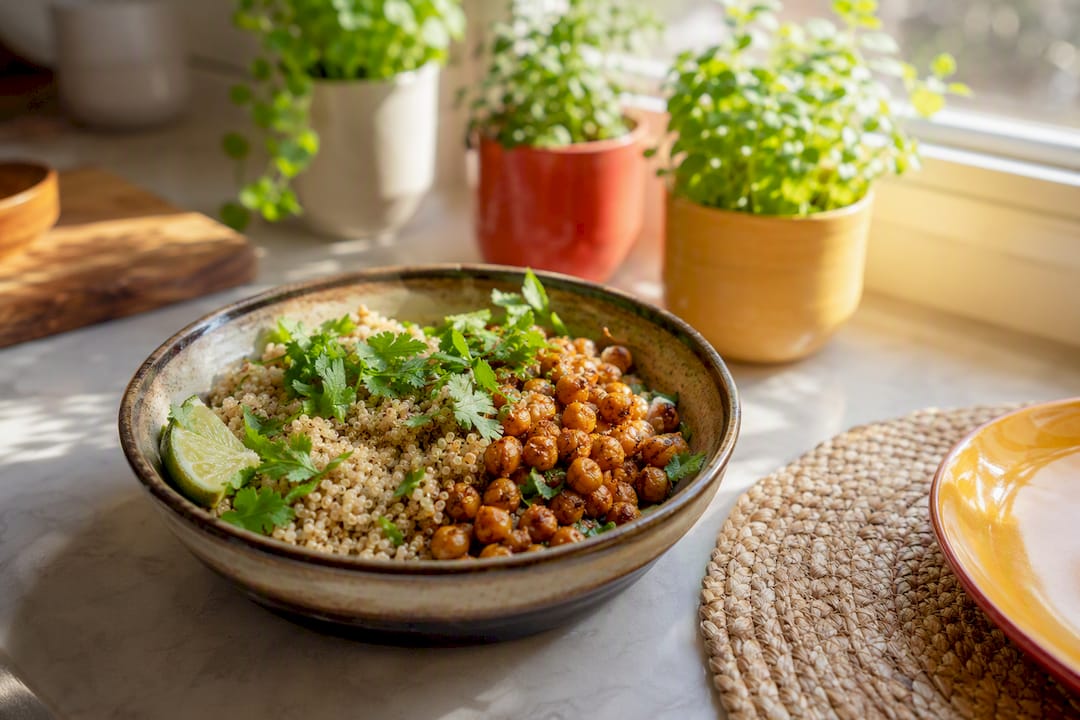
- Combine legumes with grains at the same meal (lentils with rice, chickpeas with couscous)
- Favor higher-leucine plant foods when you can: soy, pea protein isolate, and to a lesser extent corn and potato protein
- Use a fortified blend or add a scoop of pea or soy isolate to a lower-leucine meal instead of overhauling the whole plate
- Don’t fear volume. Eating a slightly larger portion of a lower-leucine food can close the gap almost as well as switching foods entirely
Research using linear programming across 151 plant protein sources found that optimized plant protein blends can closely reproduce animal amino acid profiles, and some combinations reached leucine levels sufficient to trigger synthesis in a single dose. This is the science behind why “blended” vegan protein powders exist in the first place.
Pro Tip: Keep a jar of pea protein isolate in your pantry strictly as a booster, not a meal replacement. A tablespoon stirred into oatmeal or a smoothie can push a borderline meal over the leucine threshold without changing what you’re actually eating.
When Should Vegan Athletes Use Protein Powder?
Whole foods should do most of the work, but protein powder earns its place when you’re traveling, training twice a day, or simply running out of hours to cook. The category breaks down into a few main types, each with a different profile:
- Pea protein: solid leucine content, good digestibility, often the base of quality blends
- Rice protein: lower in lysine on its own, usually blended with pea or soy to balance the amino acid profile
- Soy protein: one of the closest plant proteins to whey in amino acid completeness and leucine content
- Fava bean protein: a newer addition to blends, decent amino acid profile, often used to diversify allergen exposure
- Hemp protein: lower overall protein percentage per scoop and lower leucine, best used as an addition rather than a primary source
- Blended formulas: combine two or more of the above specifically to close amino acid gaps that a single source can’t cover alone
Before buying, run through this checklist:
- Protein per serving (look for at least 20 grams per scoop for a meaningful contribution)
- Leucine per serving, if listed (aim for at least 2 to 3 grams, either from the base protein or added BCAAs)
- Whether BCAAs or EAAs are added to boost the amino acid profile
- Added sugars, fillers, or excessive carbs and fats that dilute the protein-per-calorie ratio
- Third-party testing certification, such as NSF Certified for Sport or Informed-Sport, especially important for competitive athletes subject to doping controls
Powders make the most sense in three situations: right after a session when you don’t have time to cook, during multi-workout days when your total protein target keeps climbing, and while traveling when food quality is unpredictable. They’re a convenience tool, not a requirement, and the Frontiers research on blended plant proteins is exactly why well-formulated vegan blends can match or approach whey’s practical performance despite starting from a lower baseline. For more on how leucine and BCAAs function at the cellular level, the science behind BCAAs and muscle repair breaks down the mechanism in detail.
A few other supplements worth knowing about, each for a different reason: creatine monohydrate is one of the few supplements with genuinely strong evidence behind it for strength and power output, and vegan athletes tend to have lower baseline creatine stores since it’s naturally found in meat. Vitamin B12 is essentially unavailable from plant foods in reliable amounts, making supplementation close to mandatory on a vegan diet. Vitamin D matters for bone health and recovery, particularly for athletes training indoors or in low-sun climates. Iron, specifically the non-heme form found in plants, absorbs less efficiently than heme iron, so pairing iron-rich foods with vitamin C can help offset the difference.
Pro Tip: If a blend lists “protein blend” without breaking down the individual sources or their gram amounts, that’s usually a sign the formula is optimized for cost, not amino acid completeness. Look for full transparency on the label.
How Should You Time Protein Intake Around Training?
Divide your daily total across 3 to 5 meals, aiming for that 30 to 40 gram range with adequate leucine at each sitting. This spreads the anabolic stimulus throughout the day instead of clustering it into one or two oversized meals your body can’t fully use for muscle repair at once.
- Post-workout window: getting protein in within 0 to 2 hours after training supports recovery, but the evidence suggests this window is far more flexible than older advice implied. What matters most is total daily intake and hitting your leucine threshold at your next meal, not sprinting to the fridge the second you rack the weights.
- Morning training: if you train fasted or early, prioritize a protein-rich breakfast immediately after (tofu scramble, a soy-milk based smoothie with pea protein) rather than skipping to lunch.
- Midday training: bookend the session with a moderate-protein meal beforehand and a full 30+ gram meal within a couple of hours afterward.
- Evening training: a slightly larger dinner covering both recovery and the overnight fasting stretch works well, and some athletes benefit from a casein-free plant protein snack (like soy yogurt) before bed to support overnight recovery.
Hydration deserves a mention here too. Protein metabolism and recovery both depend on adequate fluid intake, and dehydration can blunt the muscle repair processes protein is supposed to support. This matters more for vegan athletes eating high-fiber diets, since fiber-rich meals draw more water into the digestive tract. If you’ve upped your lentil and quinoa intake to hit protein targets, you may need to drink more water than you did on a lower-fiber diet, not less. For a deeper look at the recovery window itself, post-workout nutrition timing covers the full picture beyond protein alone.
Sample One-Day Meal Plans for Endurance and Strength Athletes
Here’s how the numbers play out for two real training scenarios.
Endurance athlete, 60 kg, targeting 1.3 g/kg (78g/day):
Strength athlete, 75 kg, targeting 1.— g/kg (128g/day):
Notice how each meal in both plans clears roughly 20 to 35 grams, keeping every sitting above the practical leucine threshold rather than loading most of the protein into one big dinner. To scale either plan for a different body weight, multiply your own weight in kilograms by the target range and adjust portion sizes proportionally. A 90 kg strength athlete following the same meal structure at 1.— g/kg would need about 162 grams, which usually means adding an extra serving of tempeh or a second protein shake rather than restructuring the whole day. Glycogen replenishment strategies are worth reading alongside these plans, since the carbohydrate side of endurance recovery matters just as much as the protein side.
What Does the Research Actually Say?
The evidence base for vegan athletic performance has grown substantially, and the consistent theme across studies is that plant-based diets carry no inherent performance penalty when protein and micronutrients are handled deliberately.
Vegan athletes who consume sufficient dietary protein are unlikely to experience decrements to training adaptations. The determining factor isn’t the food category. It’s whether total protein and leucine needs are met.
That’s the core conclusion from the 2023 PMC review on vegan athlete nutrition, and it lines up with the linear-programming work showing that optimized plant blends can approach animal amino acid profiles.
The evidence isn’t uniform across every context, though:
- Some trials comparing plant proteins to whey on muscle protein synthesis found smaller anabolic responses from certain plant isolates, particularly in older adults or when leucine content was low
- Digestibility differences between plant and animal proteins are real but modest for most healthy adults eating varied diets
- Much of the strongest research on plant protein blending comes from modeling and short-term studies rather than long-term athletic outcome trials, so some extrapolation is still involved
The practical takeaway holds regardless: plan for total intake, prioritize leucine at each meal, and the food category becomes far less important than the planning behind it.
Common Myths About Vegan Protein and Performance
Myth: plant protein can’t build muscle. It can, and does, once total intake and leucine thresholds are met. Muscle doesn’t know whether the amino acids came from tofu or a T-bone.
Myth: you need animal protein to be strong. Strength depends on progressive overload, recovery, and adequate total protein, not the source. Plenty of competitive strength athletes train entirely plant-based.
Myth: powders are required to hit your numbers. They’re a convenience, not a prerequisite. A well-planned whole-food diet can hit every target in this article. Powders simply make hitting those targets faster on busy or high-volume training days.
Practical Tips for Meeting Your Protein Needs This Week
A few small changes make a bigger difference than most people expect:
- Stock your pantry with dried lentils, canned chickpeas, firm tofu, and a bag of frozen edamame, all inexpensive and shelf-stable
- Batch-cook a big pot of lentils or a tray of baked tofu on Sunday so protein is ready to add to any meal during the week
- Keep quick snacks on hand that combine protein density with leucine: soy yogurt topped with pumpkin seeds, or a pea-protein shake with a spoonful of peanut butter
Pro Tip: Buy dried legumes instead of canned when your budget allows. They cost a fraction as much per gram of protein and freeze well once cooked in batches.
How Fitnesshealth Recommends Vegan Athletes Approach Protein
Start with your g/kg target, then work backward: figure out your daily total, divide it across your meals, and make sure at least three of those meals clear the leucine threshold. Whole foods should carry most of that load, with a quality blend stepping in on the days your schedule doesn’t cooperate.
The mistake we see most often isn’t a lack of willpower. It’s athletes chasing a single “best” protein source instead of building a varied plate and monitoring how recovery actually feels week to week. If soreness lingers longer than usual or performance stalls, revisit total intake and meal distribution before assuming the diet itself is the problem.
Calculate your target this week, try one of the sample plans above, and if convenience is the sticking point, a properly tested vegan blend closes the gap fast.
Filling the Gaps With Third-Party-Tested Vegan Supplements
Whole foods carry most of the weight in any solid vegan performance diet, but the gaps are real: a rushed morning before an early session, a travel day with no kitchen access, or a training block where your g/kg target has crept above what your appetite can comfortably handle in whole food alone.

Fitnesshealth carries vegan protein blends formulated with leucine and amino acid completeness in mind, not just a protein-per-scoop number on the label, alongside BCAA and EAA formulas for athletes who want extra insurance around their leucine threshold. Creatine, vitamin B12, and vitamin D supplements round out the categories that matter most once your protein plan is dialed in, since none of those three come reliably from a vegan diet on their own. Every product on the site lists its full amino acid and ingredient breakdown so you’re not guessing what’s actually in the tub, and third-party testing status is noted where it applies, which matters if you’re a competitive athlete subject to anti-doping screening. If you’ve calculated your target and want a blend that actually matches it, browse Fitnesshealth’s supplement range and filter by your training goal to find the right fit.
Sources
Whole foods should form the base of your intake, with powders filling the gaps. Here’s what a realistic serving actually delivers:
Clinical guidance for athletes shifting to plant-based eating consistently lists these same staples, according to UW Health’s sports nutrition resource. Seitan stands out because it’s built from wheat gluten and delivers a dense protein hit per ounce, though it’s not suitable if you’re avoiding gluten.
A meal template that hits 35+ grams without much thought: a cup of tempeh stir-fried with vegetables over a cup of quinoa, finished with a tablespoon of hemp seeds. That’s roughly 47 grams of protein in one bowl, and it pairs a complete-ish protein (tempeh) with a grain that fills in any remaining gaps.
Quick swaps that raise protein without changing the meal’s character:
- Nutritional Considerations for the Vegan Athlete - PMC
- Combining plant proteins to achieve amino acid profiles adapted to various nutritional objectives — Frontiers in Nutrition
- WHO technical report series
- Dietary protein and amino acids - NCBI Bookshelf
- Comparison of proteins and amino acid composition - NCBI
One real challenge with whole-food vegan eating: volume and satiety. Hitting 150 grams of protein from lentils and quinoa alone means eating a genuinely large amount of food, and the fiber load can cause digestive discomfort or early fullness before you’ve hit your target. This is where processed but still whole-food-based options help. Tofu, tempeh, and seitan pack more protein per gram than beans or grains, which reduces the sheer volume you need to eat. Soaking and rinsing legumes also reduces some anti-nutrients like phytates that can modestly interfere with mineral absorption, though this effect is generally minor compared to the benefit of eating enough protein overall.