

Seed cycling is a dietary practice that rotates flax, pumpkin, sesame, and sunflower seeds across the two phases of the menstrual cycle to support estrogen and progesterone balance. The core claim behind how seed cycling balances hormones rests on specific nutrients in each seed: lignans, zinc, selenium, and vitamin E. These compounds interact with hormone receptors, support liver detoxification of estrogens, and contribute to reproductive hormone synthesis. Clinical evidence for the timing protocol itself is limited, but the nutritional biology of each seed is scientifically plausible and well-documented.
What nutrients in seeds support hormone balance?
The four seeds used in seed cycling each carry a distinct nutrient profile tied to hormone function. Understanding what each seed delivers makes the practice far more useful than simply following a rotation calendar.
Flaxseeds are the richest dietary source of lignans, a class of phytoestrogens that bind estrogen receptors and may shift estrogen metabolism toward less potent forms. This matters most during the follicular phase, when rising estrogen needs to stay in a healthy range. Sesame seeds also contain lignans and phytoestrogens, and sesame seed ingestion has been shown to alter sex hormone levels and antioxidant status in postmenopausal women.
Pumpkin seeds are high in zinc, a mineral directly involved in the synthesis of follicle-stimulating hormone (FSH) and luteinizing hormone (LH). Both FSH and LH drive follicle development and trigger ovulation. Zinc in pumpkin seeds supports these reproductive hormone pathways in a way that few other whole foods can match.
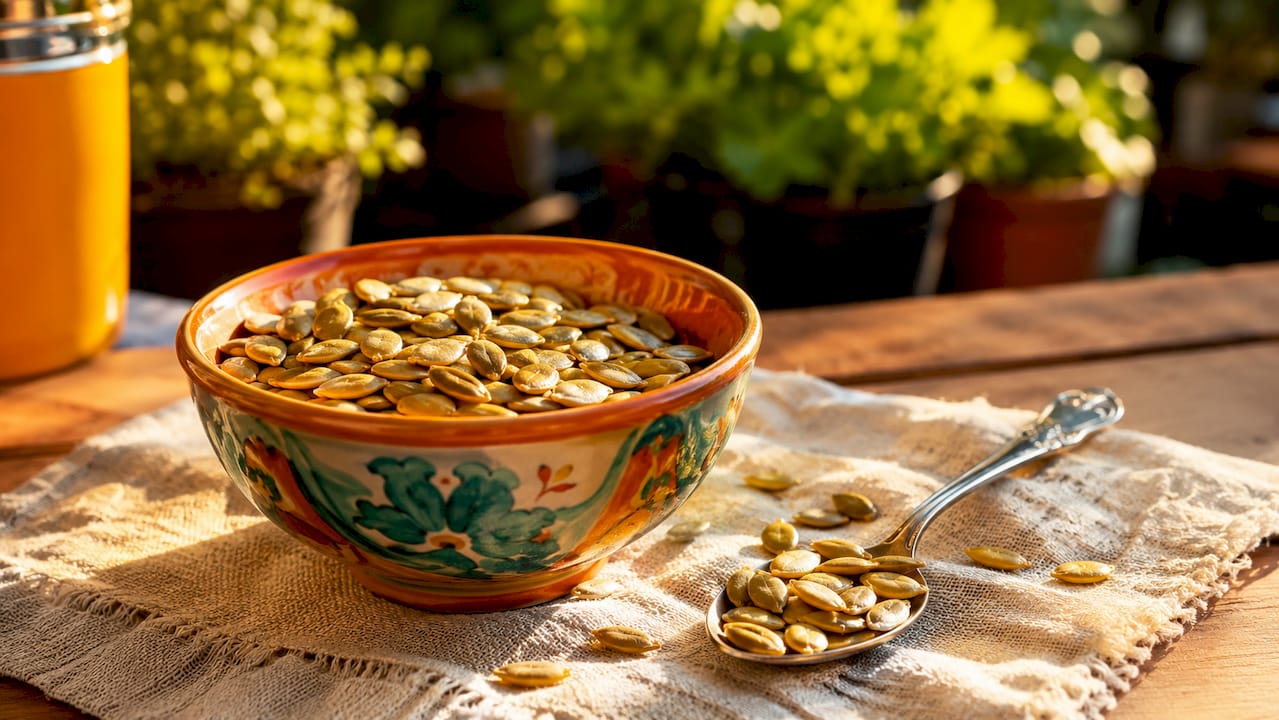
Sunflower seeds supply vitamin E and selenium. Vitamin E and selenium are implicated in progesterone production and liver-based hormone detoxification. Selenium, in particular, supports the enzymes that clear excess estrogen from the body.
| Seed | Key Nutrients | Hormone Connection |
|---|---|---|
| Flaxseed | Lignans, omega-3s | Estrogen metabolism, receptor binding |
| Pumpkin seed | Zinc, magnesium | FSH and LH synthesis, ovulation support |
| Sesame seed | Lignans, calcium | Estrogen modulation, antioxidant activity |
| Sunflower seed | Vitamin E, selenium | Progesterone production, hormone detox |
Pro Tip: Buy seeds whole and grind flaxseeds fresh before eating. Ground flaxseed releases lignans more effectively than whole seeds, which often pass through undigested.
How do seed cycling phases work with your cycle?
Seed cycling divides the menstrual cycle into two phases and assigns specific seeds to each. The logic follows the natural hormonal rhythm of a typical 28-day cycle.
Follicular phase (days 1–14): This phase begins on the first day of your period and runs through ovulation. Estrogen rises during this window. The protocol calls for 1–2 tablespoons each of ground flaxseed and raw pumpkin seeds daily. Flaxseed lignans help modulate estrogen activity, while zinc from pumpkin seeds supports the FSH and LH surge that triggers ovulation.
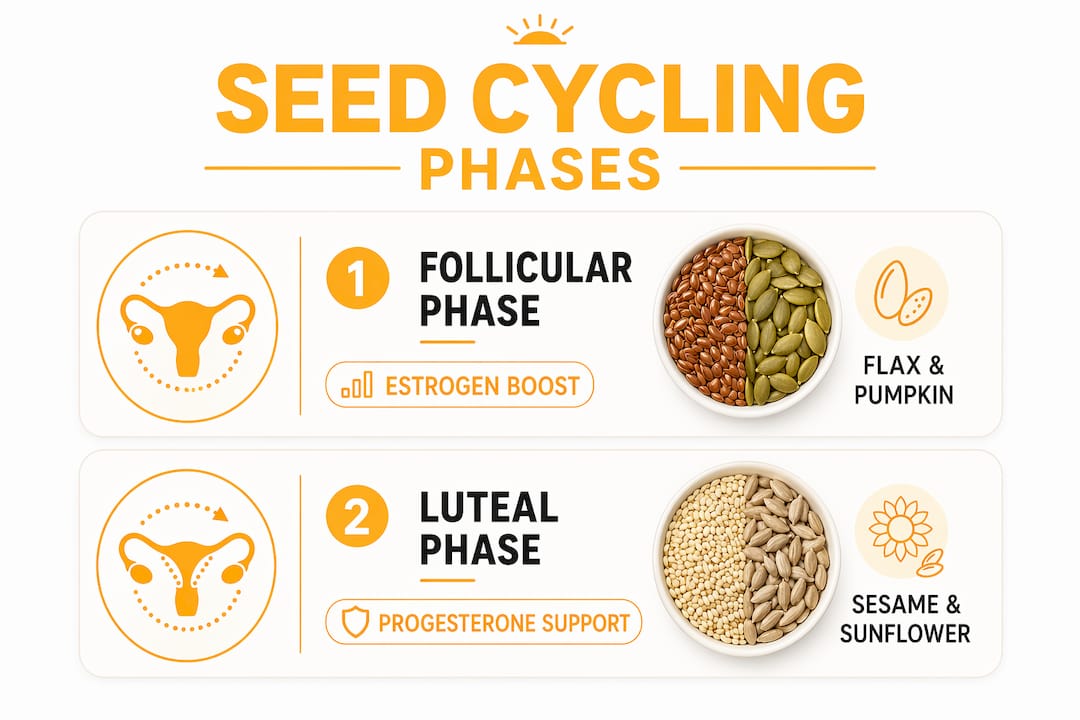
Luteal phase (days 15–28): After ovulation, progesterone becomes the dominant hormone. The protocol switches to 1–2 tablespoons each of sesame seeds and raw sunflower seeds daily. Sesame lignans continue to support estrogen balance, and sunflower seed vitamin E supports progesterone production in the corpus luteum.
Here is a simple way to start:
- Track your cycle start date using an app like Clue or Flo.
- On day 1, begin 1–2 tablespoons of ground flaxseed and raw pumpkin seeds daily.
- Add seeds to smoothies, oatmeal, yogurt, or salads.
- On day 15 (or after confirmed ovulation), switch to sesame and sunflower seeds.
- Repeat the rotation each cycle and log any symptom changes.
Irregular cycles present a real challenge here. Seed cycling assumes ovulation occurs around day 14, which is not true for everyone. If your cycle is irregular or anovulatory, the timing structure becomes less reliable.
Pro Tip: If your cycle is irregular, consider using ovulation test strips to identify your actual ovulation window and adjust your seed rotation accordingly rather than following a fixed day count.
What does the research actually say?
The evidence for seed cycling is best described as promising but incomplete. No randomized controlled trials exist on the rotation protocol itself. A 2025 evidence review confirmed that seed cycling as a timed rotation has never been trialed. The benefits attributed to it come from studies on individual seeds, not the cycling practice as a whole.
That said, individual seed research is meaningful. A crossover trial found that flaxseed lengthens the luteal phase and raises the progesterone-to-estradiol ratio in healthy women. That is a measurable hormonal shift from a whole food. Small studies also show flaxseed and sesame may improve menstrual regularity and reduce PMS symptoms.
“Seed cycling is best understood as a nutrient-dense eating pattern with plausible biological rationale but uncertain causality for timing effects on hormone symptoms.” — Medical News Today
For conditions like PCOS, the picture is even less clear. Insufficient evidence exists to recommend seed cycling as a medical treatment for PCOS or other hormonal disorders. Clinician support remains necessary for anyone managing a diagnosed condition.
| Seed | Study Type | Outcome | Limitation |
|---|---|---|---|
| Flaxseed | Crossover trial | Longer luteal phase, higher progesterone ratio | Small sample, healthy women only |
| Sesame | Observational | Improved sex hormones, antioxidant status | Postmenopausal population |
| Seed cycling protocol | None | No RCT data | Timing effects unproven |
The bottom line: the seeds work. The timing protocol is theoretical. Treat seed cycling as a structured way to get specific nutrients, not as a proven hormone therapy.
How to practice seed cycling safely and effectively
Seed cycling works best as part of a broader approach to balancing hormones through nutrition, not as a standalone fix. Here is how to do it well.
- Dose: Aim for 1–2 tablespoons of each seed type per day. More is not better. Excess flaxseed, for example, can have a laxative effect.
- Storage: Store ground flaxseed in an airtight container in the refrigerator. Sunflower and pumpkin seeds stay fresh in a cool, dry pantry for up to three months.
- Preparation: Grind flaxseed and sesame seeds before eating to improve nutrient absorption. Pumpkin and sunflower seeds can be eaten raw or lightly toasted.
- Integration: Add seeds to smoothies, overnight oats, grain bowls, or homemade energy bars. Consistency matters more than perfection.
- Lifestyle context: Seed cycling works best alongside stress management, regular exercise, and adequate sleep. These factors directly affect cortisol, which disrupts estrogen and progesterone balance when chronically elevated.
Seed cycling safety guidance flags specific contraindications. Anyone with a history of hormone-sensitive cancer, current pregnancy, seed allergies, or an active eating disorder should consult a healthcare provider before starting.
Pro Tip: Keep a simple symptom journal for two to three cycles. Track energy, mood, bloating, and cycle length. This gives you real data on whether seed cycling is making a difference for your body specifically.
Key takeaways
Seed cycling delivers real nutritional value through lignans, zinc, selenium, and vitamin E, but the timing protocol remains unproven by clinical trials.
| Point | Details |
|---|---|
| Nutrient-driven mechanism | Lignans, zinc, selenium, and vitamin E in seeds support estrogen and progesterone pathways. |
| Phase-based rotation | Flax and pumpkin seeds in days 1–14; sesame and sunflower seeds in days 15–28. |
| Evidence gap on timing | No RCT exists for the rotation protocol; individual seed benefits are better supported. |
| Irregular cycles need adjustment | Fixed day counts are unreliable without confirmed ovulation; use test strips to adapt. |
| Adjunct approach only | Seed cycling supports but does not replace medical care for hormonal conditions like PCOS. |
Why i think seed cycling gets both too much credit and not enough
Most articles on seed cycling fall into one of two camps. Either they treat it as a proven hormone therapy, or they dismiss it entirely because no RCT exists. Both positions miss the point.
The nutrients in these four seeds genuinely interact with hormone pathways. Flaxseed lignans affecting estrogen metabolism is not folk medicine. It is documented biology. The problem is that the timing layer, the idea that eating specific seeds on specific days shifts hormones in a predictable way, has never been tested as a protocol. Those are two very different claims, and conflating them does readers a disservice.
What I find most useful about seed cycling is the structure it provides. Many people who start it end up eating more whole seeds consistently, which improves their overall nutrient intake. That alone can support hormonal health. If you track your symptoms honestly and combine seed cycling with sleep, stress reduction, and exercise, you give yourself a real chance to see what is actually helping.
The one thing I would push back on: do not skip the medical consultation if you have a diagnosed hormonal condition. Seed cycling is a food habit, not a treatment. Knowing the difference protects you.
— Rene
Support your hormone health with Fitnesshealth
Seed cycling is a strong starting point, but lasting hormone balance comes from a full nutritional strategy. Fitnesshealth offers supplements, programs, and educational resources designed for health-conscious individuals who want real results from their daily habits.
From antioxidant-rich formulas that support hormone detoxification to fitness-focused nutrition plans built around whole-food principles, Fitnesshealth has the tools to take your wellness routine further. Whether you are just starting to explore natural hormone support or looking to build on what you already know, explore the full range of supplements and programs at Fitnesshealth and find what fits your goals.
FAQ
What seeds are used in seed cycling?
Seed cycling uses four seeds: flaxseed and pumpkin seeds during the follicular phase (days 1–14), and sesame and sunflower seeds during the luteal phase (days 15–28).
Does seed cycling actually balance hormones?
Individual seeds contain nutrients like lignans, zinc, and vitamin E that support hormone pathways, but no clinical trial has proven the rotation protocol itself shifts hormones predictably.
How much seed should you eat per day for seed cycling?
The standard recommendation is 1–2 tablespoons of each seed type daily. Grinding flaxseed and sesame seeds before eating improves nutrient absorption.
Is seed cycling safe for everyone?
Seed cycling is generally safe as a food habit, but individuals with hormone-sensitive conditions, pregnancy, or seed allergies should consult a healthcare provider before starting.
Can seed cycling help with irregular periods?
Seed cycling assumes a regular 28-day cycle, so irregular or anovulatory cycles reduce the reliability of fixed-day timing. Using ovulation test strips to identify your actual cycle phase improves accuracy.










