![[HERO] How to Choose the Best Herbal Supplements for Sleep and Stress (UK Buying Guide)](https://cdn.marblism.com/W2umL-auOxH.webp)
If you're struggling with poor sleep or stress, you're not alone. Around 16 million UK adults deal with sleepless nights, and stress levels have hit record highs. Before reaching for prescription medications, many people turn to herbal supplements as a natural first step.
But here's the problem: walk into any health shop or browse online, and you'll find dozens of options. Ashwagandha, valerian, magnesium, L-theanine: how do you know which one actually works for your specific situation?
This guide cuts through the noise. You'll learn exactly how to choose herbal supplements for sleep and stress based on your needs, what dosages matter, and what to look for when shopping in the UK.
Step 1: Identify Your Primary Sleep or Stress Issue
Different herbal supplements target different problems. Start by pinpointing your main concern:
Stress-Related Sleep Problems
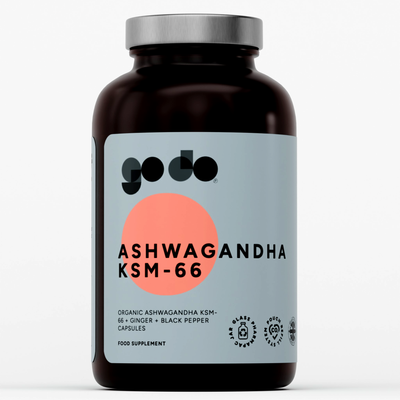
If your mind races at bedtime or you can't switch off from daily worries, you need adaptogenic herbs that regulate stress hormones. Ashwagandha (specifically KSM-66 formulations) works by balancing cortisol levels and supporting your nervous system's stress response. L-theanine, an amino acid found in tea, reduces anxiety while promoting calm alertness before bed.
For more on how ashwagandha works, check out our detailed guide on ashwagandha side effects, benefits and uses.
General Sleep Onset Issues
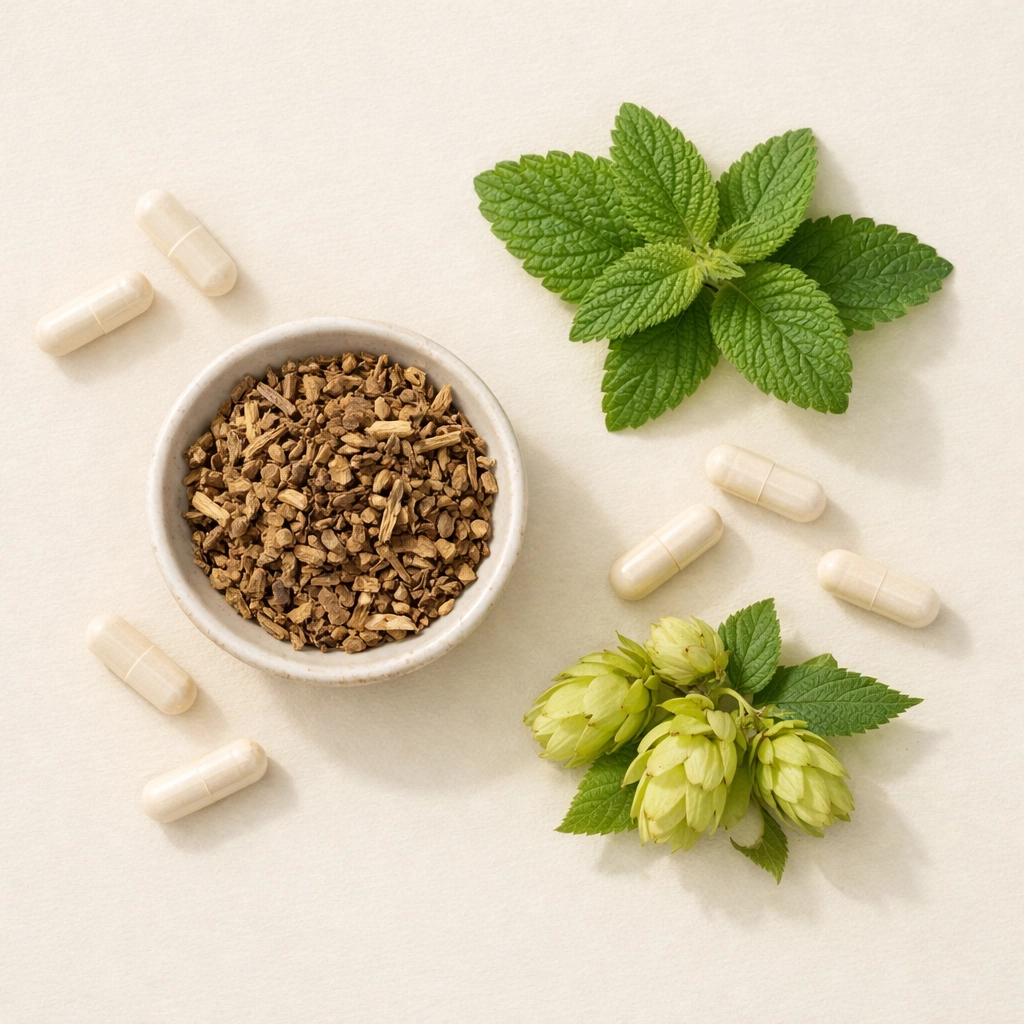
If you simply struggle to fall asleep but don't have significant stress, traditional sedative herbs work well. Valerian root is one of the most researched options: studies suggest 300-600 mg taken 30-60 minutes before bed can improve sleep quality. Hops complement valerian's effects, and when combined, they create stronger sedative properties.
Racing Thoughts and Night Wakings
Lemon balm has mild sedative properties and is particularly effective for anxiety reduction. If you wake up frequently with an active mind, lemon balm can help quieten mental activity. Lion's mane mushroom works differently: it supports cognitive calm and mental clarity rather than acting as a direct sedative.
Anxiety and Tension
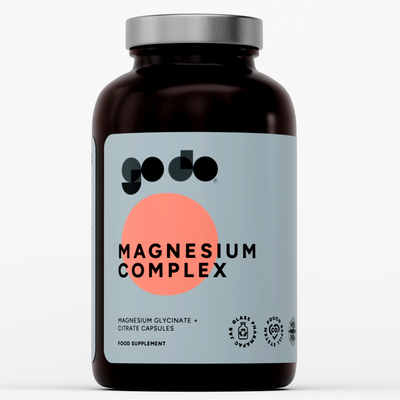
Passion flower reduces anxiety and promotes relaxation. It's often combined with valerian or lemon balm for enhanced effects. If physical tension accompanies your stress, magnesium glycinate supports muscle relaxation alongside nervous system calm.
The Best Herbal Supplements for Sleep
Here's what actually works, based on research and clinical use:
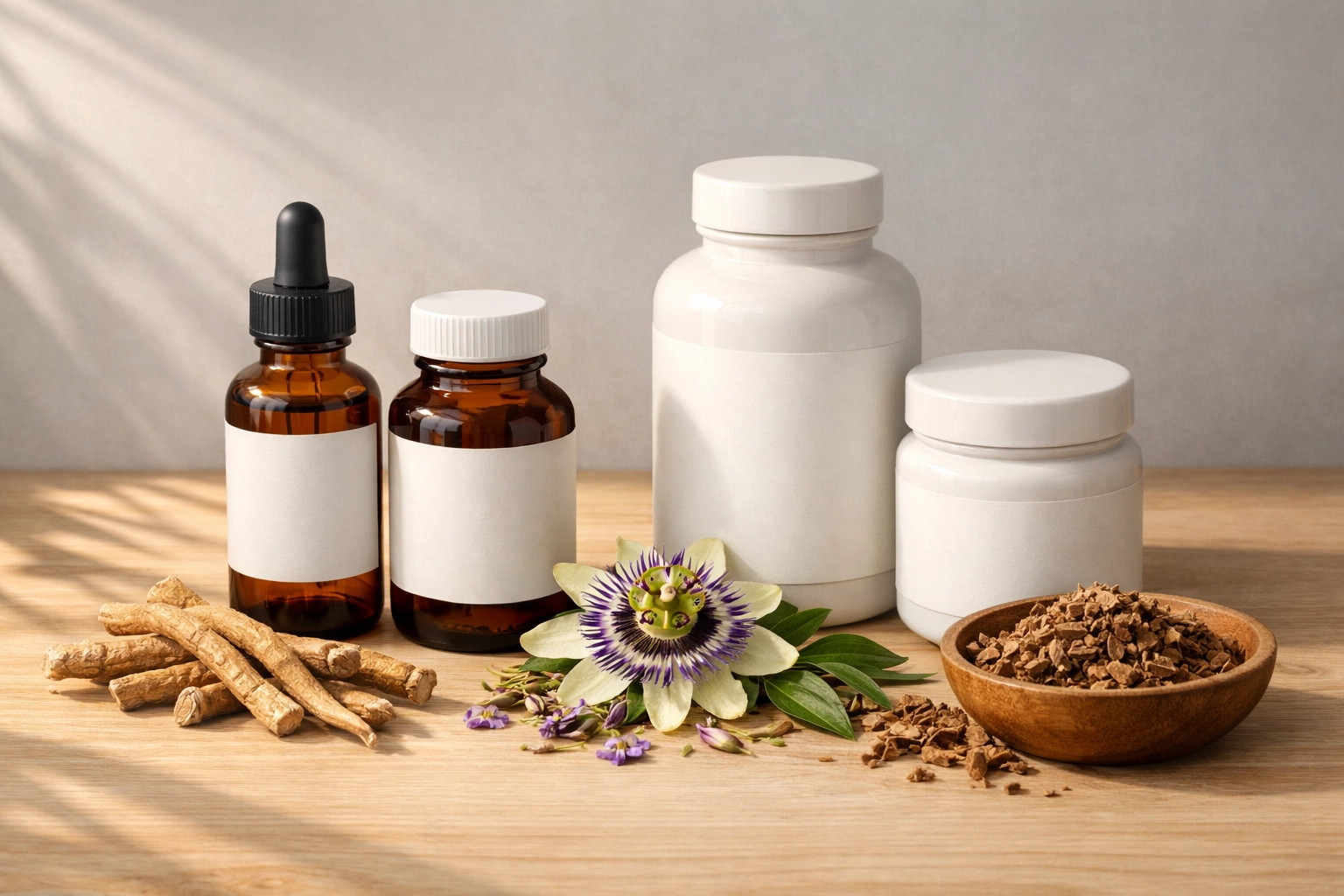
Valerian Root
Dosage: 300-600 mg, taken 30-60 minutes before bed
Best for: Improving sleep quality and reducing time to fall asleep
Notes: Effects may take 2-4 weeks of consistent use
Passionflower
Dosage: 250-500 mg
Best for: Anxiety-related sleep issues
Notes: Often combined with valerian for stronger effects
Hops
Dosage: 30-120 mg
Best for: Sleep onset when combined with valerian
Notes: Look for standardized extracts
Lemon Balm
Dosage: 300-600 mg
Best for: Racing thoughts and mild anxiety
Notes: Can be taken as tea or capsule form
Magnesium Glycinate
Dosage: 200-400 mg elemental magnesium
Best for: Muscle tension and nervous system support
Notes: Glycinate form absorbs better than oxide
The Best Herbal Supplements for Stress
These adaptogens and nervines help your body respond to stress more effectively:
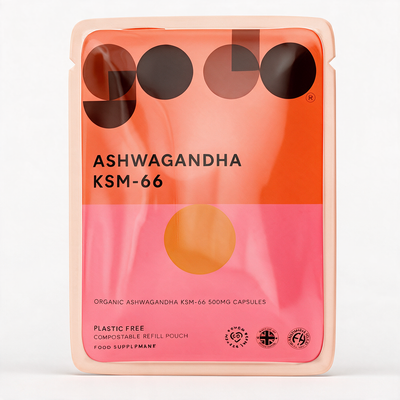
Ashwagandha (KSM-66)
Dosage: 300-600 mg daily
Best for: Cortisol regulation and stress resilience
Notes: KSM-66 is the most researched form
L-Theanine
Dosage: 100-200 mg
Best for: Anxiety reduction without drowsiness
Notes: Can be taken during the day or before bed
Rhodiola Rosea
Dosage: 200-400 mg
Best for: Physical and mental fatigue from stress
Notes: Best taken in the morning
Bacopa Monnieri
Dosage: 300 mg
Best for: Mood balance and cortisol support
Notes: Effects build over 8-12 weeks
Single Ingredient vs. Multi-Ingredient Formulas
Choose Single Ingredients If:
- You're new to herbal supplements and want to test tolerance
- You have one specific issue (e.g., just sleep onset)
- You want to control exact dosages
- You're already taking other supplements or medications
Start with lower doses and increase gradually. This approach lets you identify what works for your body without confusion.
Choose Combination Formulas If:
- You have multiple concerns (stress AND sleep issues)
- You want synergistic effects across different pathways
- You prefer convenience and fewer capsules
- You've already tested individual ingredients
For example, a formula combining magnesium (for muscle and nerve calm), ashwagandha (for stress pathways), and valerian (for sleep onset) creates comprehensive support. Look for products that list exact amounts of each ingredient: avoid proprietary blends that hide dosages.
Dosage Guidelines and Safety Considerations
Start Low, Go Slow
Begin with the lower end of recommended dosages, especially if you're combining supplements. Increase gradually over 1-2 weeks while monitoring effects.
Common Effective Dosages:
- Valerian: 300-600 mg before bed
- Magnesium glycinate: 200-400 mg elemental magnesium
- Ashwagandha: 300-600 mg daily
- L-theanine: 100-200 mg as needed
- Lemon balm: 300-600 mg
- Passion flower: 250-500 mg
Safety Notes:
- Consult a healthcare professional before combining multiple supplements
- Some herbs may interact with medications (particularly sedatives or antidepressants)
- Pregnant or breastfeeding women should seek medical advice first
- Most herbal sleep aids are safe for daily use in adults, but monitor for any adverse effects
- If symptoms persist beyond 4-6 weeks, consult a healthcare provider
What to Look for When Buying in the UK
Quality Markers
Standardized Extracts: Look for products that specify extract ratios or standardized active compounds (e.g., "KSM-66 Ashwagandha" or "5:1 Valerian Extract")
Third-Party Testing: Products tested by independent labs ensure purity and accurate dosing
Clear Labeling: Avoid proprietary blends. You should see exact amounts of each ingredient
Certifications: Look for Vegetarian Society approval, organic certifications, or GMP (Good Manufacturing Practice) compliance
Format Considerations
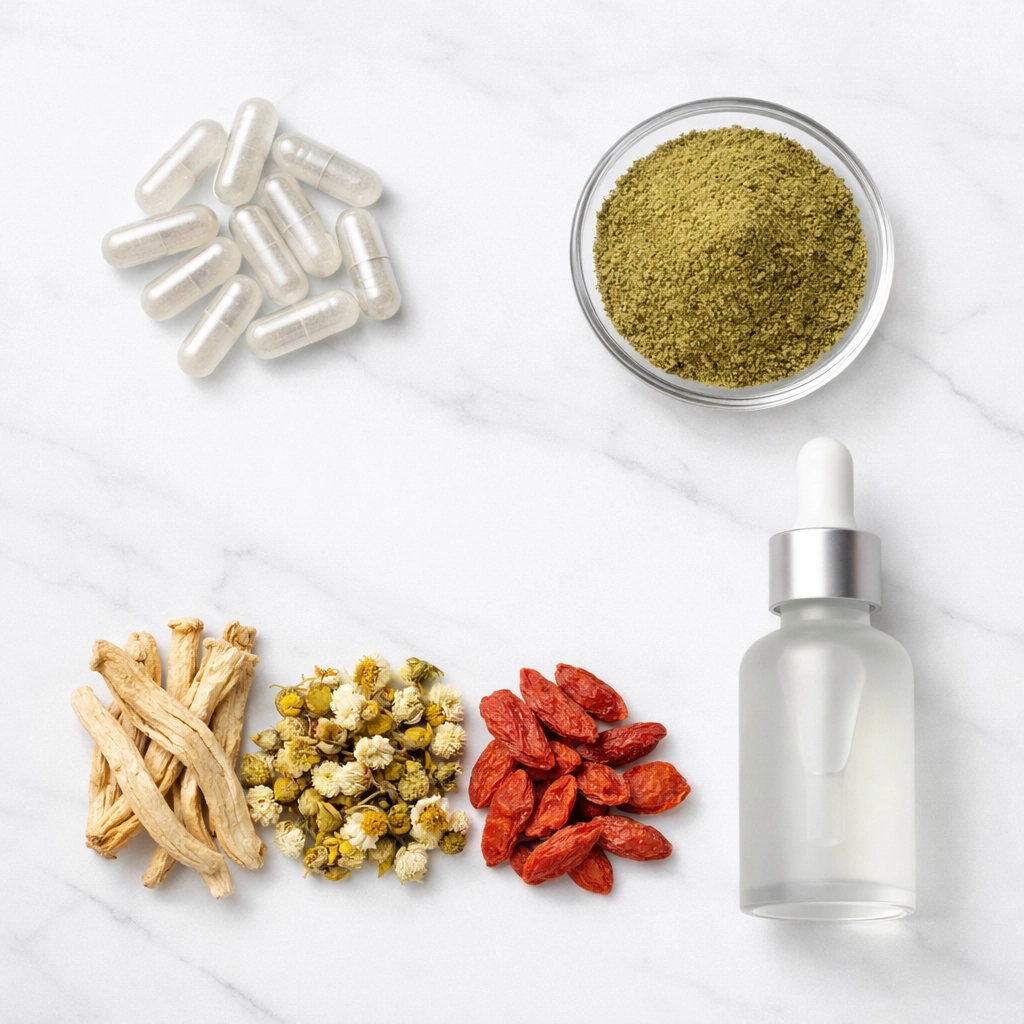
Capsules: Convenient, precise dosing, travel-friendly
Powders: Flexible dosing, can be mixed into drinks, often more affordable
Liquid Extracts: Fast absorption, adjustable doses, but may contain alcohol
Teas: Gentle, ritualistic, but harder to standardize dosing
Choose based on your lifestyle and preferences. Consistency matters more than format.
Avoid These Red Flags
- Products that don't list ingredient amounts
- Excessive additives, fillers, or artificial colors
- "Miracle cure" marketing claims
- Extremely cheap prices (suggests low-quality sourcing)
- No contact information or customer service
Effective Supplement Combinations
These pairings work synergistically:
For Stress-Related Insomnia:
- Ashwagandha (300 mg) + Magnesium Glycinate (200 mg) + L-theanine (100 mg)
For Sleep Onset Issues:
- Valerian (400 mg) + Hops (60 mg) + Magnesium (200 mg)
For Anxiety and Poor Sleep:
- Passion flower (300 mg) + Lemon balm (400 mg) + Valerian (300 mg)
For Stress Resilience (Daytime):
- Ashwagandha (400 mg) + Rhodiola (200 mg) + Bacopa (300 mg)
Take sleep formulas 30-60 minutes before bed. Take stress formulas with breakfast or lunch (avoid late-day doses of stimulating adaptogens like rhodiola).
Making Your Purchase Decision
Before buying, ask yourself:
- What's my primary concern? (Sleep onset, stress management, racing thoughts, etc.)
- Do I want single ingredients or a formula?
- What's my budget? (Single herbs are often more affordable than complex formulas)
- Do I prefer capsules, powders, or liquids?
- Am I taking any medications? (Check for interactions)
Start with a 30-day supply to test effectiveness. Most herbal supplements need 2-4 weeks of consistent use before you notice full benefits.
The Bottom Line
Choosing herbal supplements for sleep and stress doesn't need to be complicated. Match the herb to your specific issue, start with evidence-based options like valerian for sleep or ashwagandha for stress, and prioritize quality over price.
Remember: supplements work best alongside good sleep hygiene and stress management practices. Create a consistent bedtime routine, limit screen time before bed, and address underlying stressors where possible.
If you don't see improvements within 4-6 weeks, or if sleep or stress issues significantly impact your daily life, consult a healthcare professional. Sometimes, professional support provides solutions that supplements alone cannot.
Start with one or two targeted supplements, give them time to work, and adjust based on your response. Your path to better sleep and stress management is individual: what works for others may not work for you, so be patient and observant as you find your optimal routine.