

Whole-body supplementation, known in clinical nutrition as systemic supplementation, is defined as the practice of combining adaptogens, herbs, vitamins, and minerals to support multiple body systems simultaneously rather than targeting a single symptom. What is holistic supplementation explained in plain terms? It is a strategy that treats the body as an interconnected system, where gut health, immune function, hormonal balance, and cellular energy all influence each other. Unlike a single-nutrient pill taken for one deficiency, this approach uses ingredient combinations designed to reinforce each other’s effects. Fitnesshealth builds its entire supplement philosophy around this principle.
What is holistic supplementation and how does it differ from traditional approaches?
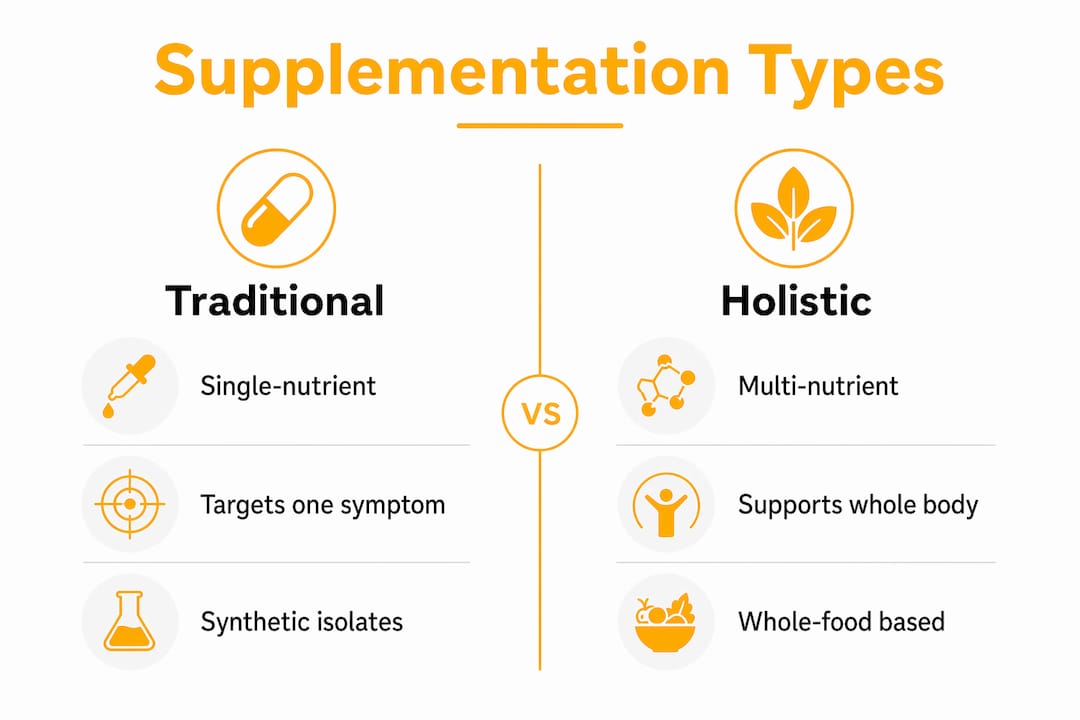
Traditional supplementation targets one nutrient for one problem. Vitamin C for immunity. Iron for fatigue. Magnesium for sleep. The logic is simple, but the body does not work that way.
Systemic supplementation takes a different position. It supports multiple organs and regulatory systems at once, aiming for homeostasis rather than symptom correction. The goal is to maintain balance at the level of hormones, cellular energy pathways, and gut function before problems appear.
The science behind this difference comes down to nutrient synergy. Multiple compounds in plants work together to boost bioavailability in ways that synthetic isolates cannot replicate. A whole-food turmeric extract, for example, contains curcumin alongside natural oils and fiber that improve absorption. A synthetic curcumin capsule delivers the isolated compound without those cofactors.
Bioavailability is the critical factor here. Synthetic isolates often lack cofactors found in whole-food matrices, which directly affects how much of a nutrient your body actually uses. The dose on the label may not reflect what reaches your cells.

| Feature | Single-nutrient supplements | Systemic supplement formulas |
|---|---|---|
| Target | One symptom or deficiency | Multiple systems simultaneously |
| Ingredient design | Isolated synthetic compounds | Synergistic whole-food blends |
| Bioavailability | Variable, often lower | Higher due to natural cofactors |
| Timeframe for results | Often fast for acute deficiency | Weeks to months for systemic balance |
| Best use case | Diagnosed clinical deficiency | Long-term wellness maintenance |
Pro Tip: When reading a supplement label, look for whole-food sourced ingredients and cofactors like black pepper extract (piperine) alongside active compounds. Their presence signals a formulation designed for real absorption.
What are the key benefits of whole-body supplementation?
The benefits of systemic supplementation span several health domains at once. That is the defining feature of this approach. Supporting one system tends to improve others because the body’s regulatory networks overlap.
Core benefits include:
- Immune resilience: Ingredients like elderberry, zinc, and vitamin D work together to regulate immune signaling. Nutrition directly powers immune function, and synergistic formulas address multiple immune pathways simultaneously.
- Cognitive function: Adaptogens such as ashwagandha and lion’s mane mushroom support the stress-response axis and neurological health. Reduced cortisol load from adaptogens correlates with clearer thinking and better focus.
- Cellular energy metabolism: B vitamins, CoQ10, and magnesium are all required for mitochondrial energy production. A formula combining these addresses the full chain of cellular energy rather than one link in it.
- Hormonal balance: Foundational systems like hormonal regulation respond to whole-food supplementation over time, improving overall function rather than forcing a single hormone level up or down.
- Gut health: Probiotic and prebiotic combinations support the gut microbiome, which in turn affects immunity, mood, and nutrient absorption. Probiotics benefit athletes and non-athletes alike through these downstream effects.
- Inflammation regulation: Omega-3 fatty acids, curcumin, and polyphenols each reduce inflammatory markers through different pathways. Used together, they address inflammation more broadly than any single compound.
Systemic supplementation also fills gaps for specific populations. Older adults, vegans, and people with high physical training loads often have elevated needs that diet alone does not meet. The COSMOS trial, involving 21,000 participants, showed modest cognitive benefits from daily multivitamins in older adults over a 2–3 year period. That finding illustrates both the real value and the realistic scale of supplementation effects.
How to use natural supplements effectively in a wellness routine
Effective use of systemic supplements starts with an honest assessment of your diet. Supplements serve as insurance for well-nourished people, not as a nutrition foundation. If your diet is poor, no supplement stack will compensate for it.
Follow these steps to build a practical routine:
- Audit your diet first. Identify consistent gaps, such as low omega-3 intake, minimal fermented foods, or irregular vegetable consumption. These gaps define where supplementation adds real value.
- Choose formulas designed for synergy. Look for products that combine complementary ingredients, such as vitamin D3 with K2, or magnesium with B6. These pairings reflect how nutrients function in the body.
- Commit to consistent daily use. Benefits develop over weeks or months, not days. Systemic balance is a maintenance process, not a quick fix. Missing doses regularly undermines the entire approach.
- Set realistic expectations. You will not feel a dramatic shift in week one. Track energy, sleep quality, and recovery over 8–12 weeks to assess real change.
- Do not abandon whole foods. Whole foods offer nutrient interactions and physical structures that supplements cannot replicate. Fiber slows digestion and improves nutrient release in ways no capsule can match.
Pro Tip: Use a daily supplement checklist to track consistency. Consistency over 90 days gives you a meaningful baseline to evaluate whether a formula is working for your body.
Common misconceptions about natural supplements and the science behind them
The biggest misconception about systemic supplementation is that more ingredients means better results. Stacking unrelated compounds without understanding their interactions produces no synergy and can create competition for absorption pathways. Calcium and iron, for example, compete for the same intestinal transporters when taken together.
A second misconception is that supplements work like pharmaceuticals. Pharmaceutical drugs are designed for fast, targeted symptom relief. Systemic supplements work through gradual regulatory support. Expecting overnight results leads to abandoning a routine before it has had time to work.
| Misconception | Reality |
|---|---|
| Supplements replace whole foods | Whole foods provide fiber and nutrient structures supplements cannot replicate |
| More ingredients equals better results | Unplanned combinations reduce synergy and can block absorption |
| Results appear quickly | Systemic benefits require consistent use over weeks to months |
| All supplements are equally bioavailable | Formulation quality and cofactors determine actual nutrient delivery |
The science also shows that supplements are transformative mainly for those with clinical deficiencies. For people eating a genuinely varied diet, the marginal benefit is lower. That does not make supplementation useless. It means the goal shifts from correction to maintenance and resilience.
Key Takeaways
Systemic supplementation works because synergistic ingredient combinations support multiple body systems at once, producing benefits that isolated nutrients cannot achieve alone.
| Point | Details |
|---|---|
| Systemic vs. single-nutrient | Whole-body formulas target multiple systems; single nutrients address one deficiency at a time. |
| Nutrient synergy matters | Whole-food compounds improve bioavailability beyond what synthetic isolates deliver. |
| Consistency is required | Benefits build over weeks to months; daily use is non-negotiable for real results. |
| Supplements complement diet | Whole foods provide structures and interactions no supplement can fully replicate. |
| Realistic expectations | The COSMOS trial showed modest, real benefits over 2–3 years, not dramatic overnight changes. |
Why I think most people misunderstand the timeline for systemic supplementation
People abandon good supplement routines too early. I have seen this pattern repeatedly. Someone starts a well-formulated adaptogen and mineral blend, feels nothing after two weeks, and concludes it does not work. The problem is not the product. The problem is the expectation.
Systemic balance is not a switch you flip. It is a process that unfolds at the level of hormonal regulation and cellular energy production. Those systems respond slowly by design. The body does not reorganize its regulatory networks in a week.
What I find most compelling about the science is how it validates what traditional medicine systems have practiced for centuries. Ayurvedic and Chinese herbal traditions always used ingredient combinations, never isolated compounds. Modern nutrient synergy research is catching up to that logic.
My honest recommendation is this: treat your first 90 days on a systemic formula as a baseline period, not a trial. Track sleep, energy, and recovery. Do not judge the formula on how you feel in week two. Judge it on the trend across three months. That is the timeframe where the data becomes meaningful.
— Rene
Fitnesshealth’s approach to whole-body wellness
Fitnesshealth designs its supplement range around the principle that the body functions as a system, not a collection of isolated parts. Every formula in the Fitnesshealth catalog reflects the nutrient synergy principle, pairing active compounds with the cofactors needed for real absorption and systemic effect.

Whether your focus is energy, gut health, immune resilience, or recovery, Fitnesshealth offers formulas built for long-term maintenance rather than short-term fixes. The platform also provides wellness programs and guides that help you build a supplement routine grounded in whole-food nutrition principles. Explore the full range of Fitnesshealth supplements and programs to find the right systemic support for your goals.
FAQ
What is holistic supplementation in simple terms?
Holistic supplementation is the practice of using synergistic combinations of adaptogens, herbs, vitamins, and minerals to support multiple body systems at once rather than targeting a single symptom.
How long does it take to see results from systemic supplements?
Benefits from systemic supplementation typically develop over weeks to months of consistent daily use, not days. Tracking energy, sleep, and recovery over 8–12 weeks gives the most accurate picture.
Can supplements replace a healthy diet?
No. Whole foods provide fiber, nutrient structures, and physical interactions that supplements cannot replicate. Supplements work best as a complement to a varied, nutrient-rich diet.
What makes a supplement formula truly synergistic?
A synergistic formula pairs active compounds with natural cofactors that improve absorption, such as vitamin D3 with K2 or curcumin with piperine. These combinations reflect how nutrients function in the body.
Who benefits most from whole-body supplementation?
People with diagnosed nutrient deficiencies see the strongest results. For well-nourished individuals, systemic supplements serve as a maintenance and resilience tool rather than a corrective one.










