Rhodiola rosea has moderate clinical support for reducing fatigue and improving stress resilience, with weaker, smaller studies pointing to modest gains in mood, cognition, and exercise endurance. Most trials use standardized extracts at 200 to 400 mg per day for 4 to 12 weeks. If you take antidepressants, blood pressure medication, or blood thinners, talk to your prescriber before adding it.
TL;DR:
- Rhodiola shows moderate evidence for reducing fatigue and enhancing stress resilience, especially at doses of 200 to 400 mg daily for 4 to 12 weeks.
- The herb’s effectiveness depends heavily on standardized extracts with specific rosavin and salidroside percentages, typically in a 3:1 ratio, rather than unstandardized root powders.
- Benefits for mood, cognition, and exercise endurance are less proven, with most data coming from small, inconsistent studies or animal research.
- Rhodiola can cause side effects like dizziness and jitteriness, particularly at higher doses or when taken late in the day, and may interact with antidepressants and blood pressure medications.
- Choosing a high-quality supplement involves verifying third-party testing, transparent sourcing, and labeling that matches clinical trial conditions.
Table of Contents
- What Rhodiola Actually Is and How It Works
- How Strong Is the Evidence for Each Claimed Benefit?
- How Much Rhodiola Should You Take and When?
- What Side Effects and Interactions Should You Watch For?
- How Do You Choose a Quality Rhodiola Supplement?
- Who Is Most Likely to Benefit From Rhodiola?
- Where the Research Actually Points
- What Experts Get Wrong About Adaptogens
- Where to Find a Rhodiola Supplement Worth Trusting
- Sources
- FAQ
What Rhodiola Actually Is and How It Works
Rhodiola rosea grows in cold, high-altitude regions of Europe and Asia, and herbalists have used its root for centuries to fight fatigue and altitude sickness. Today, it sits in the category researchers call adaptogens: plant compounds theorized to help the body maintain steady function under physical or mental stress rather than pushing any single system into overdrive. That distinction matters if you’re used to stimulants. Rhodiola isn’t caffeine. It won’t hit you with a jolt, and if you’re comparing why caffeine boosts workout performance against what rhodiola does, you’re comparing two different mechanisms entirely.
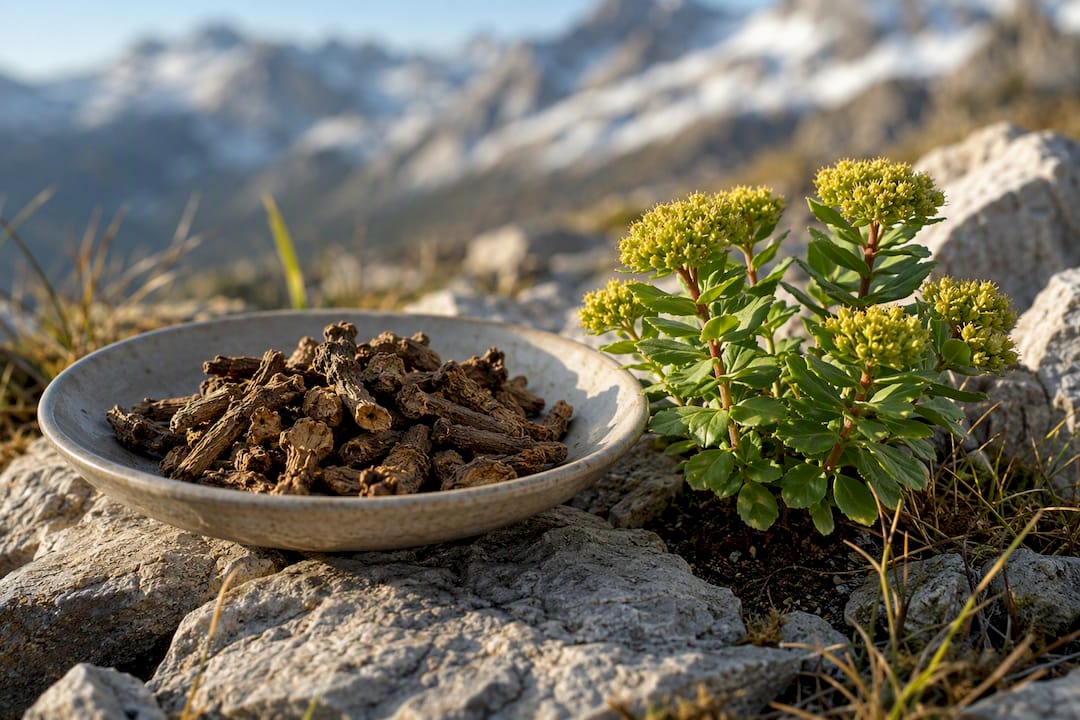
The compounds researchers care about most are salidroside and a group called rosavins. Reviews on rhodiola’s anti-stress and immunostimulating properties point to these two markers as the primary drivers of its measured effects, and they’re also the reason label reading matters so much with this particular herb. Raw rhodiola root varies wildly in potency depending on where it was harvested and how it was processed, so a bag of unstandardized root powder might carry a fraction of the active content used in the actual clinical trials. For deeper background on how adaptogens function generally, the science behind adaptogens and hormone balance covers the broader mechanism.
When you’re shopping, expect to see rhodiola sold in a few common forms:
- Standardized extract capsules listing exact rosavin and salidroside percentages
- Powdered whole root or root cut, usually cheaper but far less consistent
- Liquid tinctures, often used for faster absorption
- Combination formulas that pair rhodiola with other adaptogens like ashwagandha
Many clinical trials rely on extracts standardized to a 3:1 rosavin to salidroside ratio, which is worth remembering when you get to the section on choosing a product later on.
How Strong Is the Evidence for Each Claimed Benefit?
Not every claim made about rhodiola carries the same weight. Some benefits rest on genuinely solid trial data. Others rest on cell studies and a handful of animal experiments that haven’t been replicated in people yet.
Stress and fatigue have the best data behind them. A 2022 review of rhodiola’s effects on stress symptoms found that a single dose produced measurable anti-fatigue effects in a study of 161 military cadets performing demanding night duty. Multiple trials over several weeks reported improvements in stress symptoms and self-rated quality of life using standardized rhodiola extracts at doses similar to those studied in clinical trials. Researchers behind that review frame rhodiola as something that raises baseline resilience to stress rather than acting as a fast-acting calming agent, which lines up with how adaptogens are supposed to behave.
Statistic Callout: In the cadet study cited in the 2022 review, a single dose of rhodiola produced measurable anti-fatigue benefits during sleep-deprived night duty, one of the more striking acute-effect findings in the adaptogen literature.
Mood and depression show a more mixed picture. A 12-week randomized trial of 57 patients compared rhodiola directly against sertraline, a standard prescription antidepressant. Rhodiola improved depression scores compared to placebo, but it did not perform as well as sertraline on the primary outcome measures. The tradeoff was tolerability: rhodiola produced noticeably fewer adverse effects than the prescription drug. That makes it a plausible option to discuss with a clinician for mild cases, not a stand-in for treating moderate to severe depression.
Cognition research splits into acute and chronic effects. Short-term trials measuring attention and mental performance under fatigue or stress conditions have shown modest improvements, particularly in tasks requiring sustained focus. Longer trials on general cognitive sharpness are thinner and less consistent, so treat cognitive benefits as real but unproven at scale.
Exercise performance research tells a similar story. A systematic review of 13 randomized trials involving 263 participants found that acute rhodiola use tended to benefit endurance performance, while chronic daily use showed more promise for anaerobic effort. The researchers behind that review were clear that the trials were small and inconsistent enough to call for larger studies before drawing firm conclusions.
Other claims you’ll see online, things like anticancer or cardioprotective effects, come almost entirely from cell and animal research. The review covering rhodiola’s chemopreventive properties documents anti-inflammatory and antioxidant activity in laboratory settings, but none of that has been confirmed in human clinical trials. File these under interesting and worth watching, not under reasons to buy the supplement today.
Here’s a quick summary of where each claim currently stands:
- Stress and fatigue: Moderate evidence, multiple human trials, most consistent finding
- Mood and depression: Small positive trial data, less effective than prescription antidepressants
- Cognition: Modest acute benefits, weaker long-term data
- Exercise endurance: Mixed, acute doses show more promise than daily chronic use
- Anticancer/cardioprotective effects: Preclinical only, not yet tested rigorously in humans
How Much Rhodiola Should You Take and When?
Trial doses cluster in a fairly narrow band, which makes replicating study conditions easier than with most supplements.
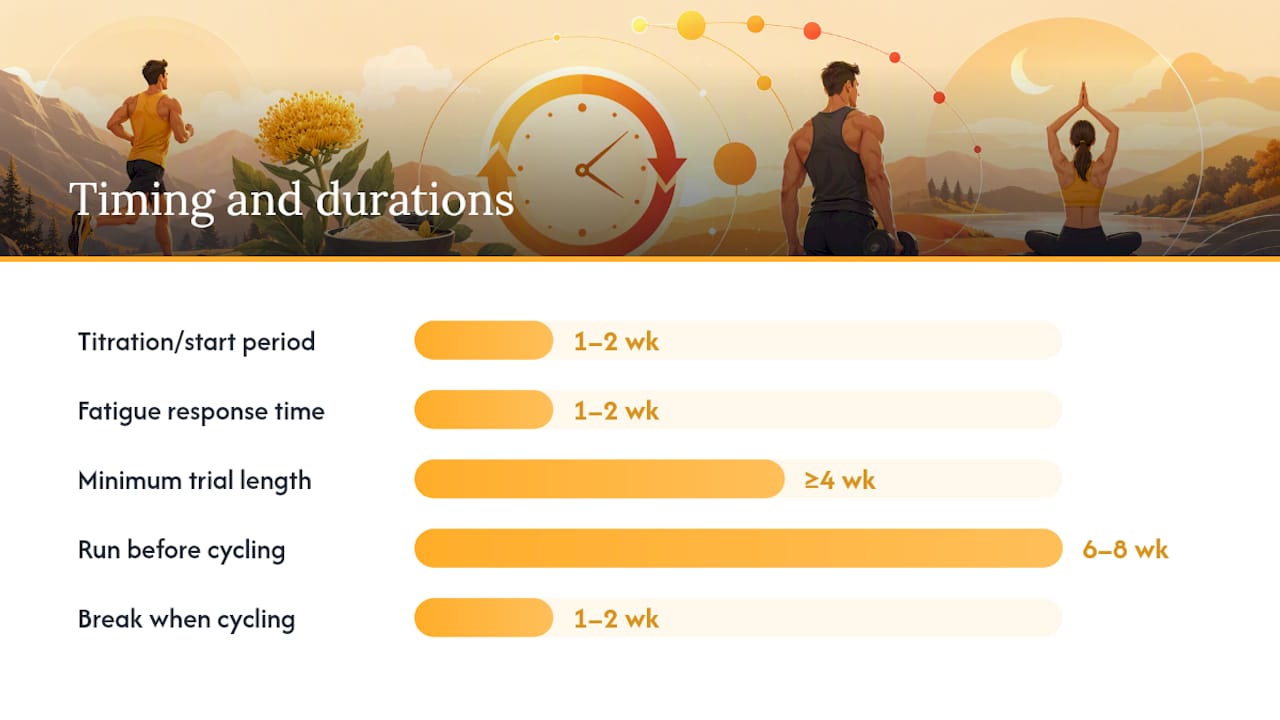
- Start at 100 to 150 mg once daily for the first one to two weeks and watch how you respond, particularly around sleep and any jitteriness.
- Titrate up toward 200 mg twice daily (400 mg total) if you tolerate the starting dose well, matching the range used in several of the 8-week trials on stress symptoms.
- Hold at your effective dose for at least 4 weeks before deciding whether it’s working. Fatigue improvements can show up within one to two weeks, but stress and mood benefits often take longer to become noticeable.
- Take it in the morning or early afternoon. Because it can be mildly stimulating for some people, dosing late in the day risks disrupting sleep.
- Separate it from caffeine by a few hours if you’re stacking supplements, since combining two stimulating compounds makes it harder to tell what’s actually working.
Pro Tip: If you train fasted or rely on pre-workout caffeine, take rhodiola on off days first. That way you’ll know whether any jitteriness or GI upset comes from the rhodiola itself rather than getting lost in a stack of other stimulants.
On cycling: some people run rhodiola for 6 to 8 weeks and then take a one to two week break, largely to avoid building tolerance to its stimulating effects, though the trial evidence doesn’t strongly confirm this is necessary. If you’re already rotating supplements, the same logic behind safe supplement cycling protocols applies here.
What Side Effects and Interactions Should You Watch For?
Rhodiola is generally well tolerated in trials, but “well tolerated” doesn’t mean risk-free.
- Dizziness, dry mouth, and excess saliva show up as the most commonly reported side effects, according to consumer safety summaries.
- Jitteriness or trouble sleeping can occur, especially at higher doses or when taken late in the day.
- Antidepressants, particularly MAOIs, carry a real interaction risk since rhodiola may influence similar neurotransmitter pathways.
- Blood pressure medications and anticoagulants deserve caution too, since rhodiola’s effects on circulation and stress hormones aren’t fully mapped out in people already on these drugs.
- Memorial Sloan Kettering Cancer Center’s guidance on rhodiola specifically tells patients to disclose rhodiola use to their care team before starting it, given how many prescription drugs it could theoretically interact with.
Certain groups should be more cautious or avoid rhodiola entirely: people who are pregnant or breastfeeding, anyone with bipolar disorder (stimulating adaptogens can theoretically trigger manic episodes), and anyone currently on an MAOI antidepressant.
One regulatory reality worth sitting with: rhodiola supplements are not approved by the FDA the way prescription drugs are. The National Center for Complementary and Integrative Health notes that most human research on rhodiola remains limited and of low to moderate quality, which means dosing standards and purity checks depend heavily on individual manufacturers rather than any universal enforcement.
How Do You Choose a Quality Rhodiola Supplement?
Most of the disappointment people report with rhodiola traces back to buying a product that has nothing in common with what researchers actually tested.
- Check for a stated rosavin and salidroside percentage on the label, ideally close to the 3:1 ratio used in many of the trials referenced above.
- Avoid products that just say “rhodiola root powder” with no constituent breakdown. That’s the herbal equivalent of buying unlabeled coffee and hoping it has caffeine in it.
- Look for third-party testing seals from organizations like USP, NSF, or ConsumerLab, which verify that what’s on the label matches what’s in the capsule.
- Skip proprietary blends that lump rhodiola into a mix of “adaptogen complex” ingredients without disclosing individual amounts. You can’t dose what you can’t see.
- Note any harvest or sourcing information when it’s available. Rhodiola grown at higher altitudes in colder climates tends to develop higher concentrations of active compounds, though this is harder to verify without transparent sourcing.
Matching a supplement label to trial conditions isn’t unique to rhodiola. The same logic applies with other standardized extracts, like matching clinical huperzine A dosing to what’s actually on U.S. labels.
Who Is Most Likely to Benefit From Rhodiola?
Rhodiola tends to help people dealing with situational, ongoing stress rather than acute crisis. Students during exam periods, shift workers fighting fatigue, and endurance athletes managing training stress are the groups most likely to notice something.
- People with mild, everyday stress or fatigue are reasonable candidates to try it
- Those with diagnosed depression, anxiety disorders, or bipolar disorder should prioritize clinical care first
- Give it at least 4 weeks before judging whether it’s working, since fatigue effects surface faster than mood or stress improvements
- If side effects appear or nothing changes after 6 to 8 weeks, it’s reasonable to stop and reassess with a healthcare provider
Where the Research Actually Points
Rhodiola’s best-supported use case is straightforward: everyday stress and fatigue, backed by trials with real sample sizes and measurable outcomes. Everything past that, mood support, cognitive sharpness, endurance gains, comes with real but thinner data, and the anticancer or cardioprotective claims floating around online are preclinical at best. Rhodiola won’t replace treatment for a diagnosed mood disorder, and it isn’t a substitute for medical care when symptoms are severe.
One practical habit worth building: pair rhodiola with the basics that actually move the needle on stress resilience, sleep consistency, recovery nutrition, and training load management, rather than expecting a root extract to carry the whole job on its own.
What Experts Get Wrong About Adaptogens
The biggest mistake people make with rhodiola is treating it like a supplement that should produce a noticeable effect within days. It doesn’t work that way, and expecting it to sets people up to quit before the compound has a real chance. Fatigue metrics in trials moved within one to two weeks, but stress resilience and mood benefits took considerably longer to show up.
The second mistake is dosage guesswork. Most people buy whatever bottle is cheapest, ignore the rosavin and salidroside percentages entirely, and then wonder why they don’t feel the effects described in research summaries. If a label doesn’t disclose those numbers, you’re not replicating the trials you read about. You’re taking a different product entirely.
What should come first: match your dose and duration to what actual trials used, track your own fatigue and stress levels for at least a month, and treat rhodiola as one piece of a stress management approach rather than the whole strategy.
— Rene
Where to Find a Rhodiola Supplement Worth Trusting
Fitnesshealth cuts out the guesswork that comes with sorting through mislabeled root powders and vague “proprietary blend” listings. Every rhodiola option in the Fitnesshealth catalog is selected with an emphasis on standardization and third-party testing, the same qualities that separate a research-grade extract from a bag of ground root with no verified potency.
Before you buy anywhere, run the product through this checklist: does the label state an exact rosavin and salidroside percentage, is there a visible third-party testing seal, and is the sourcing information transparent rather than hidden behind a proprietary blend name? If a bottle can’t answer those three questions, keep looking. Browse available product lineups and start with a dose that matches what the trials actually used.
Sources
The strongest evidence on rhodiola’s stress and fatigue effects comes from the 2022 clinical review covering multiple human trials, including the 161-cadet study. For mood-related claims, the 12-week trial comparing rhodiola to sertraline offers the clearest head-to-head data available. Preclinical and mechanistic background comes from the review on rhodiola’s anti-inflammatory and antioxidant properties, while safety guidance draws from NCCIH and Memorial Sloan Kettering Cancer Center.
This article is general information, not a substitute for advice from a qualified doctor. Consult a qualified healthcare professional about your own circumstances before acting on anything here.
- Rhodiola rosea L.: an herb with anti-stress, anti-aging, and immunostimulating properties for cancer chemoprevention
- Randomized trial comparing rhodiola and sertraline (trial reference)
- Rhodiola: Usefulness and Safety | NCCIH
- Rhodiola | Memorial Sloan Kettering Cancer Center
FAQ
What Are the Main Benefits of Rhodiola?
Rhodiola’s best-supported benefits are reduced fatigue and improved resilience to stress, with weaker evidence for mood support, cognitive performance, and exercise endurance.
What Should Not Be Taken With Rhodiola?
Avoid combining rhodiola with MAOIs and use caution with other antidepressants, blood pressure medications, and blood thinners, since interactions haven’t been fully studied and a prescriber should weigh in first.
Is Ashwagandha or Rhodiola Better?
Neither is universally better. Ashwagandha has more evidence around sleep and cortisol regulation, while rhodiola’s strongest data centers on fatigue and stress resilience, so the right choice depends on which symptom you’re targeting.
Does Rhodiola Reduce Cortisol?
Some trial data suggests rhodiola supports the body’s stress response and may influence cortisol regulation indirectly, but the evidence is still limited, and no large trial has confirmed a consistent, measurable cortisol reduction.